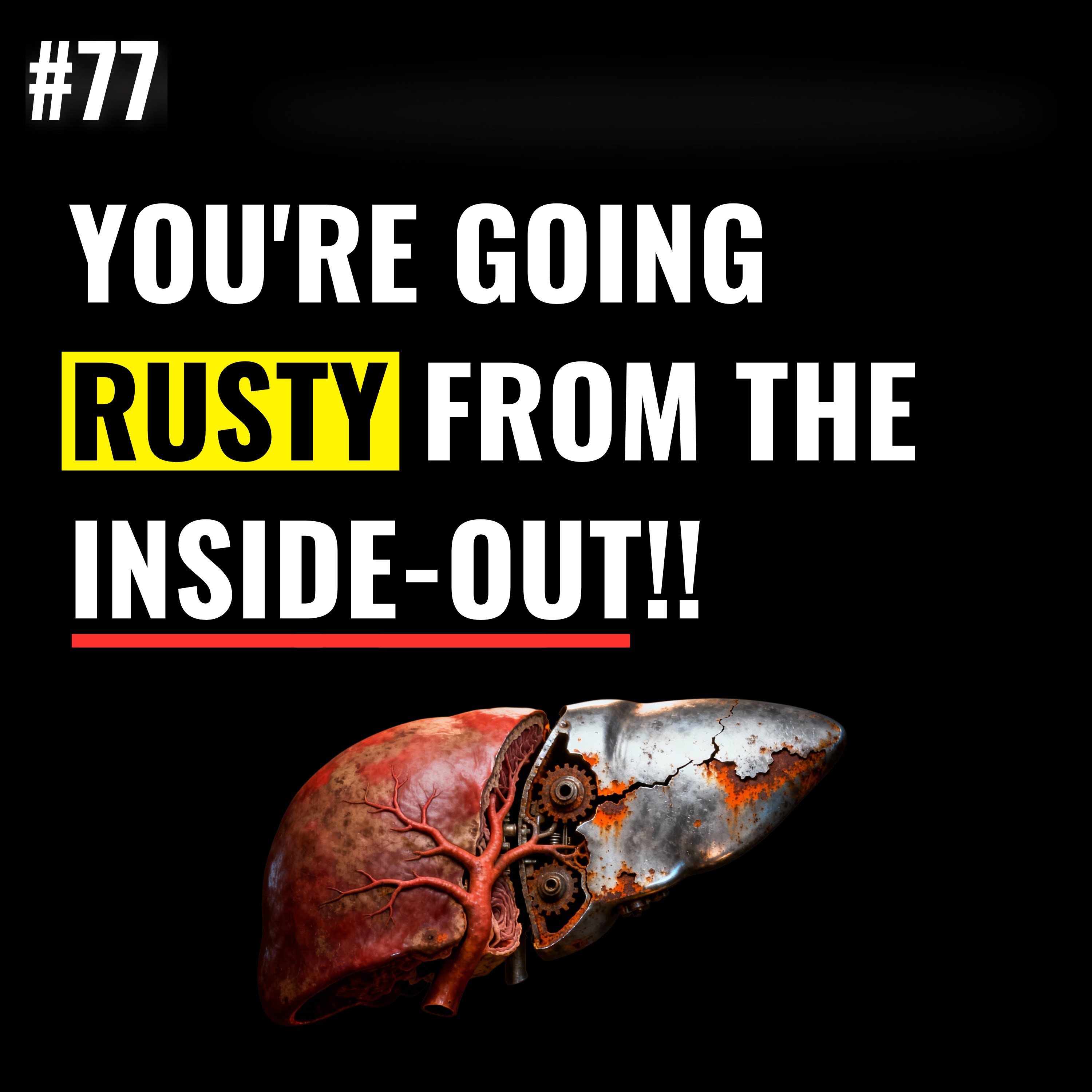
Iron Overload & Mineral Imbalance: Fatigue, Inflammation, Hormone Dysfunction, Metabolic Health, Cholesterol Myths & Root-Cause Healing | Dr. Malea Jensen aka Iron Lady Doc
What's This About?
Iron overload, mineral imbalance, fatigue, inflammation, and hormone dysfunction — in this episode of the Fitness Wisdom Podcast, I sit down with Dr. Malea Jensen (Iron Lady Doc) to uncover how iron dysregulation silently drives many modern health issues.
We explain why iron is essential yet harmful when mismanaged, how excess iron fuels inflammation, metabolic dysfunction, hormone issues, and cardiovascular disease, and why minerals must be viewed as interconnected systems — not isolated nutrients. This conversation challenges mainstream narratives around cholesterol, supplementation, and heart disease while highlighting the overlooked roles of liver health, the glycocalyx, diet, stress, and lifestyle.
This episode focuses on prevention over management, helping you understand root causes so you can restore balance instead of chasing symptoms.
🎯 Ideal for anyone dealing with chronic fatigue, inflammation, hormone issues, or confusion around minerals, iron, and heart health.
---
⏱️ Chapters:
00:00 Holistic Approach to Medicine
06:19 The Importance of Minerals in Health
11:01 Mineral Imbalances and Their Symptoms
16:04 The Role of Minerals in the Body
19:30 Understanding Magnesium and Selenium Testing
21:42 The Importance of Ruminant Meats
23:33 Whole Animal Consumption and Nutrient Density
25:24 The Role of Salt and Electrolytes
27:13 Iron Dysregulation and Its Implications
29:42 The Impact of Iron on Health
33:24 Heme vs Non-Heme Iron Explained
36:50 Iron Regulation in the Body
41:22 Addressing Iron Overload
43:13 The Power of Simplicity in Diet
44:49 Plant-Based Diets and Mineral Depletion
47:28 Nutrient Balance in Modern Diets
50:07 Lifestyle Factors Beyond Diet
52:14 Cholesterol, Heart Disease & Misconceptions
59:03 The Glycocalyx and Cardiovascular Health
01:04:33 Metabolic Health with Dr. Malea Jensen
---
🔥 12 - Week Body Transformation Program: Specifically designed to get you into the Best Shape of your life!
You'll get:
- Personalized Nutrition
- Training Program
- Lifestyle Optimization Advice
- Step-by-step guidance & support to transform your body from the inside-out ✅️ Start your Journey Today
---
‼️Join my Free Fitness Wisdom Podcast Telegram Community HERE: I look forward to seeing you in there!🤗
---
📥 Join my Newsletter for FREE Educational & Empowering 🧠 content straight to your inbox: FIND IT HERE
---
⬇️ Find & Connect with Dr. Malea Jensen:
📲 IG: https://www.instagram.com/ironladydoc/
▶️ https://www.youtube.com/@IronLadyDoc
🔖 https://www.facebook.com/CenterStagePrimaryCare/
⬇️ Find & Connect with me Here:
https://www.bio.link/move_with_andreas
👉🏽 For Discounts & Offers: HERE
---
👇🏽 Find the SHILAJIT I use & recommend HERE ⚡
Use promo code: MOBILITYFITNESS for Discount ✅
.
➡️ For my favourite Blue Light Blocking Glasses, use promo code: MOBILITYFITNESS for 15% Discount ✅ HERE
.
💦 My favourite Magnesium Supplement HERE⚡Use promo code: MOBILITYFITNESS for Discount ✅
.
👉🏽 Find Best Red Light Therapy panels, Blue Light Blockers & Circadian friendly bulbs 🚨Use promo code: MOBILITYFITNESS ✅ for 40% OFF LIMITED TIME OFFER on your entire order HERE
---
*None of the content / statements in this Podcast are Medical or Personal Advice & is not intended to cure, treat, prevent or diagnose any medical condition. All my videos are for Educational & Research purposes only. If you decide to try anything discussed in this video, you agree to do so at your own risk & responsibility*
This is the Fitness Wisdom Podcast.
Hello and welcome back to another exciting episode of the Fitness Wisdom Podcast. Today we have Doctor Malia Jensen on the show and we're going to be diving into the very interesting topic of minerals, iron, and much more. So welcome to the show, Doctor Malia. It's a pleasure to have you. Well, thank you for having me, Andreas. It's a pleasure. You know, we connected over on Instagram and I found a lot of the things that you were very, quite fascinating and you have a very interesting view of the human body.
And I'm just wondering, since you're a doctor and you go not through the conventional education system, right? What was the thing that actually LED you to view the body more holistically? I believe that my intent when I became a doctor was to to heal the body. I don't necessarily think that there was some magical transition of when I started medical school and where I'm at right now, it was always my intent to prevent disease. Unfortunately, going to I can only speak from medical school in the United States because that's where I'm located.
The the medical education, whether and I'm a deal, there are, you know, an osteopathic physician or there's medic, you know, an MD. The, the curriculum in the United States is almost exactly the same. So we're taught the exact same things in both curriculum. Whether you go to a medical school with an MD or medical school with the DO. Now with that being said, there isn't so much a trigger that got me to where I'm at today. It's just that after time I got fed up with having to defend what the medical curriculum is trying to teach us.
And you get exhausted with it, to be honest, because the, the, the curriculum teaches us to make a diagnosis and treat it. And that usually includes pharmaceuticals. So that I, I think getting out of their script, I'm exhausted and getting out of the script that they want us to play was really because our values didn't align. So that's probably what attracted you to where I'm at right now. Oh, yeah, absolutely. I saw, I saw that you have a more holistic and open minded view of the human body. And that's what I really appreciate, that you understand systems instead of isolated parts.
Because a lot of times what we see, you know, in the conventional medical system is that we have a lot of specialization going on. And everyone is a specialist in their area. And no one is kind of looking at the body holistically, you know, how all systems of the body are communicating together. And I guess this is where we're going today, you know, with our conversation, diving into minerals and iron and all of this stuff. And so basically it was actually your values from the from the get go that made you kind of go more of that holistic and all, let's call it alternative, but it's rather the original route, which is to actually help people to heal, right?
And to actually get better rather than to just kind of keep them alive but sick. Because when you look at the conventional medical system now, it's more about disease management rather than disease prevention, right? Just to keep you from not dying, but neither from thriving. So then the way that you are approaching the body, it's more like you're actually want the individual to take ownership and responsibility and you give them guidance, you know, in their life to make, you know, to improve their health from the inside out.
Am I understanding this correctly? You are there was one key component to what you just said is the way we were taught was to prevent the main chronic diseases, but we have never been taught to prevent them. We've been taught to diagnose them, make the diagnosis. You get diagnostic tests like, you know, labs or you get an X-ray or you get a, a mammogram or you get and you make a diagnosis. It's a diagnostic test used to make a diagnosis and then the diagnosis requires or you know, not requires, but maybe requires a medication or a treatment.
There isn't a, you know, where we were taught protocol like, OK, they got diabetes. What is the root cause of diabetes? And let's, let's work backwards instead of, OK, pat ourselves on the back, make make the diagnosis of diabetes and now knowing see they, they, they, they pride you on your ability to protect, to, to pick, to choose the correct medicine. So we are valued by what we choose at the medication. So if a guideline says put that person on metformin first and you, do you get a, a pat on the back, a kudo, right?
And so we're valued by how we treat the patient with the medications. You you got cholesterol problem. You go to Staten, you got a blood pressure problem, you get an ACE inhibitor, you got a diabetes problem, you get metformin, and on and on and on. Guys, if you haven't already, smash that subscribe button and the like button. Now back to the show. Yeah. So then basically you just, you know, you just have this cookie cutter like playbook. Let's say that, you know, if you've got this issue, you give these pills or you go to these surgeries or to these kind of treatments, but there is nothing there which is sort of respecting the body's innate ability to heal, I guess.
Correct. I believe that, yes. Yeah, I agree with you. Because obviously when you go, that's what I've understood as well, that you can't even criticize or judge doctors who don't really understand what they've been taught is not necessarily how to show the body necessarily how to, you know, heal innately, but it's just more how to manage symptoms rather than to go after root causes. Yeah, I'm not sure that we've ever really been taught that. And until a doctor jumps out of that matrix, like myself, they just, they, they're going to follow the protocol.
And it's a protective mechanism. It really is. So they don't want to get sued. If they follow guidelines, they're not gonna get sued. Yeah, yeah, it's crazy. So was there something specifically in your practice or some patients or something that led you down the road of, you know, understanding and you know, your interest in minerals in general and their importance in the human body? Was there something specific along your journey that led you down this path? Yeah, I think some people would say it was all in my name with the Iron Lady doc and iron must be my go to mineral.
But actually iron refers to lifting weights. I was into bodybuilding, competitive bodybuilding. I'm into building my body still. But yeah, iron, iron in my name is from Iron Lady. Doc is definitely from lifting weights. But when it comes to minerals, especially iron, about maybe one to two years ago I was introduced to somebody who's their whole world or their whole being revolves around iron. OK. And he taught me so many things, how to look at iron and how we've defined words like anemia incorrectly, OK.
And he got me to think. And that is important because I believe that iron is a cause or a part of a cause, one of the root causes of all of our chronic diseases. We need it. We need iron. We're just getting too much in most cases and the wrong kind instead of calling something, you know, by a definition of anemia, which our natural human brain goes to, oh, I'm low on iron. But you may not be, you know, because doctors are only looking at certain things. And if you don't look at the whole picture, you're going to miss a lot and you it's going to lead to worsening of chronic diseases despite being on appropriate medications.
Wow. So basically then do you want to maybe list of a few symptoms associated with iron overload or this dysregulation with iron? What's actually maybe take a step by step? What's actually going on then why are we accumulating all of this iron in the human body? Where is it coming from? Is it coming through our diet? Is it coming through supplements and what kind of symptoms are manifesting because of this? How can we identify that we have iron overload? Or do we need to go and get blood tests and stuff like that to try and figure out figure it out in that way?
OK, well, OK, let's let's break it down. If we're talking about iron or other minerals, some of the common symptoms we could have from and then this is basic and you could probably think of many, many more is, you know, muscle cramps or fatigue or weakness or a weak immune system. Mood changes is very common. Irregular heartbeat, weak bones on poor nerve function, like maybe even restless leg or muscle cramps. Maybe fluid balance, your fluid balances off your hair, your skin, your nails. All of these could be resulting.
The problems you have could result. And we could go through every system, our eyes, ears, nose, throat, cardiovascular, respiratory, we could go through all of them OK, and each could be a symptom of something that is going on with our minerals. Maybe maybe iron is a big one, but we need to understand that it's not just looking at separate levels of these complex, you know, minerals and vitamins and all of that. It's it's looking at their ratios, it's looking at environmental factors, it's looking at how they relate to each other.
It's not saying, oh, well, I heard calcium is good for our bones. I'm going to take calcium. But if you, you know, when you start taking calcium, then you're going to change magnesium. OK, so calcium is excitatory. Let's say it's excitatory and magnesium is calming. But if you increase calcium too much, you're going to deplete magnesium. And when you deplete magnesium, you're going to deplete potassium and on and on and on. And so when people are listening to influence or holistic people or whatever they're listening to and they say, oh, I'm going to take I'm going to take magnesium, but you don't know what you're doing to calcium and I'm going to, you know, you without getting level in our blood.
I don't recommend anybody taking vitamins and minerals. Based on my research, this is the best Chilajit in the world. Here's why you need to know about Chilajit. Chilajit is a Herba mineral substance made from the decomposition of plants and bacteria. This process taking place over thousands of years. It's harvested from the Altai and the Himalayan mountains. Think of it as a hyper concentrated plant matter that is made by a Mother Nature over thousands of years. In many cultures and traditions, it's known as the destroyer of weakness.
Let me tell you why. Chilajit is loaded with ionic minerals which are the most biocompatible with our human body. It also has a very high concentration of folvic acid. This folvic acid allows those minerals to get into the cell and do their work. Minerals are absolutely essential for all processes of the body, from having good energy levels, enhanced cognitive function, hormone optimization, and so much more. You name it. This is why I use Chilajit on a daily basis because it works on a foundational level, on a mitochondrial level, and we know that we need healthy mitochondria in order to produce cellular energy.
Something very important to mention is the quality of shilajit. The one I use has been tested for heavy metals and impurities, ensuring the highest quality shilajit. So if you want to experience this incredible ancient substance and find the one that I use on a daily basis, head over to the description below and use the promo code attached to get a discount on your entire order. So let's go back to the beginning then with the function of minerals. You mentioned all those symptoms there that people can experience due to mineral imbalances.
Maybe you could tell me why people are experiencing these mineral imbalances in the 1st place, and also why does it actually cause all of these symptoms? So what function do minerals play in the human body in general? What is their role? Well, one, to answer the first part of your question, why are minerals possibly depleted in our body? One, it could simply be from the soil. The changes in our soil, especially in the United States, we used to have a, a topsoil that was 6 inches, 6-8 inches, maybe even a foot of good topsoil and now it's it's less than an inch.
With that, the soil depletion is also depleted of other vitamins and minerals or minerals. Just to say what maybe we have too much calcium in our soil. Let's just say, OK, plants have a natural defense mechanism. They make oxalates, OK, There's oxalates in plants. The reason they have oxalates and the reason they make vitamin C is for the oxalates to take care of the calcium that's they're growing in the soil. So the depletion of our soil or too much of something in our soil changes the food that we consume, OK, Another thing is stress.
Stress can deplete magnesium, stress can deplete zinc, and we need those two things to take care of cortisol. And you know what happens with cortisol, You know, you got your increase of sympathetic nervous system and increase in blood sugar, and it's just around a loop where we just get ourselves in trouble. But again, you know, soil stress, they change, they cause mineral depletion medications, the medications that the doctors putting them on, they may not tell them about diuretics and how it changes the sodium and potassium pump.
They you might be on a proton pump inhibitor. A proton pump inhibitor is for acid reflux. OK, but they never told you that a proton pump inhibitor changes the pH of your stomach acidity. So a normal acidity might be between 1:00 and 3:00, but you take a PPI and now you're sitting at a four and you might think, well, that's not very much, but it is when it comes to how God made our body. OK. And we need a certain pH of our stomach to absorb all of the minerals like calcium and magnesium. Anything with a positive charge, calcium, magnesium, zinc, selenium, iron, iron, OK, the one that we, we maybe want to break down a little further, but you know, the iron are amino acids.
If you change the, if you make the, the acidity of our stomach more alkaline, like A4 instead of a three or A2, now you can't absorb amino acids. So now I always joke with my clients that if you eat a $25 rib eye and you're taking a PPI and you put up asparagus on your plate, you've just made your $25 rib eye. I worth about 5 bucks. Wow, that's a great analogy. Yeah. And so I don't want to waste my rib eye, so I'm going to eat it plain. And I hopefully am not on a PPI, but I'm on a PPI probably because of the food.
The crapola, I always call it crapola that I'm putting in my body that causes the reflux to cause me or lead me to take a medication. Processed foods. Processed foods are a tremendous way to cause depletion of minerals, you say? But doctor, aren't processed foods fortified? They are, they're fortified with a whole bunch of synthetic crap. And that actually changes all of the, you know, when we start adding again, we're not adding it in a balance. We're adding here and there and we're thinking that we're doing a service to you.
But when we add processed foods into the mix, we're we're causing a lot of disturbance in the normal biologic pathways that's going on OK. Our body has normal pathways, and when we eat something that's trying to be God or trying to fortify us with certain things, it's just telling you. When you have to fortify something, it's telling you that that's not really food, okay? Food by definition has to have nutritional value. So if they fortify it with all the stuff that they took in by processing it, now it becomes food.
And, and again, I, I, that is one of the ways that we, you know, why our minerals are, are depleted. Alcohol is another one. So, you know, you look at it as a review, you look at your soil, your stress, your medications, your processed food in your diet, your alcohol, smoking, all of these things lead to the problems that we're having. OK. Oh yeah, that, that was a fantastic breakdown. And now let's go into then why should we care about actually consuming mineral rich foods? Like what, why? Why is it important for us to have a healthy mineral balance in our body?
What kind of benefits are associated with that? And what functions do minerals play in the human body in general? Like I can assume that they are important for electrical conductivity, right? So it's anything that has like like a mineral body of water will be more susceptible to, you know, carrying charge or electricity through it compared to water without minerals. So do you want to maybe dive into that for us? Right. I, I think where you're leading this is more into the neurological, you know our neurological system, but that also relates to cardiovascular system as well.
You know, all the systems go together and you mentioned early on that we have all these doctors with their specialty and no one is talking about. And that I think was on purpose is when now we need a gynecologist, now we need a lung doctor, now we need a kidney doctor, now we need a GI doctor. We got all of these doctors working on their system and nobody working on their body. And it's the same as when we try to add in potassium. So you know, I heard that if we take potassium, I might not have
it would help my heart, for instance, the heartbeat. I might not have an arrhythmia if I take potassium. When taking too much potassium will deplete sodium. There is a place for every one of our minerals in our body and they need to work together and if we increase one, we could be depleting another. We need to have it in balance. And so where does our food come in? Avoiding processed food and eating Whole Foods, I mean, that's one of my core principles of of food of eating. But then again, it for me, it goes even deeper on the whole food that we do choose.
What whole food are we choosing? I tend to stick with animal products, OK, because I feel that they are the most nutritionally dense food that we can eat, we can consume. And if we're eating a variety or even eating all of the organs of the of the animals, we are not going to be depleted. Now is that always across the board? No, I mean, if you're grain eating, grain fed animals, you might be depleted in certain things, but our body is very, very good. I mean, you look at people who are eating standard American diet and you say, how are they not sick?
Because our body is very good. It's trying to stay homeostatic, trying to stay even. And so it doesn't want potassium to go too high in sodium to go too low on vice versa. But we end up doing that to ourselves by choosing the food. But you can see that a standard American diet eat, you know, person who's eating a bunch of crapola is still alive today. And sometimes they could probably live to 8090 years old. When we get into troubles, we're trying to manipulate. Things so you're on a standard American diet you're probably depleted of this and this and this here take this.
You never checked your levels. What if you're actually getting too much magnesium? Did you get in we we should be getting red blood cell levels of these minerals and RBC magnesium, RBC copper, RBC selenium. We need to get the the red blood cell because being in the blood itself isn't an accurate level. Imagine spiking your blood sugar without eating cake. Elevating course is all your stress hormone without being stressed and suppressing your body's most powerful sleep. Antioxidant and regeneration hormone, which is your melatonin.
This is why I make sure to wear my yellow daytime blue light blocking glasses every time where I spend time indoors under artificial lights and in front of screens to protect my eyes from oxidative stress and my entire body. And if I'm going to be exposed to artificial blue light, especially after sunset, I'm going to wear my red lens blue light blocking glasses to support my melatonin production and release. So if you want to protect your energy levels, sleep, and biology from artificial blue light, head over to the description and you will find all of the links with a massive discount on my favorite blue light blocking glasses.
What do you mean by that? We need to like, analyze the red blood cell itself. What's actually in the red blood cell? I didn't fully understand that. Sure, most doctors, if you ask them for a magnesium level, they will simply get a serum magnesium level, a blood level, but it's more important to get what is actually inside the red blood cell. So it's called a RBC magnesium and RBC selenium. It is a, you have to ask specifically for that level and doctors, some doctors don't know how to interpret it and they don't even know what you're talking about.
And so they're not going to order it. I see. And that's why people are having to go outside sources to get their labs drawn, use their own money. So would there be a reason then why the minerals would be in the plasma instead of the red blood cell? Is it? Does the plasma minerals indicate that they are in transition rather than they are going where they are supposed to go over? Why? Why would the minerals not be in the red blood cell in the first place? I think it they are in the blood but I don't think the level is as accurate is if we check the actual red blood cell.
So you could get just a serum magnesium level and you'll get an idea, but it may not be as accurate as getting a red blood cell level in the the red, the this the blood level, the blood serum level could be a little high or a little low and you're still having problems. But if you get a red blood cell level and you say, oh, I was perfect anyway, I'm at 4 or whatever that, you know, I'm OK. So I don't really need to take magnesium. Or it might support the fact that you are taking magnesium and it's doing good for you.
It's you're in a good range, an optimal range. And I say, OK, thank you for that clarification. And so going back to the food then you mentioned there eating whole animal food, sources of food. Is there any specific types of food of the animal Kingdom that you prefer? I know a lot of people talk about fish and oysters and you know these type of things because they are they're coming from the ocean. So they are coming with like a lot of, you know, ocean minerals, but is red meat and organs and this type of stuff, is that also loaded with minerals as well?
I my preference is to consume ruminant meats which are you know are polygastric. They have multi chambered stomachs so and I prefer to eat organic or grass fed of those animals. We could give a cow which is a ruminant animal green and they will grow up and we can slaughter them and eat their meat. Yes. However, if they grass feed, then they're going to be higher in Omega threes. They're going to be richer in vitamins and minerals from the grass they're eating or the food they're free ranging on.
And though I, I believe that is important. So I eat ruminant meats and especially ones that are grass fed. So if bisons grass fed and Buffalo and sheep and lamb and cow and beer instead of eating a grain fed. But not everybody has access to that. So is eating grain fed better than not eating a ruminant meat at all? Absolutely, yes. I believe if you eat the ruminant muscle meat and you eat the fat and you're eating the organs, you can get everything you need. MMM. Nose to tail, basically. How about like making like bone broth?
I'm sure that's a really great way to extract even more minerals, right? Absolutely, yeah. You're getting collagen and elastin. You're getting so much from the bones. I mean, when you look at something in in the wild, they're going to be eating every part of that animal that they have killed. And we as America, I can only speak for Americans, is we get repulsed or disgusted by drinking the blood or eating the bone marrow. We're we're getting a little better. But those things of the whole animal is really important.
And you know, leaving those things behind is one, you're, you're decreasing your own health, but two, you're, you're wasting so many good things on the animal. You mentioned eating fish. I'm OK with eating fish. I will choose sardines. I think it's a great source of Omega threes. I think it's a great source of vitamin A and vitamin D, but I'm hesitant to completely eat a whole bunch of fish because even though it grows in the ocean, there's heavy metals in our ocean now, you know, from the raining down of all these chemicals into our water system.
And I, you know, I, I stay away from those things, especially the larger fish. OK, I again, I tend to eat ruminate meat, try to get grass fed and I consume eggs, try to get pastor raised eggs, butter. I stick to those things that that's just me and my opinion. I feel the healthiest and I also feel that we can reverse a lot of diseases by following that type of meal plan. Yeah, returning to what nature provides I think is always the answer, right? Staying away from anything man made is, is always a good idea in my opinion.
I mean, nature has everything in the the matrix. It never has anything in isolation. So there's also less worry about creating these mineral imbalances, right? So you mentioned a lot about the animal sources there. I'm just wondering is there anything else would that be sufficient for somebody to actually cover their mineral bases? Or what's your thoughts on salt like unrefined sea salt? What's your thoughts on on shilajit, for example? Do you have any other ways, any favorite ways of re mineralizing the?
Body, you know, I, I used to take Shilaji or I used to do that. I do use a very good salt. I'll use Jacobson salt. I think when when doctors tell their patients to stay away from salt, I believe they're referring to processed salt. I hope they are. But I but if you get a clean salt, that's, you know, if I went out to a salt and I chipped away and made my own, it's going to have all the minerals in it. Now, I do know, you know, if you talk to, you know, like Richard Smith, you know, Richard makes his own electrolytes, OK.
And I could see that there are people who might limit their intake on their carnivore diet or their ketovore diet that a good source of elect electrolytes would be and minerals would be in their best interest. OK. But if we are, you know, if if you listen to Doctor Chafee, he doesn't even eat salt. He's just eating. He's getting everything from his meat and it is water and maybe a little butter here and there. I doubt he even eats eggs or so he says. But you know, everybody's a little different.
And getting your levels checked I think is important. If you find out that your, you know, your sodium and potassium are off, why? OK.
So there's some deeper. I'm sorry. Go ahead. Sorry, I caught you up there. I was just going to say that there is some deeper underlying 'cause that triggers this imbalance. It's not so much let's say from our diet, especially if we are eating more of an ancestral diet and we're we're covering our bases in that manner. But then if we still have are experiencing some mineral imbalances for some whatever reason, it could be for all from the all the other things that you mentioned before, you know the alcohol maybe you know like processed diet get like stress and all of these type of things that could be all medications that could be altering that mineral imbalance, yes.
Correct. And things we even eat, let me give you an example and I'll make it short. If we are consuming a diet that's very high in calcium, OK, if we have high calcium, we're going to have low magnesium. If we have low magnesium, we're going to have low potassium. And if we, let's just say we're also on high salt diet, high salt will deplete potassium. So now let's say you have a high salt diet with a high calcium diet and now you've really depleted your potassium. So all of even without taking anything, just how we consume our foods makes a difference.
And you know, you look at, you know, if potassium is low and sodium is dominating, now you're looking at, I got high blood pressure now. And so they'll just tell you just lower your, your sodium intake. Well, what does that mean? There's nothing real, you know, there's no real advice. I'll just say you follow a good diet. Why don't you eat Mediterranean? These are all of the things that doctors are telling people and they're not even thinking about, hey, what's in our water? You mentioned water, you know, clean water or ours.
Our water in the states are full of fluoride. In most every state is full of fluoride. OK, If you have high fluoride, which is a halide, guess what happens to iodine? It goes down. So now if you have low iodine, how's your thyroid function goes down? All of these things people don't understand yet. Yet any halide that we are in contact with, fluoride, bromide, chloride, lower iodine, they displace iodine and we need iodine. Every cell in our body needs iodine, just like every cell in our body needs iron.
You mentioned that earlier. And there are things in our in our diet or things that we do that will increase our risk of either having iron overload or iron deficiency. Muscle cramps, eye twitching, headaches, agitation and stress. Those are all signs that I have magnesium deficiency. I can always tell when I haven't taken my magnesium. You see magnesium is an absolutely essential and is required in over 600 biochemical reactions across the body. I'm pretty sure we've all experienced that cough cramp in the middle of the night and that is most likely due to a mineral or magnesium deficiency.
And the reason why most individuals are deficient in magnesium these days is because stress depletes magnesium and tell me a single person in this world who is in stress right now, whether that is physical or psychological stress. Magnesium is something that I'm very religious about taking every single evening before I go to bed because I don't only want to sleep 8 hours I I want to have a deep and restorative sleep. I know that when I've taken my magnesium, I wake up feeling relaxed and refreshed.
So if you want to discover the magnesium that I use on a daily basis, you want to make sure that you head over to the description below and use the promo code attached to get discount on your entire order. Wow, it kind of feels like everything that the way that society is constructed is almost like you mentioned about the matrix at the beginning. It feels like, kind of like it was purposeful in a way to deplete or imbalance our minerals, you know, and, and yeah, as you were kind of like saying that how they are so, so important for the human body and, and the all of our functions really for everything.
I can assume they are very important for the mitochondria, right? As well for the powerhouse of the cell? Absolutely. You know, you mentioned something just now that I just want to touch on, you know, from the very beginning, eat well, let's just talk about iron from the very beginning when they told us that we're all deficient in iron. And So what this led to is the development of formula for babies. If if we were to have a baby breastfeed, they will get exactly the type of iron they need from mother.
And it's a very small dose that is needed. However, when the whoever elites or global whatevers told us that iron is so important, we're going to give tell you mother, don't breastfeed because you're probably low too. And so give your baby this Enfamil in this Enfamil has been fortified with synthetic iron, synthetic minerals and vitamins. Synthetic iron is non heme iron and it has to be in such high doses to only get a small amount absorbed. Non heme iron is only 3% absorbed. Heme iron is about 30% absorbed.
So all of these formulas fortified us with huge amounts of non heme synthetic iron that builds up in our system. It we can't use it, we can't absorb it and use it. OK, 3%. What do we do with the others? It can sometimes get trapped in our organs like our liver and that's a huge place. But you mentioned mitochondria. Can iron get embedded in the mitochondrial membrane? Absolutely. The cell membrane, absolutely. And that takes us down a huge rabbit hole because iron oxidizes, it rusts. So if you're consuming it from birth and your formula and then you eat processed synthetic food and then you go to the doctor and they tell you you're iron deficient and they give you a bunch of iron supplement, which is more non heme iron.
It just goes up and up and up. And that's aging us. We're getting wrinkles. We're getting, you know, aging organs. If you put some iron outside in a humid area, you know, you got oxygen and water, what does that lead to? It leads to rust. We are rusting in our body from all of the iron that we are consuming. Was that an agenda? It kind of makes you wonder, you know, and all of the things that were were like all the pathogens. I mean, think about it, Andreas. Think about the pathogens, bacteria, viruses, parasites, fungus.
What do they eat? I know you want to say sugar. They do eat sugar. What else feeds them iron? Wow. That's crazy. Yeah, there was a study not too long ago that was. Go ahead. Sorry. Go ahead. No go. Ahead No, I was just going to mention there was a recent tuberculosis outbreak in and it was maybe it was less than 15 people, but there was an outbreak nonetheless in Kansas City. And you know, if you read back maybe early 2000s, there was an article that talked about tuberculosis and how increased iron in our body increases our risk of getting infected with TB and for TB to grow by feeding on it.
And that was in pub Med. Yeah. So this is all like public knowledge is just not actually made so mainstream. It's sort of kind of like hidden away. So what I understood there from everything that you said that there are two types of iron, the heme iron and the non heme iron, and it's actually the non heme iron that's the problem. Does the heme iron pose any issues to the body as well or is it just a non heme iron that we need to be concerned about? Yes and yes. OK, to break that down, non heme iron and and heme, let's let's refer to it as you mentioned before, iron, iron dysregulation, it's a dysregulation.
It's not being used the the regulatory part of our body is unable to use the types of iron in our body act appropriately now because we have so much non heme iron, you know, in plant eaters, anybody who's eating plants, all plants is non heme iron. And then we eat processed foods full of non heme iron, synthetic and then we take vitamins with non heme iron. That is a huge problem because we can't use it now. Could you have a problem with heme iron? Could a carnivore have too much heme iron? It's possible.
Could a carnivore who's taking testosterone have a heme iron overload? Yes. Could you have a disorder of familial hemochromatosis, a condition of OSIS? OSIS means condition of your heme hemoglobin. Yes, that's a possibility that you could be overloaded or you know, iron overload in that regards. But for the most part, we're missing non heme iron overload and heme iron deficiency because we've been told not to eat meat and eat more plants, more grains, more corn, more, you know, fruits and vegetables and all of these things and don't eat meat because now it causes coronary artery disease.
So they got us away from eating heme iron. So are we seeing that as much heme iron overload? No. But non heme iron overload, Yes. And by looking at the labs, you can see it. But doctors are not trained to look at the labs in great detail. They'll look at hemoglobin or your hematocrit and they'll say, oh, it's low, you're iron deficient. See, that's now we've defined iron deficiency by looking at two things. And when if you were to look at the whole big picture of ferritin and transferrin and TIBC and iron saturation and the MCV and the MCHC and all of these labs and the liver function, you might see a different pattern if you knew what to look for.
I don't believe many doctors know what to look for. I didn't know what to look for until about a year and a year to two years ago. So basically then would that mean that because people are eating too much of the non heme again, eating it from the diet but also getting it from supplements? You mentioned all of these different places where it's kind of like processed, artificial, synthetic, basically going inside of our body. Because of this accumulation, it's causing a dysregulation at the level where heme iron is also processed and then therefore the heme iron cannot get utilized because the non heme iron is there and it's causing that dysregulation within the system.
But can I ask you specifically where exactly is the regulation occurring? I just don't understand where in the human body is iron being regulated. The liver is our master organ. OK. And. It the iron that is overloaded is in our cells, all of our cells, OK, It gets driven into our cells. Let me give you an example. If if a person is low, OK, let's just say, let's just say a person is low in vitamin D, OK, by one specific test and then they start taking vitamin D. What does vitamin D do to vitamin A lowers it.
And if vitamin A is low, then copper is low. If copper is low, that naturally drives iron into hepatocytes, which are the liver cells. And so we start by getting iron overload in our liver cells. And then when the liver cells are so engulfed in iron on their membrane and inside them like on the mitochondria like you mentioned, it cannot function. And if liver is our master organ, all of the things that the liver should be doing, it's not doing because it's trying to take care of iron overload. And so doctors will say your liver looks fine.
I see your AST and your ALT, they look great. No, those are enzymes that don't start getting bad till way down the line. So where does the dysregulation start? It's not that it starts any. It's all the cells. All the cells is getting iron embedded into the membrane, and iron oxidizes. Iron causes reactive oxygen species, just like the iron you set outside it with the oxygen in the water. We have oxygen and water in US in every cell. So it's oxidizing like every heavy metal bit. Iron especially, OK, because we are so overloaded on it.
And so our body is rusting inside. And can we fix it? Oh, there's been there's now been lots of people are trying to figure out how to to fix it. Like the gentleman that introduced me to all of this iron problem. I mean, he's developed a product that is basically breast milk in a capsule. OK, so breast milk is lactoferrin. Lactoferrin naturally has iron for the baby and for the mother. Lactoferrin contains iron. But what this gentleman did is now he's using a apolactoferrin APO apolactoferrin. Apolactoferrin is the iron removed.
And he also added in something called trivalent chromium, chromium on the periodic table in the trivalent SO33 plus. And that particular trivalent chromium can bind to excess iron and it can absorb it, sequester it, chelate it, all the things that, you know, could, you know, that we need to do to relieve ourselves of iron overload. OK, Now, is there other products on the market? Some people will take EDTA, all capitals. EDTAEDTA helps to chelate heavy metals, but it doesn't sequester them. It doesn't move it here and there.
You call dysregulation, right? So I need it from here to go to here and usable. Well, EDTA doesn't do that. There's also a new medication and I promised myself I would look it up. There's another medication that just came on the market for heavy to bind for heavy metals. I cannot remember the name, but it just came on the market. So those are options. But if you're taking these products and you still can continue to consume products that are high in non heme iron, you know, is it really working for you?
So then the only solution really is, is that that supplement that you mentioned and also removing the non heme iron in the 1st place, Is that sufficient enough to actually start to lower the iron levels? Or do you need to sort of have some other minerals coming in to lower iron iron? Because as you mentioned there are some minerals, if you take one, it affects the other one and it lowers the other one if you take more of something. So is there something that lowers iron if you take it? Yeah, the product I'm referring to is called Glucoferin GLUCOFERRIN.
That's the name of the product. It, it will help with the iron overload. But just think if we like, like you said, if we have too much iron, we have something low of another vitamin mineral. So if we're if, maybe if we even out the iron by removing, we're not adding anything. We're trying to get the system back in order in homeostasis. Now, I'm not saying that you can't live with iron overload for the rest of your life. You will. You'll live with it and you'll just die. And they'll call it a heart attack, or they'll call it diabetes, or they'll call it asthma, or they'll call it COPD, or they'll call it whatever.
They're going to call it that chronic disease when or you died of sepsis, you had some bacterial pathogen. Well, what was it eating? Well, it was eating your crappy diet and iron. OK, so but they'll call that a natural cause of death. And when we look at iron and we look at sugar or carbohydrate overload, those are things that we can easily change. But we first need to be educated. There's nothing magical about a carnivore diet, except when you say I'm just going to eat meat, there's nothing. I mean, meat is great.
It's nutritionally dense. But more importantly, when you eat a carnivore diet, you're removing all of the other crap and now your body is able to heal itself and your body is very good of manipulating all of the minerals in our body. It's very good. God made us perfect. We mess it up. We add things when we shouldn't. Mostly adding things when we shouldn't. Instead of subtracting things, we need to subtract things. Get rid of the things that are causing the diseases. Yeah, that's what a carnivore diet does.
Yeah, I resonate with that because it's true that in in in modern day life, we always think what can we actually add to our life? What more supplements can we take or what more bio hacks can we do in all these things? But in reality, it's it's what actually we removed from our life that actually improves our life, right. Simplicity, I think, always wins. And when you look at nature, like when you when I make diet plans for for my clients, you know, there are some clients who want like fancy recipes and stuff like that.
And I just tell people that just focus on eating like simple foods, simple nutrient dense foods, because in that way, you know what you're putting inside of your body. I mean, I'm not saying that you shouldn't use spices and stuff like that make taste good, but I just feel like we need to relearn how to enjoy simplicity, you know? Just to enjoy how food actually tastes like rather than having to hide the taste of food with sauces and, you know, and spices and and all this kind of stuff. What's your thoughts on that?
I agree. And those spices are the exact plants that we're trying that I'm trying to get people to avoid, you know, And I'll get the question. You mean, doctor, you don't eat any plants? And I'll say I only eat plants as long as they're filtered through a cow or a deer or a bison or Buffalo or sheep or a lamb, OK, Because my body cannot break them down. I do not. Humans do not have a cellulase enzyme that breaks down the membrane of plant cells that's made of cellulose. To breakdown cellulose, you need cellulase.
And so people will say, but it's good for our bacteria in our gut. Well, your bacteria are there because you eat the crap. So if you take the crap away, you don't have those bacteria that need it. And they're not breaking it down. They're sucking out the juices, the sugar, they're fermenting. And when they ferment, they give off gases and they give off irritability and they give off waste that is a bowel movement. OK, so when I tell people if they say, but I can't have any plants. No, you can have plants.
I'm not telling you what to eat. You have to know all of the information and what that plant does to you. So they'll say, well, I want I'm going to still eat vegetables. OK, well, if you eat vegetables, then cook them. Well, why do I need to do that? Because they have chemical defenses in them when they're raw, worse when they're raw, oxalates, phytates, tannins, sapanins. And so you need to cook them to try to get them out. And when I say cook, I'm talking boiling. Boiling for 20 minutes to remove oxalates it.
It's when. So I have to be honest with my people. You can eat plants, you can eat fruit. Do you know what fructose does to your liver? Do you know what fructose does to your brain? Do you know what fructose does to your uric acid? Do you know what uric acid does to your body? All of the things I have to, I want to teach my people so they can make enough good decisions with enough information. You, Andreas, you can't make a decision if I don't give you enough information, OK. You can't make a good decision, correct?
So I've probably heard about red light therapy before and all the incredible benefits that it has to offer. But unfortunately not all panels on the market are created equally. And This is why I only use and trust the ones that have put in the description below. They have the highest quality panels on the market from bill quality, a aesthetics and functionality. So if you want a massive 40% discount on my favorite red light therapy panels, head to the description below and make sure to use the promo code attached to get a massive 40% discount.
So basically now going back to solutions then OK, we talk about diet, we talked about that one supplement. Is there anything else that people can do to lower their iron and and feel better? Do we need to start eating more copper rich foods? Is there anything else that we can do? Well do I didn't hear that last part. Do we need to consume what kind of foods? More copper rich foods. Oh, that. Well, that it goes back to for me, if I'm eating a animal based diet, I'm going to get lip. I eat liver as an organ.
The liver is going to be high in those minerals like copper, like vitamin A that we need retinol, OK? I know that if I eat plants, I'm not going to get vitamin A or retinol, OK, very little. And so I know that I need to eat all of the plants, see what or all of the the animals. So what we get into trouble with is people go off the deep end carnivore and they only eat rib eye steaks. They don't salt, they don't do anything right. And so now they get unhealthy and then they'll blame it on carnivore or the vegan person.
They they eat vegan, they're only gonna eat plants. And then they forget to supplement with B12 because they didn't have enough information. And they get really, really sick. And so then they say, well, it was the vegan diet that cut. No, you didn't know enough about what the vegan diet is deplete of. You don't have essential fatty acids, you don't have essential amino acids, you don't have the fat. The you know the vitamins of B12 and B6B, not whatever the vitamins are. And you decrease the absorption of everything.
If you don't know all those things, you're likely not going to survive very well. The vegans who are surviving are having to supplement with a bunch of vitamins and minerals and amino acids to mix and match to get a complete protein that it takes a lot of work. I don't, I don't want to be a vegan. It wait, it takes way too much. If I just eat some meat and some liver and butter and eggs and I'm fine. I'm getting all the carnitine and the creatine and the carnitine and the I'm getting it on the leucine.
I'm getting all of that and I'm getting enough vitamin C, by the way.
So why would you say then that, you know, a lot of people are supplementing with all kinds of supplements then, you know, now with magnesium, with vitamin C and all the different like minerals and vitamins that people are taking. And so would you suggest against that, that what people are doing or would you suggest that they keep doing that and then they just work on their diet alongside that and slowly come off the supplements? Is the goal eventually to come off supplements? Because I kind of feel like supplements do have their time in place, especially, you know, in a very stressful world.
I know that a lot of people are depleting magnesium at A at a crazy rate right now. You know, a lot of people are drinking coffee. We have a lot of psychological stress. We have a lot of physical stress. People are not sleeping. So I just kind of feel like diet alone is not sufficient to cover those bases. Like what's your opinion on that? I agree, diet is I think 70% of it. But what about exercise? What about getting outside in the sun? What about standing barefoot on the ground? What about hanging around positive people?
What about doing stress relief? For me it's prayer. Or you know what? What are we? What other things, what are we doing? You know, stop drinking alcohol, stop smoking, stop doing the things that are causing the problem. You know, maybe stop drinking city water, drink filtered water. All of these things help. Is diet a majority? I believe so. I I believe in my heart that if we fix the diet, it topples onto these other things. If you fix your diet, you're going to want to go outside and get in the sun.
You're going to want to stand barefoot on the ground. You're going to want to go hiking in nature. You're going to want to have a positive attitude because you just love life. You know, I want to see people skipping down the street singing the happy song. I really would like that. But there's a lot of things that are blocking that for us. And you know, our lifestyle is huge. You know, we got kids, we got jobs, we got all these things that are dragging us down or, or of taking our time that we're not taking the time to do the other things.
Let me give you an example. You know, most people would never think about leaving. Adults would never think about leaving their house without brushing their teeth or taking a shower or combing their hair. Those are just things that, you know. Oh, yeah, I wouldn't. I would do those things. But yet when I ask you about your exercise, they'll say, I don't have time for that. You, you know, you'll, you'll make time to do what you think is important. So it tells me that you don't think exercise is important.
And then I'll go ahead and tell them about, you know, right, what, how the importance of muscle is. So I'll go through that. It's just one thing leads to another. And I don't have, you know, when I talk to patients, it, it, it, it takes a lot of time and multiple times. It's kind of like talking to you. I mean, we, we, you know, we, we get off off the subject and we go down rabbit holes because there's so much to talk. About and that's cool. Like this is what it's all about, about these long, long form conversations to have this nuanced discussion instead of these short clips on Instagram or or TikTok, you know, where it's just you hear just something and you know, a lot of people just take it and run with it.
And it's just of course that those platforms are designed for dopamine. And of course we all do it right. That's that's the whole point is to drive traffic and attention to your real purpose and your real message, which is like your long form content. And we all have to kind of do that. But it's kind of sad really that in order to capture people's attention, we have to sort of pump out these triggering, you know, concepts and we just need to keep feeding people's dopamine, right? Is there anything on the subject of iron that we did that we didn't cover before we actually move forward?
No, I mean, I, I think people, you know, keep it simple right now. I, I think how you broke it down is we need to know that there are sources of iron that's non heme and heme. There is a reason why heme iron is important. We measure hemoglobin. It is heme carries oxygen, OK, Heme carries vital nutrients to our organs. It unfortunately non heme iron is is not as good, it's not as usable, it's not as absorbed. And so we get deficiencies of iron to our brain to to our organs, our heart, wherever nutrients need to be delivered.
We have red blood cells and red blood cells contain heme, OK. And it's just iron is important as all, all the minerals that we've talked about today, we need iron. We just need the right kind and in the right dose. And so that means that like the, the iron is so important for our oxygen as well the oxygen carrying capacity of the cell, right? So if the body doesn't have the the correct iron in the right places then our body is going to get hypoxic. You cut out what was that last part where if we have oxygen in the right places?
If we don't have, if we don't have iron in the right places, the correct type of iron, then we're not going to be able to carry the oxygen to where it needs to go into the cell. And then our cells are going to become hypoxic. Yes, that that can be one of the the the downfalls of just being unhealthy, of course, and having the minerals off balance, correct. Wow that's crazy. Yes this is such a like mind blowing story. Do you have any more time on your hands or are you are you tight with time? I I just have another appointment at 10 AMI got an 50 minutes.
OK. What do you want to answer? The next question would be about the low vitamin D and high cholesterol or do you want to answer the one about the the glycocalyx? Which one are you most interested in answering? You know, I, they actually go together, but I have a love for learning about why we have coronary artery disease. And it's, it's fascinating to me that because of my history and so much training from medical school through residency, through the 1st 2524 years of my practice, I was brainwashed into thinking that cholesterol LDL is the cause of coronary artery disease.
And I have since over the past three years learned more about what is the actual cause of coronary artery disease? What, what really is it? And when I narrow it down, there's some sort of inflammation and there's some sort of a blood clot forming. And how does that change the arteries in our body, especially in our heart? OK, so when when an artery is inflamed over time, it gets stiff. And when an artery is injured, a blood clot is going to form. It has to. If you cut your skin, it bleeds and then it clots over you hope or else you would bleed to death.
OK, So and then that scab heals and then you can't see where it's at inside the artery. It's very similar. We have an injury to the lining of the artery and that first lining is the glycocalyx. The Glycokelix is a, is a Jelly like material. It's I, I liken it to the coating on a fish, you know, the slippery coating on a fish. That slippery coating is like the Glycokelix on the most innermost layer of our arteries. And it allows blood, you know, red blood cells and white blade loves everything to slither its way through our arteries.
And that Glycokelix is pretty thick. And when it gets damaged by things that we've already talked about today, like iron and heavy metals and nanoplastics that we drink and, and, and all smoking and alcohol and sugar and insulin, all of these things, even sickle cell disease injuries, our lining of our artery, that glycocalyx and that glycocalyx allows keeps things from getting through it. If the glycocalyx is damaged, then bad things can get the next layer. The next layer is the endothelial cells.
It's one layer thick and they sit really tight together. But they can get damaged. OK. And if they get damaged, then no nitric oxide is produced, which helps with vasodilation and helps with anti inflammation. But when we go back and you say, well, cholesterol is the the problem. And if we got low vitamin D and cholesterol goes high, then it's the cholesterol problem. And so let's give vitamin D. Well, if even if you give vitamin D, the cholesterol might not go down. So is it really the vitamin D problem?
But vitamin D is for your immune system. Yes. OK. How about is it really the cholesterol problem? I know I'm just walking through these things because this is how my brain thinks. If, if cholesterol was truly the problem, then everybody would have heart disease. Everybody would be dying of a heart attack. And they're not. In fact, people are having heart attacks even when their cholesterol is low. How do you explain that the number one cause of heart disease is diabetes? If diabetes is a disease of carbohydrate toxicity, high blood sugar, why not just stop the carbohydrates to lower the blood sugar, to lower the insulin, to stop the damage of the arteries?
Blood sugar is the cause of the damage. You see what I'm saying? It's decreasing. That's one of the causes of decreasing the Glycokelix. And when the Glycokelix gets injured, the next opportunity is to hit those endothelial cells. And then what about the polyunsaturated fatty acids? How do they, they disrupt, you know, the seed oils that they told us to consume. That's decreasing. The glycoke iron is breaking down the glycocalyx, nanoplastics breaking down the glycocalyx. So when you get this injury, it gets inflamed, a blood clot forms, and then that blood clot is going to try to calcify over.
That's what we're measuring with a calcium scoring test. But what about the core of that blood vest, that blood clot, Maybe the outer part calcifies, but the inner part is still soft. And then that soft core could break off and cause a heart attack or a stroke. Is it was where, where down the list is LDL or cholesterol in causing your heart attack? It's probably like #15 I, I don't know the but diabetes and blood sugar and insulin is, is there and iron and polyunsaturated fatty acid seed oils. It's all there.
Your nanoplastic, it's all there. But we're concentrating on LDL. Why? Because it can sell if I tell you enough and enough and enough over and over and over again. LDL is the problem. The problem. You're going to start believing it. Well, that's why I jumped out of the matrix. LDL is not the problem. Maybe a type of LDL is the problem. But why do you get that type of LDL? Your bad diet. High carb diets increase small dense LDL's. They small dense LDL are oxidized. Now we go back to the iron thing.
Anything that's oxidized and cause, you know, reactive oxygen species is causing damage to our body, including our arteries, including our nerves, including our lymphatic system. It's all, it's all related. So when when we talk about the glycocalyx, you know, you're talking about the innermost lining of the arteries, You're talking about a protection just like your skin is protecting you from your, from damaging your tendons and your bones and your all the things, the skin, it's the integument. Well, the glycocalyx is that first line of defense inside the arteries, and many things can damage it.
So, so basically, thank you for that breakdown. That was awesome. And so basically the glycocalyx, would you say that it has anything to do with the exclusion zone water? Do you know, do you know much about the exclusion zone water? Is it similar? Is it the same thing? You know, that is a topic that is going to be futuristic and there are there are people talking about that online about the, the water and the electrons and the in, in the smoothness. I am, I'm on board with it, Andreas, I'm on board.
I just need more education because I, I, I can't even talk about third water or or 4th or whatever. You know, we got ice, you got steam, you got liquid and then you got right fourth phase. And so you know, it's, it's deep that is deep and learning about pumps, you know, the pumping mechanism and, and you know, the gradient, like how do you even get things to move if it's down by your toes, how do you get it to move back up? And so is that Brico calyx part of that fourth phase? Possibly, possibly.
OK, I'm, I'm on board to learn and to, to be able to rule it in or out. But right now it's sounding more probable than not. OK, that's. But again, how do we keep all of that healthy? It's, you know, you go back to your minerals and you go back to your, the sun and the sleep and the stress and the, I mean, it's, it's just, everything is compounded. And I love to learn about these little details just like you do. I I love to say, Oh my gosh, that's a problem. That's a possibility of this fourth phase water.
OK. I mean, it would explain a lot like the heart is not really a pump. It's just it's just doing its thing way up here and we need a pump way down below. I mean, there's there's a lot of nuances that I I probably can't get into in simple details right now because I don't know enough to simplify it. Oh, that's absolutely fine. I think it's just so cool to keep this idea and you know, this open mind about possibilities, right? Because as you described it, you talked about it being this sort of like gel like substance.
And the first thing that came to mind because I have interviewed Carrie Bennett on the show and she has talked about the liquid crystalline matrix in the human body, which is the fascial system. And she also talked, she was on another episode that we did and we talked about structured water and exclusions on water. And she just broke it down beautifully. And it just made me think that, you know, it's kind of like the same thing. I mean it sounds like the same thing, but it sounds like it contains got glucose in it as well.
Is that why it's called glycocalyx? Is it? Is it sugar? Absolutely, yeah, there is sugar, that glycocalyx is made of glycoproteins and and that is important. Yet too much of something can be detrimental, right? Or it becomes resistant, is it the sugar that we're consuming that's causing the the destruction of the glycocelics? Or is the, the insulin, you know, I don't know the answer. I, I don't know the answer. Is it a combo? Is it the insulin resistance in the hyperinsulinemia that is causing a part of the destruction of the glycocelics?
It it's possible, especially since knowing that the glycocelics is made of sugar. I don't know the answer, it's just something that I think through on a frequent basis. Doctor Malia, thank you so much. This was an absolutely epic conversation. I'm sure that the audience is going to find the absolutely fascinating. I learned so much today and I'm sure that everybody's going to love this. So if everybody like has any questions, make sure to leave them in the comment section below. And Doctor Malia, I'm sure it's going to help me out, answer you guys.
And also, where can people find you and connect with you and work with you if they wish? Sure. Yeah, I do. I am. I have actually left my physical practice and to do all online consultations with people. I I consider myself a doctor in your back pocket. I want to be a part of your doctor because back pocket like in your phone. So you, you have access to me by reaching out, making an appointment, a consultation. But it's not necessarily for medical advice. I'm not going to prescribe you and tell you.
I'm going to give you information like I just gave you right now, but it's going to be more individual. We're going to go over your labs, we're going to go over your medicines and your diagnosis. And I'm going to get you to think, I'm going to give you action steps to take back to your doctor. Now, I can't promise that your doctor is going to be receptive of that, but it's going to educate you, OK? And so you can e-mail me at Iron Lady doc, So IRONLADYDOC Iron Lady doc at AOL dot com and that way you can find me and and schedule a console.
But I'm on rumble at Iron Lady doc, Instagram, Iron Lady doc, YouTube Iron Lady doc, I'm on Facebook, but it's under center stage primary care because that's my name of my business, Center stage primary care. Put yourself under the spotlight, the bodybuilding stage, spotlight on #1 my dad to help me name that, he said he would always tell me to go center stage, Go center stage. Because if you're center stage, you're under the spotlight. And you're number one, they move you to the center because you're #1 and if you're not number one, you're last, you're there's no #2 you're #1 And so put yourself under the spotlight.
Take care of yourself so you can take care of others that you love, OK? I need to take care of myself so I can help people listening. You need to take care of yourself so you can help others. If you are smoking and drinking and obese, do you think that you can help somebody? Your brains not going to be working. Your your energy level sucks. You're tired, you're malnourished, all of these things. You can't help anybody like that. Center stage. Center stage primary care. Next time we need to do an episode about your bodybuilding journey.
I think that would be fascinating. And maybe we can get into, you know, other rabbit holes about the importance of muscle and, you know, things like like this because those are all important for metabolic health, right? And metabolic health and longevity go go hand in hand. So let's definitely do it again in the future. Absolutely, I'll be honored. You guys enjoy the topics and guests I bring on the show. I would really appreciate it if you left me a five star review on Spotify and also subscribe to Fitness Wisdom Podcast on YouTube as well as this helps us spread the knowledge and wisdom with the world.
Until next time.
 Apple Podcasts
 YouTube
 Spotify
 Castbox
 Castro
 Goodpods
 Moon FM
 Overcast
 Pocket Casts
 Podbean
 Podcast Addict
 Podcast Republic