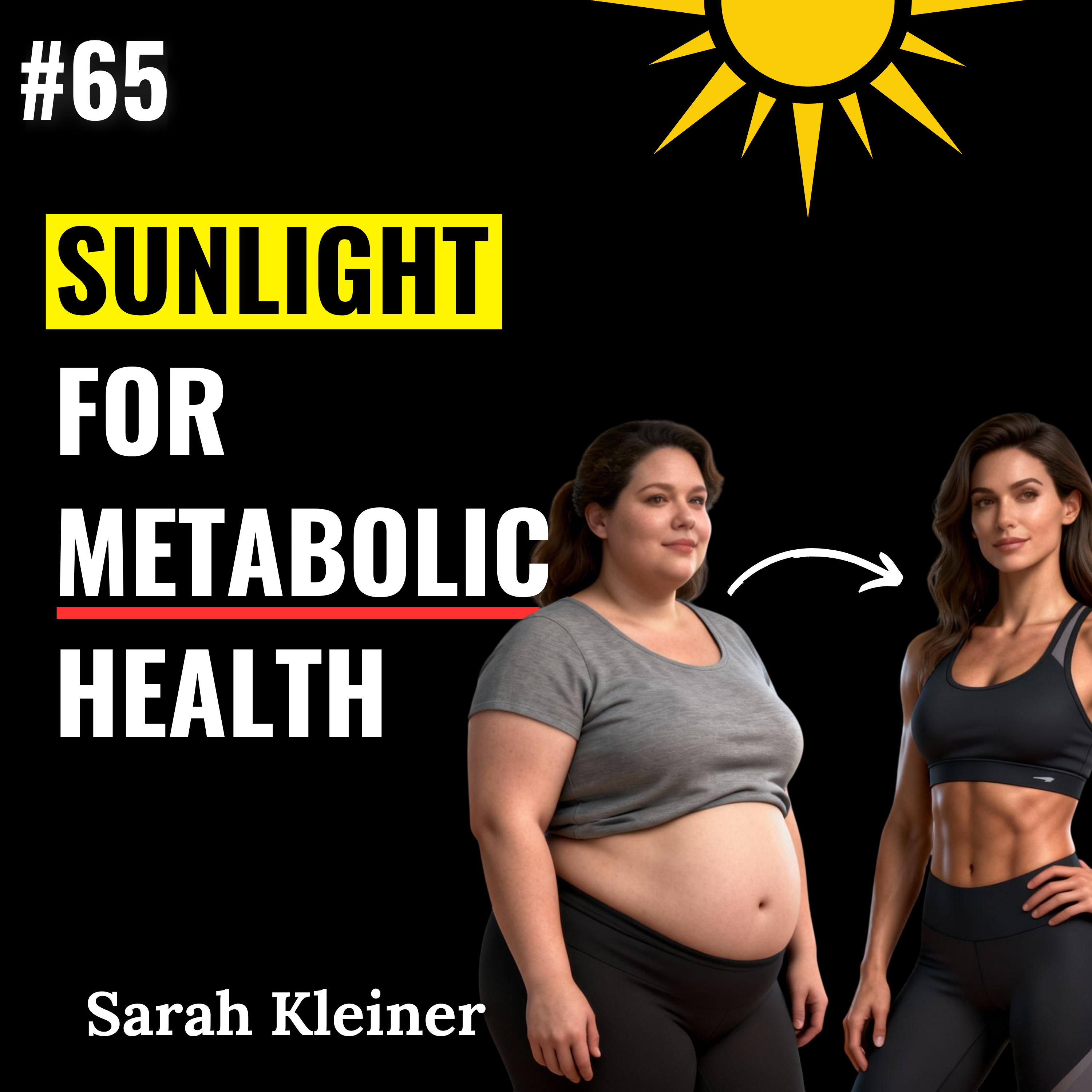
Weight Loss & Metabolic Health Unlocked: Circadian Rhythm, Quantum Biology, Hormones & Longevity with Sarah Kleiner
What's This About?
Unlock weight loss, metabolic health, and longevity with Sarah Kleiner as she reveals how circadian rhythm, quantum biology, hormones, and meal timing transform your metabolism. Learn science-backed strategies to burn fat, balance hormones, and optimize energy.
Dive deeper into the science of circadian rhythm, quantum biology, and hormonal balance. Discover how your body’s natural rhythms, stress levels, hydration, and meal timing affect energy, metabolism, fat burning, and overall well-being.
Learn why leptin, melatonin, and muscle mass are essential for metabolic flexibility, how seasonal eating supports natural energy cycles, and why syncing your lifestyle with your circadian rhythms can unlock your body’s full potential.
This episode is perfect for anyone interested in holistic wellness, women’s health, fat loss, insulin regulation, or longevity.
---
🌿 Key Takeaways:
- How circadian rhythm and quantum biology optimize metabolism and hormonal balance
- Why cellular energy loss can lead to weight gain
- The role of stress, hydration, and cortisol in metabolic health
- Muscle-building strategies for women’s health and longevity
- Seasonal eating for natural energy rhythms
- Meal timing techniques to boost fat burning and insulin sensitivity
- How melatonin regulation helps prevent insulin resistance
🔔 Follow for more episodes on weight loss, metabolic health, circadian biology, hormones, fat burning, and longevity.
---
📥 Join my Newsletter for FREE Educational & Empowering 🧠 content straight to your inbox: FIND IT HERE
---
⬇️ Find & Connect with Sarah Kleiner:
📲 Instagram: https://www.instagram.com/sarahkleinerwellness
▶️ YouTube: http://www.youtube.com/@SarahKleinerWellness
🌐 Website: https://www.sarahkleinerwellness.com
⬇️ Find & Connect with me Here:
https://www.bio.link/move_with_andreas
👉🏽 For Discounts, Offers and Freebies: HERE
---
⏱️ Chapters:
00:00 Sarah’s Journey into Circadian & Quantum Biology
02:14 Fertility and Weight Management
05:03 Understanding Energy Loss and Weight Gain
07:59 Leptin’s Role in Hormones & Metabolism
10:46 Circadian Rhythms for Hormonal Balance
13:21 Stress, Hydration & Metabolic Health
16:22 Muscle Mass for Women’s Health
19:20 Hydration & Cortisol Regulation
22:13 The Importance of Thyroid Health
25:00 Benefits of Seasonal Eating
28:43 Food as Body Communication
31:25 Carbohydrates in Context
36:16 Protein Intake Myths
44:45 Power of Meal Timing
53:14 Melatonin & Insulin Resistance
---
➡️ For my favourite Daytime Blue Light Blocking Glasses, use promo code: TINAMAARIA for Discount ✅ HERE
Targetted Fat Loss - Lipo Wrap 🔥 Use promo code: MOBILITYFITNESS for Discount ✅ HERE
👉🏽 Find Best Red Light Therapy panels, Evening Blue Light Blockers & Circadian friendly bulbs 🚨Use promo code: MOBILITYFITNESS ✅ for 20-40% OFF your order HERE
Best Barefoot Grounding Sandals ⚡Use promo code: MOBILITYFITNESS for Discount ✅ HERE
👇🏽 Find the SHILAJIT I use & recommend HERE ⚡
Use promo code: MOBILITYFITNESS for Discount on your entire order ✅
👇🏽 Here is the Methylene Blue I use 🌀🧠HERE
Use promo code: MOBILITYFITNESS to get 15% Discount on all products ✅🧠
⬇️ Fat Loss Diet Protocol 🔥 for Rapid & Sustainable FAT LOSS!! 👉🏽 FIND IT HERE
🔽 Circadian Reset Protocol ☀️ Your Step-by-Step guide for improved Energy, Metabolism, Hormonal balance, Sleep quality and overall Vitality! Find it HERE
---
*None of the content / statements in this Podcast are Medical or Personal Advice & is not intended to cure, treat, prevent or diagnose any medical condition. All my videos are for Educational & Research purposes only. If you decide to try anything discussed in this video, you agree to do so at your own risk & responsibility*
This is the fitness wisdom. Podcast Hello and welcome back to another exciting episode of the Fitness Wisdom Podcast. Today we have a returning guest, Sarah Kleiner, also known as Sarah Kleiner Wellness on most platforms. And she was on episode 11 of the Fitness Wisdom Podcast where we talked about leptin and we really went on a deep dive on that topic. So that was absolutely awesome. So definitely go and listen to that one after you listen to this episode episode. So welcome back to the show, Sarah.
It's a pleasure to have you back. Thank you for having me, it's always fun to chat with you. Oh, it's always so great. And I love to pick your brain because you're so knowledgeable on all areas of circadian and quantum biology. And you really specialize in the area of weight management and leptin and, you know, stress management in general. And you've helped thousands of people around the world, especially women, you know, optimize their hormones and lose a ton of weight. So maybe why don't you tell people who don't know about you how you go into the world world of circadian and quantum biology?
Well, I've been in the natural health world for probably 17 years, but I got into the circadian biology, leptin, quantum biology, really more so in 2020-2021 when I was trying to get pregnant and I was not able to get pregnant naturally. And I even had tried IVF twice and it failed. We never got any viable embryos. And I was just like, flabbergasted because, like I said, I had been in the natural health world for 17 years, and I thought I was really doing everything right, that I had learned no toxins, you know, clean food, organic foods like protein, you know, all the things.
I thought I was doing it right. And it was stumbling into the world of circadian biology, leptin, and quantum biology that I realized I was missing some very fundamental key things that impacted weight, that impacted hormones, and that impacted fertility. And when I implemented these things, I was able to get pregnant without IVF with my son and give birth at age 43. And so I really had to dive deep and learn these things for first for myself, but then I began implementing them with clients about the same time in 2021.
And I was seeing that the women that were stuck previously with weight, with hormones, they had made progress doing a lot of the natural things and a lot of the dietary recommendations, but they would only get to a certain point. And when they added in circadian biology and biology and these other principles, they were starting to have rapid results as well. And so I've been implementing these things again with myself and with clients since 2021. I've gone on to get multiple certifications with Quantum Biology Collective, a board certification with the American Naturopathic Medical Board, and just can do a lot of research on my own and gathering data, putting it together, that sort of thing.
And it's been life changing, absolutely life changing. So that's really how I got into it was just for myself, a desire to get pregnant in my 40s and understand better hormones and weight management and it worked. So that's that's really how I got into it. Thank you for sharing your story and that's very inspiring for people to hear that, you know, you can transform your health really at any age and turn your whole life around if you want to. And there is a will, you know, because, because it seems that always when we hit sort of like a personal struggle, that that is when we go down the rabbit hole to research ourselves because we've tried all the things and nothing works.
And then we try to figure out why is it not working. And then we when we find the solution, we feel so entitled to get on the rooftop and scream from the rooftops about the answer, you know, like, because it just seems like, you know, the whole world needs to know about it. And you've done exactly just that and you've helped so many people along the way. And that's absolutely awesome. So one of the things that you said there, which, which was very important was how the fertility and the weight management go hand in hand.
It just seems that they are intertwined, right? And so this is what we're going to be talking a lot about today. We're going to be talking about fat loss, the root cause of, of weight gain in the 1st place. I know that you make some really nice posts on Instagram. You talk about the about the reason of gaining body fat is a loss of energy. So do you want to explain that for the audience? Yeah, I mean, there's so many things that impact weight gain. Obviously if you eat more than your body is capable of expending, you're going to gain weight.
But that's it's, you know, it's not as simple as calories and calories out like a lot of the people say. That's like 1990s advice. Eat less, move more, right? It's true. You have to eat less then your body is, you have to, it's just you can't get around it. But the thing with circadian biology and quantum biology is that light literally programs your metabolism. Light literally programs your mitochondria. Things like grounding darkness at night, making enough melatonin at night, and we also make melatonin during the day with the proper signals.
We need those things in order for our bodies energy battery to essentially work properly. And so a lot, a lot of people are living lifestyles that are out of sync with these very basic things like sunlight in the morning, darkness at night, getting enough sunlight on the skin during the day to make sub cellular melatonin through infrared light, getting enough far infrared light to expand exclusion zone water again, really boosting that body's energy battery. And so there are things yes, you have to eat less than than your body is you know, burning at that point to lose the weight.
But there are things you can do to support metabolic rate, to support your body's energy management system. And that's where the modern eat less, move more dieting advice falls short is that they're not supporting the body from this holistic place of circadian biology and quantum biology. Because you can quite literally look at metabolic rate studies and people that are not getting enough brightness in the morning, enough sunlight in the morning for every hour they delay that time outdoors, BMI goes up by one point.
There is some research to show that. And so very simple, free, you know, you don't have to buy anything to do that. And yes, basic. Guys, if you haven't already, smash that subscribe button and the like button. Now back to the show. Yeah. So that's actually what I wanted to understand from you because. You also say that basically weight gain is a loss of cellular energy and you just mentioned all of these things, all of these practices, they allow us to gain energy. And so you're basically what you're saying is that when the Organism is gaining energy and it has enough energy to function properly, it's able to process that food that we are taking in.
So from my understanding, what you're saying is that modern life or from artificial blue light to non-native VMF, therefore causing mitochondrial dysfunction lowers metabolic rate because now the cells cannot process the energy you're taking in. So let's say we assume that person has burns 2000 calories, you know the basic metabolic rate and now they encounter mitochondrial dysfunction and their diet is also at 2000 calories. Now. Before they were maintaining their weight at 2000 calories per day.
Now that they have mitochondrial dysfunction, because now their metabolic rate is let's say 1500, because that means they're, they're basically eating 1500 calories more than their body is burning, even though the body, you know, kind of process it. So basically this is the reason why we gain weight extremely rapidly when we start to experience more and more cellular and mitochondrial dysfunction. It's not the fact that we're necessarily eating more, it's the fact that our metabolic rate is tanking and our hormones are tanking, which are, you know, supporting our metabolic rate and therefore we're gaining body fat.
Yeah, it's definitely a huge contributing factor that's overlooked. I mean, there's a lot of things that can impact metabolic rate, but this is definitely something that's very overlooked and very ignored. I ignored it. I thought it was stupid, but then I couldn't get pregnant and I really wanted to have a baby. And so I was like, fine, I will go outside in the morning, fine. I'll wear these stupid glasses, fine, I want to have a baby and if this will do it, I'll do it. And the side effect of doing that, yes, it allowed me to get pregnant and stay pregnant obviously as my sons about to turn 3 this Sunday.
But I lost 30 lbs in that process before I got pregnant, and I had been stuck with my weight probably a decade plus. I just couldn't get below a certain weight no matter what I did, and I was very frustrated. And now after my son is 3 and I'm 46, I'm actually leaner than I was even before I got pregnant because I've consistently by about 30 lbs. I've consistently practiced these things over the years and they absolutely work. Wow that's incredible. So then I can imagine that allows you to eat more food as well without you gaining body fat.
Yeah, I do. I do. You know, I'm still careful with what I eat, yes. I don't go crazy, but I definitely have more leeway than I did before for sure. Yeah, I think that's so important for people to actually hear and understand that, you know, that food freedom and the ability to have this food freedom starts with fixing the fundamentals. And I always tell people that circadian and quantum biology is the foundation of your health. Everything else is stacked on top of that. So if you can get that right, everything else is going to work 10 times better.
So you talked about this weight loss and how effortless it was. Do you put it down to the leptin hormone? Do you want to maybe explain to people who didn't listen to our previous episode, what's the role of leptin in the body and why is it so important for weight management but also for fertility? So leptin, and I know we talked about this in the last episode, it's a master circadian signaling hormone. It talks to your thyroid. It signals the glucose, insulin axis. There are multiple studies and papers that show the impact of leptin on fertility, endometriosis, hot flashes, and menopause.
I mean, it's correlated heavily with our reproductive system, leptin and PCOS. And so it is heavily, heavily correlated with our reproductive system. And when the body loses the ability to have communication with leptin in the brain, you get appetite dysregulation. So your body doesn't know how much stored energy it has on it when you become leptin resistant. And so really foundational and the way that I live my life is a way that leptin has the best chance possible to, you know, create a conversation with my brain so my brain knows we've got enough energy so that hormones, thyroid, everything stays as optimized as it can through through lifestyle, through light, through nutrition, getting enough protein, cutting off my eating window at a certain point every day.
That is hugely important to leptin because it's a circadian hormone. So leptin, cortisol, melatonin are all circadian and they all have a relationship with one another. When cortisol's going up in the morning, leptin is meant to be at its lowest. When melatonin is at its highest, that's when leptin is supposed to start peaking and be at its as well. So if cortisol and melatonin are not really optimized, you're going to have difficult issue with leptin. Appetite will be dysregulated, thyroid will down regulate because your body is like it's doing what it's supposed to do.
We have to understand the body is very intelligent and it's always looking for instructions. Mitochondria are biological sensors. They're always sensing the environment. Is it safe, What time is it? What day is it? You know, what time of year is it? So our bodies are always taking instructions from the environment and that's why this lifestyle is so important for weight management and for leptin. Because when you give your body the right instructions, you're going to give yourself a much better chance of having a regulated appetite, having these hormones orchestrate and fire and communicate at the proper times.
As a movement specialist and nutritionist, I honestly used to think that targeted fat loss was a scam until I discovered the Lipo Rap by New Shape. The Lipo Rap is a targeted red light therapy device which is specifically designed to target stubborn body fat areas. Research suggests red and infrared wavelengths promote like policies, which is the liberation of fat from the fat cells into your bloodstream. This in combination with exercise and nutrition can significantly reduce body fat from stubborn areas.
You guys know that I'm a huge fan of red light therapy, so fat loss isn't the only benefit we're getting from this targeted red light therapy device. So if you want to grab my favorite targeted red light therapy device by new shape, head over to the description below and make sure to use the promo code attached for a nice discount on your entire order. Yeah, that's so important for people to understand that, you know that how you live like your life entirely like from the morning to the to the evening time, honoring the cycles and honoring darkness after sunset.
And as you said, these eating times, respecting the eating times, all of these are circadian cues, right? And they are feeding into our circadian mechanism, which is like organizing when these hormones are produced and released. So This is why it's so important for us to be in tune with our body. And so it seems that leptin is the other piece of the puzzle. You have the appetite suppression from leptin. So when you get, you know, when you're telling your body when you've eaten enough or when it's, you know, gotten enough energy, because the, the energy banks in the body can tell how much energy there is available in the 1st place because that's when leptin is working properly.
Whereas when it's dysregulated, it thinks that the banks are totally flat, they're totally empty and we don't have body fat. And so then it goes, OK, let's keep on eating. Let's gain that body fat, you know, keep me hungry. And so This is why it's important for people to optimize this hormone. But then again, on the other, on the other hand, is the metabolic rate. We want to make that, as you know, raging as possible through our lifestyle practices like we mentioned through the Light. What other lifestyle factors do you believe are contributing to our basic metabolic rate stress?
Is a huge 1 you know that's I've been to water I know you spoke with Carrie, but the coherence of the water in the body and then just cortisol in general can if your cortisol is dysregulated got too much cortisol, that can slow down thyroid conversion. The T4T3 conversion slows down and it can lower thyroid rate, which can also lower metabolic rate because again the body is intelligent it thinks that you're in a time of danger that there's something wrong. And so it needs to like really slow things down because we're going to run out of energy, we're going to run out and we have to slow down.
And so that's an issue that I think a lot of people run into is that they're running on these stress hormones all the time because our modern life really primes us to be in a sympathetic dominant state. And then we make it worse with excessive coffee drinking, not not eating breakfast, not having regulated blood sugar period. If you've got blood sugar levels that are just going all over the place all day, that's going to lower thyroid convert. Well, it's going to create thyroid issues. And so there's a lot of things in our modern life, toxins even creating, you know, these toxic beauty products that will also impact thyroid, liver, lots of blue light in your environment, lots of non-native EMF in your environment.
Again, those things will also really contribute to lowered metabolic rates. Wow. And what's your view on muscle for women? Do you think women should aim to increase their muscle mass in order to increase their metabolic rate? I think for health and longevity, muscle is very important for women. And you know, you obviously don't want to overdo it, but I think strength training is something that all women should really be doing as we get older because it will help protect your body. There's so much research that even shows, you know, if you were to get cancer or something like that, that you have a 20% better chance of surviving that if you have adequate muscle mass.
And it does help with your metabolic rate as well. So I know some people in the quantum world say don't build a lot of muscle because it'll pull, you know, it'll mess with mitochondria. I disagree with that. I think that muscle is important. Obviously with everything. You don't want to overdo it and be in the gym 2 hours a day. It's to have enough. You need that, especially as you get older, you do need it. Yeah, I agree with you as well because I hear it as well in the quantum biology space, circadian space, that you know, people say that if you have too much muscle, they can steal essential energy away from your vital organs, your brain or your heart or whatever.
I can totally see the scenario that that can happen when you're in an energy depleting environment. Muscle can work against you because obviously muscle is an energy hungry organ, right? And so if you're in an environment where there's a lot of blue light or non-native VMFS, your, your cells are requiring more energy because they're under stress. And so then, you know, if the muscle is using a lot of the energy now, those vital organs are having to work so much harder. This is why I feel like a lot of bodybuilders are more prone to, you know, sudden deaths and stuff like that.
Of course, all the steroids that they take in and all that other stuff. Yeah, exactly. All the other environmental factors and, you know, all the supplements that they take. So there's not many, many things. But if you think about the environment where they're in all the time and if if they are spending many hours stressing their body in a stressful environment, that's like a double whammy, which is making you more prone to heart issues and mitochondrial dysfunction in general. And that's, you know, pulling the energy away.
So I feel like I'm a big advocate for people training outdoors. You can still build a really good amount of muscle outside, you know, because you can be grounded, you can be getting the red and infrared light, you can be getting the UV light and you've been can be generating that piezoelectricity as well by doing more functional exercises, which are amazing. So I'm a huge, you know, fan and advocate of, of muscle as well for the metabolic rate, helping people to lose the body fat. But I just feel like what you mentioned about the hormones and optimizing the light environment, that's so important because that ties into the, the whole puzzle in increasing our metabolic rate in general and also managing our hunger and you know, our satiety levels.
You talked a little bit about the hydration aspect. I know you made a really great post about why it's important to drink water in the morning. Do you want to go down that rabbit hole? I mean, water is essential for and hydration is essential because our body is 99% water by molecular volume. And you know, looking into Doctor Gerald Pollack's work and how exclusion zone water inside the body is crucial for mitochondrial function. It's crucial for energy. It's like our bodies energy battery that's drinking high quality water is so important, but also managing the environment that you're in as well as equally important because yes, I'm very keen on waking up drinking minerals in the morning first thing.
That's my routine. Always wake up, have my minerals, then have my Sheila Jit, then have a big glass of hydrogen water while I'm outside with my dog grounding, getting morning light. That's just that happens everyday, rain or shine. But we also have to look at how much infrared we have in our daily environment. You know, right now I'm sitting in front of my computer, but I have Iris software on. I have my window open. I do have a blue light that's like shining in front of me to kind of light up my face.
So I will go outside and I will ground. I will, you know, I'm doing the best that I can to mitigate my environment because I know I have to drive a car. My car has a lot of 90 of EMF. It's a 2022 car. It's a newer car. All modern cars, yeah. They're all and even the old cars too are not full of non-native EMF because of the motors and there's there's a whole issue with older cars too. So you're not safe just because you have an older car. You're safer, don't get me wrong, yes better off than being surrounded by Bluetooth, but there's still non-native EMF because you're in a metal cage with spinning motors and it's attracting non-native EMF.
So there's issue regardless. But I always roll down the window because nature has an antidote to these things, which is far infrared light and near infrared light as well, where you make subcellular melatonin to kind of clean up these things in the mitochondria. But that far infrared light above 3000 nanometers, it helps to expand that exclusion zone water. So it basically creates A Faraday cage for your body. So what's missing in our indoor environments? What's missing inside of our cars with the windows rolled up, It's that near and far infrared that we can get naturally from sunlight.
So nature does have an antidote, but because non-native EMF it dehydrates us on a cellular level. That's Doctor Pollock shows that it pulls that exclusion zone water down 15 to 20%. And so yeah, it the modern environment does drain this water and that also can slow metabolic rate down. And it can also create an issue where mitochondria don't work as well, again creating metabolic issue. So we have to make sure, we have to be intentional to make sure that we're getting outside, that we've got sources of infrared indoors, that we're mitigating blue light to the best of our ability.
Imagine spiking your blood sugar without eating cake. Elevating course is all your stress hormone without being stressed and suppressing your body's most powerful sleep. Antioxidant and regeneration hormone, which is your melatonin. This is why I make sure to wear my yellow daytime blue light blocking glasses every time where I spend time indoors under artificial lights and in front of screens to protect my eyes from oxidative stress and my entire body. And if I'm going to be exposed to artificial blue light, especially after sunset, I'm going to wear my red lens blue light blocking glasses to support my melatonin production and release.
So if you want to protect your energy levels, sleep and biology from artificial blue light, head over to the description and you will find all of the links with a massive discount on my favorite blue light blocking glasses. And so is that dehydration then like what leads to the cortisol elevation for people who drink water compared to? People who don't hydrate in the morning, is it like that stress that the mitochondrial are experiencing? Oh yeah, there's I think I just posted a study a few weeks.
I I post like so much I lose. Trade. But I, I'm like, wait, what was that? I, I posted a study about a month ago, I believe that showed that people, they tested saliva cortisol levels of people under psychological stress and the people that were hydrated, and this is not even with any sort of special hydrogen water, any kind of thing that I do, right? Just hydrated. The people that were hydrated had a 55% lower rise in cortisol when exposed to psychological stress. The people that were dehydrated and exposed to the same psychological stress saw a 55% higher rise in cortisol.
And so hydration absolutely impacts our baseline for cortisol now. And like I said, cortisol is one of the things that will tell your thyroid, hey, we got to slow down, we're in trouble. So just being adequately hydrated is a metabolic hack and it's itself when you look at it from that lens. Since we're on the thyroid topic, let's go a little bit deeper into that. Maybe tell the audience and myself like why is the thyroid so important for our overall health and well-being, but especially for weight loss?
Well, it's crucial for mitochondria. I mean, it's crucial. It's basically your body's thermostat, right, Of like how much energy it can actually make. It's telling the body like, let's make this amount of energy, we're safe, we're good. Like I've mentioned several times, sometimes it's it's like a thermostat for the body. And so when you're under chronic stress, that thermostat, the body just adapts. It says we have to turn this down because we're in trouble. We need to conserve. And so thyroid Doctor Connolly is a really amazing cancer doctor.
I don't know if you follow her. I think he's recently. Done some. She's done some really great posts recently about how low T3 actually is a contributor to cancer and cancer is a metabolic disease. I think we, it's pretty clear that we see that cancerism is a, you know, a breakdown of the metabolism in many ways and a breakdown of exclusion zone, what a breakdown of coherence in the body. And so she's actually shown that low T3, low thyroid levels can impact our basically how easy it would be for us to get cancer.
So I think it's important that we really tend to thyroid and looking at that and look deeply at that, not just a TSH, because that's not even really showing you what's going on. That's like pituitary signaling. That's not actually what's going on with conversion of the active thyroid hormone. So it it does so many things in the body, but it does speak to mitochondria as well. And so the connection with leptin is that do you think that leptin is controlling the thyroid or the other way around or they have this bi directional communication?
I think it's really bi directional, but leptin does signal thyroid. You know, if leptin's not docking to the brain at night when it's supposed to, then it can't. The, the thyroid is just like, I don't know what's going on and thyroid runs on its thyroid hormone runs on a circadian rhythm as well. So it's supposed to do certain things at certain times of the day in that conversion process. So if you don't have your light right, if you don't have adequate sunlight in the morning and you don't have darkness at night, that also impacts thyroid conversion as well.
Really good to know and for everyone listening, definitely go and listen to episode 11. This will make so much more sense. Like everything that we're talking about South. On to the next topic then, which is more related to food, Our carrots trying to kill us. Haha, no, absolutely not.
No, I don't think so. I don't think carrot. I don't think carrots are that powerful, to be honest with you. Carrots are not a good source of vitamin A. If you want vitamin A, you're going to want to go for your beef liver, your egg yolks, your raw butter. So don't look at carrots to be your source of vitamin A, but they can be very powerful to help move estrogen out of the body. They are a good source of fiber. And I think I think they're a thing that you should have in your diet when they're seasonal, when it's that time of year, I think that they can be really helpful.
And I don't think that there any plants are trying to kill us. Honestly, if you're worried about it and cook them, that's going to take care of a lot of things and eat seasonally, eat seasonally and cook it because we wouldn't eat spinach year round. We're not supposed to eat spinach year round. We're not supposed to eat kale year round. We're not supposed to eat broccoli year round and all these other vegetables. We we would never have done that. So I think a lot of the anti nutrients plants are trying to kill us.
Stuff is based on eating this way too much, way too often, not cooking it. And then if you do have a thyroid condition, I will tell you if you're going to eat leafy grains and goitrogens, then cook them down or just avoid them. You know, eat, eat something else. There's plenty of other foods to eat. So there, you know, there's nuance with all of these topics of plates trying to kill us. There's always nuance. And there may be reasons to avoid different plant foods at different times based on what you currently have going on in your body.
So you touched on seasonal eating there. So let's go down that rabbit hole then, like why is it important to eat seasonally? What's going on within the body if we eat out of season? Like, so I just want to understand on a fundamental level, why do we actually want to eat things which are local and seasonal to us? Yeah. And The thing is like, I don't, I don't think you have to be perfect with this if you have your light environment down and hydration and stress management, because it's really hard for people to go eat everything from the garden and eat seasonally 100% of the time.
That's going to be a gold standard ideal. But the reason why is that light grows our food and food contains light code. So UV index here where I live gets to 11, you know, sometimes 12 in the summer. So there's certain foods that are going to be grown underneath that light that are only going to be available during that time of year. And that's when I eat them, you know, like watermelon Peaches. Those are the foods that I'm going to enjoy them when they're in season. I'll always pair with protein and fat.
I don't usually just eat those by themselves, and I'll try to eat as many meals as I can outdoors as well. But really, food is going to contain light coat. Food also contains deuterium. The the higher the sugar content and the food, the higher the deuterium content. But UV light helps our body to deplete deuterium. So we're meant to deplete more deuterium in the summer when we're sweating. When we're outdoors, we're getting more UV light, more red and infrared. Our bodies can handle it better as long as we're living in that natural environment.
If you're indoors, behind glass, surrounded by blue light and not need to BMF all day, you probably shouldn't be eating tons of fruit. I'll just say it, you know? But again, if we're living in tune, then that's it's a communication. Food is communication with the body. It's a signal with the body. Do you think then like eating not necessarily out of season, but eating seasonal diet in an indoor lifestyle? So basically still out of season for the body, right? The body still doesn't perceive the season because we're not experiencing the season with our body, we're just experiencing the food.
Do you think that that can contribute to mitochondrial dysfunction and therefore lead to weight gain as a result? You know, I think that if people are living an indoor lifestyle trapped behind glass, but they're eating protein and they're eating locally and seasonally, they're going to be far ahead of the curve than the average person that's eating processed, boxed, crappy foods. So I don't want to act like eating local seasonal foods, even if you're behind glass all day is going to be a bad thing necessarily.
But your body is not going to be able to utilize those carbohydrates as efficiently. It's not going to be able to deplete the deuterium efficiently because you're just not, you're not outdoors. You're not getting the benefits of the red and the infrared to help to stabilize your blood sugar. You're getting all this blue light that's going to raise the blood sugar, raise insulin. And so, you know, that's a tough question to say yes or no. I always think anybody is going to be better off eating local and seasonal, regardless of indoors or outdoors over, say, the standard American diet here, which is pizzas and processed foods and crappy boxed foods and sodas.
You'll do better. You will. But are you going to be optimized gold standard? No, I hope that makes. Sense if you eat. No, it totally makes sense if you eat Whole Foods in general. Of course, that's going to put you like way ahead, like then everyone else who is just eating conventional foods out of a pocket, like exactly as you just said. So anything that nature provides, especially it's local and organic is going to do of course, wonders for your health compared to something that's, you know, But of course, now we're talking about minor, minor details, right?
Which, which can have like an impact for people who are already doing all of the things and maybe they are stuck in some way with their weight or you know, or something they're experiencing some issues like this. So maybe let's talk a little bit about carbs because I know that so many people are are having conflicting opinion about carbs. There are some people who say that carbs are evil and then you've got like their AP community or to say that carbs are everything and you know, they use it for stress management.
What's your opinion on carbs? Where do you? What's your stance? I think that all the conversations on carbs are missing light. I think that's fundamental. They're missing light and they're missing leptin. They're missing seasonality and they're missing the element of timing. There are times of year where our body should go into ketosis. We should not always be burning glucose for fuel all the time. We should not. I agree. We need to go in and out of ketosis for cellular cleanup, for autophagy, for apoptosis, especially in the modern environment where we're all exposed to non-native EMF and blue light.
So I'm not here to just say all sugar or all fat. I'm more of a middle ground, nuanced type of a person. And there are clients that come to me and it's the middle of the summer and I say you're we're, we got to get you in ketosis now. Like we can't mess around. I'm pulling all the carbs out. We're going there now. I don't care if it's June like we have to because you're in a metabolic crisis right now. That's very rare. Most people, I'm going to go with a more moderate approach where they have, let's say, a lower carb.
When people come from a standard American diet to what I recommend, they're going to still say that's pretty low carb, right? Even though the carnivores have labeled me as repeat at this point because that's what they do to everybody who starts eating carb. Oh, you're repeat. No, I am not. I see the value in some of the things that repeat says. So it's all it's all about the person sitting across from you, what's going on with them. And most people are in a state where they just need to quit eating the processed foods and the junky crappy foods and go outside.
They need to do the very basic fundamental things, and they don't need to run all the way to the other side of cutting out the carbohydrates and going straight into ketosis. But there are people that do do that. So it's, again, it's a conversation that you have with the person sitting across from you. You know, how messed up are they? What's going on? Do we need to just pull out as many, you know, signals as possible at this point to get their body out of out of out of that inflamed state? Yeah.
Then carnivore might be appropriate for that person, but that's not most people. Most people can really get rid of the inflammation and start feeling better if they start adopting these light habits and circadian principles and pull out all the processed foods, you know, and start eating just this local seasonal what's available to you and getting enough protein that's going to take people away. And then if down the road they need to do ketosis and they need to do carnivore, we can, we can pull, it's a lever that we can pull at a later time.
But it's, you know, it's not a black and white answer as people want to believe that it is. Yeah, it's funny that how people are so resistant at utilizing all of these different diets as tools, but rather get so dogmatic about, you know, one thing or another thing and they have to be in these certain camps or groups to feel like they belong, which I understand. You know, social media makes you feel like you're part of something, which is it can be an illusion at the same time, right? But as well, it can become sort of like a cult like mentality where you are hating on another group of people.
When in reality I'm like this kind of person who zooms out and I'm just looking at all the different diets. And I think where, where does a vegan diet like help someone? Where does a carnivore diet help someone? You know, where does like a fruitarian diet help someone? You know, where there was this period, you know, with the sugar fasting with Mark Bell and all this kind of stuff. I kind of feel like there is so much value in all of these diets. There is always a little bit of value that can be found, you know, you can extract from each one.
And I feel like a learning curve, a learning process. And you can utilize it as a coach or as a person who is trying different things and then see what actually works for you. Because if you just of course, there are more optimal ways to do things. But I think it's quite nice to have an open mind and a will to experiment with yourself and just to see like how you feel. Because you might just surprise yourself if you always eat meat and then all of a sudden you eat some carbs, you might notice that you feel way less stressed and you feel, you know, more relaxed and maybe you sleep better, maybe you or libido goes up, you know, and all this kind of stuff.
Because that was my experience on a carnivore diet. I just felt like my energy was just all the time going down, even though I was eating so many more calories that I'm currently eating right now and my body was all the time stressed. So maybe you can, that would lead us into the next question which I want to ask you, which is about eating too much protein. Why is eating too much protein an issue for our health and also like our fat loss results? Yeah, there's a lot of people that say you can't overdo the protein.
There's no upper limit for protein, and maybe they haven't scientifically found that. I used to be there. Yeah, I did too, until it backfired on me and I just didn't feel good and I couldn't get my blood sugar regulated. I couldn't get my insulin regulated. And I'm getting, because of this protein craze, I've been getting a lot of clients with insulin rates that are problematic in my eyes. You know, they're, it's still kind of falls under that normal range, but I think it's too high. I like to see insulin, you know, below, below a six, really a fasting insulin.
I like it to be below a six. I don't want it to be too low, you know, but 6 is a four to six, you know, that's a good range to be in. And when someone's eating a lot of protein and they're not balancing it with fat and carbs, it can push your body into a stressed out state and it can raise insulin, it can raise blood sugar over time because the body needs an energy source. Protein is not, it's a signal for leptin. It's very important. It's a building block has got amino acids. Our bodies, our brains absolutely have to have protein.
So it's an essential macronutrient, but it's not a fuel source. Fuel source is either a carb, carbs or fat. So your body wants to be an either ketosis or burning sugar. It it's a gluconeogenesis is what happens when you're just eating all this protein and you don't have enough of either the fat and you don't have enough of the carbs. You're trying to just push all the protein. Your body goes into gluconeogenesis, which is an expensive metabolic state. This is a state that essentially sends your cortisol levels into a higher place over time.
And again, this can impact thyroid conversion. It's an expensive metabolic process. It's an emergency process. Because I'll get carnivores. I'm going to, I'm actually going to do a reel on that on this, this morning when we get off here, if I have time before my next interview. Because I've more and more lately I've been getting carnivores that come to my page since I've been speaking out about the need for seasonal carbohydrates and say, well, don't you know? You don't need carbs because your body makes its own sugar.
Your body makes its own sugar with gluconeogenesis. I know that's. True, but you don't want to be in a gluconeogenesis state as a default. You don't want that. That's a survival state. It puts a lot of stress on your liver. Yeah, you don't want to be there all the time. So honestly, people can eat whatever they want. I don't care. I don't care if you want to just eat protein, have at it, have fun. If you want to be carnivore because that's what you want to identify as as a human being, as a person, I think you need to go deeper and find some more purpose in your life personally.
But fine, go for it. I don't care. I'm just here to tell you that the clients I've worked with and the experience I've had myself right and looking at lab work of people who get high SHBG, low testosterone, low progesterone, low T3, there are, there is a cost, there is a metabolic cost from constantly running this gluconeogenic process all the time. If I want to regulate my nervous system, reduce anxiety and depression, and get an instant feeling of calm, my go to is grounding. And This is why I make sure to get my bare feet on the ground every single day as much as I can.
You see, the body needs energy in order to function properly and grounding is a massive source of energy for our body. Now if I'm not grounding barefoot in the sea or on grass, I make sure to wear my earth runners, which are my favorite barefoot and grounding sandals. As you can see, they come with a white toe box to allow your feet to work as they should. And underneath there is a copper plug and the silver stitching through the lace to make sure that you are grounded at all times. So if you're serious about your health and nervous system, you definitely need to check them out.
You'll find the link in the description below and make sure to use the promo code attached to get a nice discount on my favorite barefoot grounding sandals 100%. I mean, I started gaining weight towards the end of my carnivore journey. I believe that was because of my thyroid. Probably like tanking or something. And also I started to lose hair as well. I started to notice many, many symptoms which are associated with just low energy in the body. Just like you talk about when the body has just low and low cellular energy, then everything, all the pillars begin to fall down.
So as soon as I introduced carbs back in my diet, I did notice that I was more insulin resistant when I ate them because I didn't feel so good at the beginning. And then that validated to me see, like plants are trying to kill me. And this is the problem when carnivores come off the carnivore diet and they even introduced even just one fruit. The problem is like your body can't even tolerate fruits. You have to start super simple, like something with white white rice or something like this, very, very low fiber, easy to digest, like very small amounts.
And you know, just kind of introduce it slowly. That's the thing which which I wish I knew when I was, you know, reintroducing them back for, for almost a whole summer, I was, I felt like I wasn't insulin sensitive, even though I was spending time outside. I was grounding. I was trying to sleep, you know, as much as I could doing all the things. But my body had got into this gluconogenic state and the body would just wouldn't stop producing its own blood sugar because it just got stuck in that state, you know, until my cells realized, oh, there's carbs coming in from the environment.
Now I can shut down my own production. I don't need to keep on pumping my own blood sugar anymore. You know, and this is something that people don't realize that insulin resistance is a, is the foundation of metabolic health really. And, and our ability to utilize and suck in the glucose from the bloodstream and pull it into the cells is so, so important to, well, for reducing inflammation. We don't want, you know, high circulating blood glucose for long periods of time, number one. And then secondly as well, like, you know, put it in the right places for the body to use it.
Otherwise, if it's just in the bloodstream, then your cells are screaming for energy. So therefore it's asking you to eat, but then your blood sugar is still high. So it's kind of like it creates this like wrong, wrong cycle in the brain, you know? Yeah, yeah. I think that just the information out there is so dogmatic and it's just, it's doing a big disservice to people because the average client that I get, the average student that I get that's in my membership group that's doing my leptin course is perimenopausal menopausal woman who's done low carb, who's very afraid of carbohydrates because they've been watching all these videos about how you don't need carbs because your body makes its own carbs.
And you know, carbs are going to carbs are just sugar. Your body is just going to turn into sugar, which is going to turn into visceral fat and you don't need it. And so they're not sleeping less. One big problem, they're not sleeping their hormones are, you know, because you're in perimenopause, menopause, you're already going through natural shifts, natural shifts. And so they're struggling even more and they're scared to eat an apple because they've been told it's just going to turn into visceral fat.
So I really have to coach these people. And it is a slow process to add these back in because, again, people will hear what I say. And they say Sarah doesn't go eat 300 grams of carbs a day. No, no, if you've been keto, carnivore, if you haven't had carbs in a long time, you don't want to do that. You're going to feel terrible. Your body is going to freak out. I have people start very slow carbs in the middle of the day baked apples put a little cinnamon on it right and that is going to be very easy for your body to digest.
Eat it outside grounded go for a walk afterwards and we got a there's a process to ease back in. Some people need to add digestive enzymes because their body is doesn't create the enzymes anymore in the digestive system to digest carbohydrates that they've down regulated. And so it's not a matter of just waking up one day and deciding you're going to start eating all this carbohydrate because your body is not going to do very well with that. You have to be methodical about it. And it's a, it's a holistic process, you know, Yes.
So it's, again, it's a conversation. People love to take things out of context. They love sound bites, they love to be polarizing. And I'm just not. I'm not that I try not to be anyway. Well, that's why we're having these discussions. And I love to have these kind of discussions with people to bring the nuanced perspective. It's so important, you know, that we are spreading the truth, I feel. And then this is going to resonate with a lot of people. And this is how the word gets out there about the truth.
You know, there is there are those on the opposite sides of the camp and then there are those in the middle who are trying to like just zoom out and just look at everything. And I just feel like that's where you and me are right now now. And that's my mission really, is to just kind of demystify a lot of this noise that exists because everybody has a point. I feel like everyone has a point and everyone is writing something. It's just that we have to, again, like, pick and choose what's useful depending on the context.
Exactly. As you mentioned, you talked a lot about meal timing in this episode. Do you want to tell people why it's so important to eat breakfast and why it's also so important to not eat dinner too late as well? Yeah. There's so many things, things in our body. All these systems in our body run on a circadian rhythm. Digestive system runs on a circadian rhythm. Our enzymatic function and stomach acid production is stronger when the sun is up. It winds down, it slows down, and it actually comes to more of a halt after the sun goes down.
Cortisol, insulin, leptin also run on a circadian rhythm. You're more insulin sensitive earlier in the day and as the day winds down, we get closer to sunset. You're less insulin sensitive. So that means the same meal, eat earlier in the day, your body is going to #1 have more enzymatic function, more stomach acid, and you'll be more insulin sensitive than if you wait and eat that meal at 8:00 at night. Your digestive system doesn't work as well. You don't have the enzymes and stomach acid that you would have had earlier in the day.
And then metabolically, you're a different person at 8:00 PM than you are at, let's say, 11 AM. Metabolically, your body is working differently. And so to optimize your body's metabolic systems, your digestive system, all of that, you ideally want to eat when the sun is up. It's pretty simple. And I like to have the larger meal. It's the middle of the day when the sun's up high in the sky. Eat it outdoors if you can. And yeah, you just keep it really simple. But you want to have breakfast because to stabilize your blood sugar in the morning, to start this Lepen signaling in the morning, get all of that on board so that you're not running on stress hormones.
And then your body goes through this sort of crash because stress hormones go up too high because you've skipped the breakfast. Blood sugar is unstable. You don't have that signaling on board. And then you end up eating unintentionally, eating more later in the day, and not not having the best experience possible for your metabolism and digestive system. Yeah, I used to do intermittent fasting and I was always used to fast until 12:00 PM or, or 1:00 PM every day. And I just, I found it very beneficial at first because I felt like my, my system inside was sort of clogged because I wasn't doing any of the circadian stuff.
I was just watching my nutrition, right. And then I just felt like inside something needed to change. And when I started doing the fasting, it felt like it helped me a lot. The 1st for six months. After that, when I continued there and I kept on doing it for almost 2 years, I found that the other 1 1/2 years was not so beneficial. I was just doing it because that's what I got used to. I just got used to running on stress hormones and then I started to gain weight, eventually even eating the same calories.
So that was like a real wake up call to me that oh, oh, I think I'm doing something that's maybe not so optimal. And that's actually when I found a lot of your stuff and you started mentioning about eating breakfast. I started learning about leptin and the importance of leptin. So I had introduced it into my diet and I started to feel like so much more calm in the morning. And I didn't realize that I wasn't feeling calm before because I didn't have any contrast or perspective. So as soon as I introduced like a breakfast, I was like, wow, like, is this how I'm supposed to feel?
Like I'm supposed to feel like more calm and just clear and focused, but not like just wire than jittery. And you know, I always just drank a coffee on an empty stomach. So, you know, you're, I guess you're not a very big fan then of one meal a day, someone eating their meal at 8:00 PM at night. I do not like that. I don't like that at all. If someone wanted to do that for cellular cleanup, for autophagy, I wouldn't recommend doing it like every day. I mean maybe once a week or so. I think fasting is OK.
Again, this is where repeat people and I disagree. I think a little bit of cold therapy is good. I think a little bit of fasting is good. I end up skipping dinner, you know, maybe once a week. I had to that this summer. I skipped dinner way too much. And I did see my T3 levels went down a little bit. They're still in a normal range. I, I just did a bunch of blood work, but I got really lean this summer accidentally, just because I get very involved in my family and my kids and it gets to be like crazy just trying to get taking care of them.
They're both running everywhere, you know, keeping them out of danger. And I end up just not, I get to 8:00 at night. I'm like, oh, I didn't eat dinner. OK, I'll just not because it's 8:00. I'm not going to eat it that late. And yeah, I got really lean, but I ended up my T3 went down a little bit again, still in normal range, but I know exactly what did. It was too much of the dinner skipping. So I always tell people if you want to fat skip dinner, don't skip breakfast. And then just watch it because it is another stressor.
So yes, you know, just keep an eye on things. Crazy that it's that stressful as well the other way around from the evening to the morning time. You wouldn't think it would be like that stressful for the body because you're sleeping. But I guess because the body goes through this dip in energy, maybe, you know, in your blood glucose or something, maybe it, you know, heightens. Did you find that you were waking up earlier in the morning? No, I was still waking up the same time, but I would, I did wake up in the night, you know, I was waking up in the middle of the night and I would always be able to go back to sleep.
But I did notice I'm waking up in the middle of the night. And that's what I typically tell people. That's one of the first signs that either you've cut your carbs too low or you're doing too much fasting is if you're starting to have those wake ups in the night that are often that's cortisol, you know, trying to come online and save the day. And that's your, your liver trying to make its own sugar and say, all right, we gotta we, she's, she doesn't have enough fuel. So we've got to create some fuel for her.
And so you can do that even if you're eating carbs. But if you're not eating enough food and you're doing too much dinner, skipping, I think I was just in too much of A caloric deficit because I did, I did get a little too lean. I was like, oh, I'm a little too thin. Yeah, but it would, you know, wasn't even trying at that point. I was just really involved with my kids and my, I love what I do for work. And so I can easily just throw myself into those things and not eat the dinner. So now I'm just intentionally bringing it back in, making sure when the kids are eating, I'm eating too.
You know, I have to just get them in a place where they're sitting and I'm going to eat. I'm going to take 10 minutes or, you know, something to just eat. So it's it you have to be be intentional about this stuff because it's easy to go one way where you just eat whatever, whatever time and you don't care and you're just doing it. You can also go the other way where you're like, oh, I'm so in, you know, you can, you can swing the other ways. It's always about being mindful and listening to your body's feedback.
If you're having those middle of the night wake ups, if you're feeling like, oh, I startle a little more easily, if I feel myself getting work, I was getting worked up about things. Doctor. Doctor Pugh was here from gosh, she was here like 2 months this summer and she was on me. She's like you have to step back, you have to step back from work. I had travelled a couple of times to go speak at different conferences and she was just like you are going to crash if you don't stop. So she saw me just kind of getting more worked up because I was putting so much energy into my work and my kids and I, I there was when I did my labs at the end of the summer, it was plain on paper to, you know, that that thyroid was coming down.
Why? Because I was just stressing out too much, doing too much. So. Yeah, yeah, yeah, yeah. So it always comes back down to the stress management. Oh my God, This is something which I keep on hammering to all of my clients that I work with that that is something that if you don't fix that, no matter all the things you can do in the world, if you don't address your stress, there will always be like that thing in the background which will be disturbing some aspects of your health and hindering our progress, you know, and reaching our goals.
Like that is such a huge thing. There is one last question I would like to ask you because I know that we're running like on a tight schedule before we close off, which was about the melatonin in the morning. And you mentioned like how there is a wrong time or you're eating your breakfast wrongly. Do you want to tell people about that? Yeah, that was kind of one of those like this is an interesting fact kind of thing and I don't want people to freak out about it too much. But but when you wake up, your body is still is clearing out melatonin and that does make you a little bit more insulin resistant.
And so, you know, when you wake up in the morning, ideally you want to go outside and get some sunlight in your eyes. That's gold standard to start cortisol to really come online, clear out that residual melatonin, hydrate ground, move around a little bit, nothing vigorous. You don't have to do that and then eat your breakfast because if you just, you know, a lot of people will say, oh, I'm just not super hungry when I wake up. That could be part of the reason is your body is still has a lot of that residual melatonin from the night before.
And so that's just another reason why morning sunlight is so important because it helps to spend those metabolic clocks to get those, you know, going again to reset that cycle and clear out that residual melatonin from, you know, what your body was making the night before. And yeah, there is some interesting research to show the circadian rhythmicity of melatonin and how, you know, if you give someone a large dose of melatonin during the day, it can actually make them more insulin resistant. If you give them that same large dose of melatonin at night, it will make them less insulin resistant.
So melatonin is again a circadian hormone and you want to time your food with that also. Yeah, well, that makes so much sense. And that that would mean that your dinner should be also a more lower leaning, more lower carb, because depending on how close to bed obviously you eat, I'm sure you advise people not to eat right before bed, right? Or right before it gets dark. So then they would have enough time to clear and digest right and put that glucose away. But you know, if someone did eat pretty late, let's say, and they didn't have any choice and they did want to eat, it would be more ideal for them to eat more of a keto style dinner.
Right, definitely, definitely. And you know, my women that start going a little bit lower carb and then they do experience the sleep issues, I will have them put the carbs at dinner because that will allow the body and this is the repeat stuff. You know, there is an aspect of carbohydrates and serotonin which is a precursor to melatonin. So yes, you know, if you're eating the dinner at like 6:00 and you move your carbs, which is like a nice squash or something, healthy carbs, right, yes, that can help someone who having those sleep difficulties.
So yeah, I mean, it makes sense to if you have to eat dinner late to make that more of a ketogenic meal because that's going to, you know, you won't have as much of an insulin surge from that. Your body doesn't have to do as much with that meal as far as glucose and all that goes. But there's also a benefit for some people that might be having an issue with sleep and that are having carbs to put some of those carbs at the dinner meal. Because that I have seen that be really helpful for people with sleep also.
Again, context and bio individuality so important. Yeah. Thank you so much, Sarah. This was an absolutely epic discussion. I'm sure the audience is absolutely going to love it. And we like the value that we gave today was so important because it helps people understand that like weight gain or like weight loss is just so much more complex. It's not just as simple as like cutting our calories, but we have to address the foundation of health, which is our mitochondrial function in our circadian health.
And when we get that in order, we're working with our body and against our body. And we, therefore, we do not need to diet as hard in order to reach our goals if we if someone is trying to lose weight. But if someone is in general, just trying to be healthy, you still want to do this stuff. You still want to, like, do all of the things because your external appearance is a reflection of your internal health. So if you're healthy on the inside, your mitochondria working well, looking good is a byproduct of taking care of your insight.
So thank you so much, Sarah. So where can people find you, connect with you and work with you? Yeah. My website, sarahkleinerwellness.com is where I have all my free resources my my blog where I write long form articles and then at Sarah Kleiner Wellness on Instagram. I'm pretty active over there. I also have a newsletter that I send out a couple times a week with more valuable long form content That's free. It's not. Behind it, those are great and. A podcast. Thank you. Yeah, a podcast YouTube channel, so all that.
You can find all the links on my website and that's the best way to to follow more of my work. Awesome, Sarah, I'm sure that we're going to do it again in the future. I'm going to like dig your Instagram page and find some interesting topics to talk about and maybe some triggering topics as well. So until next. Time you guys enjoy the topics and guests I bring on the show. I would really appreciate it if you left me a five star review on Spotify and also subscribe to fitness wisdom podcast on YouTube as well as this helps to spread the knowledge and wisdom with the world.
Until next time, this is the Fitness Wisdom pod cast.
 Apple Podcasts
 YouTube
 Spotify
 Castbox
 Castro
 Goodpods
 Moon FM
 Overcast
 Pocket Casts
 Podbean
 Podcast Addict
 Podcast Republic