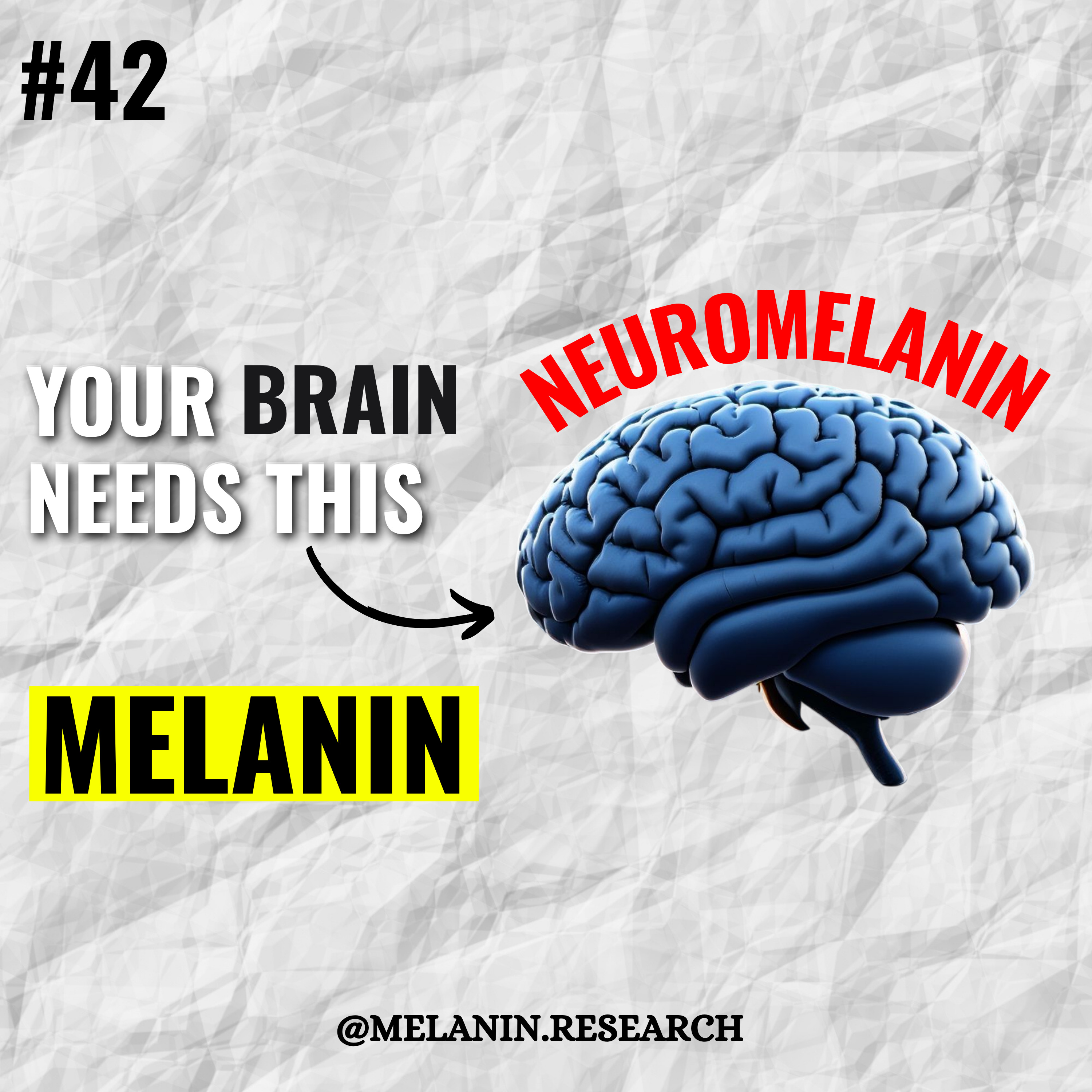
Neuromelanin role in Brain Health, Consciousness, Neuroprotection, Parkinson's Disease | How to build Eumelanin with Cold Exposure, Ways to help Melanin through Fasting, Sunlight, Stress management
What's This About?
Neuromelanin role in Brain Health, Protection & Consciousness! This is PART 2 of the MELANIN RESEARCH series. In this episode of the Fitness Wisdom Podcast, Andreas and Melanin Research delve deep into the multifaceted roles of melanin in the body, particularly focusing on its presence in the brain as neuromelanin. We explore how melanin protects neurons, enhances consciousness, and regulates various bodily functions. The conversation also touches on the degradation of melanin due to lifestyle choices, the impact of electromagnetic fields, and the benefits of fasting and cold exposure on melanin health. The episode concludes with a discussion on the relationship between melanin and consciousness, emphasizing the importance of maintaining melanin levels for overall well-being and vitality!
Definitely SAVE & SHARE this episode with a friend, this knowledge is extremely important & potentially life changing!✅
🔱 Dynamic Stretching Routine Program! Only for limited time, you can get it at a 50% OFF ✅ with the code: GET50 at checkout 👇🏽https://www.mobility-fitness.com/dynamic-stretching-routine/
👇🏽 In this Episode of the Fitness Wisdom Podcast we discussed:🎙️
00:00 Exploring Melanin's Role in the Body
00:45 Neuromelanin: The Brain's Guardian
09:51 The Impact of Lifestyle on Melanin
18:41 Melanin and Electromagnetic Fields
22:36 The Importance of Removing Stressors
24:40 Understanding Melanin Production
27:48 Dietary Sources of Melanin
29:49 The Risks of Artificial Tanning
32:55 The Role of Fasting in Melanin Production
37:54 Cold Exposure and Melanin
41:57 Melanin and Consciousness
👇🏽 You can find me on my other platforms as well, as work with me1-on-1 Online World-Wide 🌎
📲 Instagram: https://www.instagram.com/andreas_david_christou/
🎙️ Podcast IG: https://www.instagram.com/fitnesswisdompodcast/
🌐 Website: https://www.mobility-fitness.com/
▶️ https://Youtube.com/@fitnesswisdompodcast/
🐦 Twitter: https://x.com/movementandreas/
👇🏽 Find & Connect with Melanin Research💎
📲 Instagram: https://www.instagram.com/melanin.research/
📩 Email: [email protected]
🌐 Website: https://www.melaninresearch.com
👉🏽 Find the Best UV + Red Light Therapy panels, Blue Light Blocking Glasses & Circadian friendly light bulbs 🚨Use promo code: MOBILITYFITNESS ✅ for 20-30% OFF your entire order 👇🏽
https://www.emr-tek.com?snowball=MOBILITYFITNESS
👇🏽 Here is the Methylene Blue I use 🌀🧠
merakimedicinal.com/MOBILITYFITNESS
Use promo code: MOBILITYFITNESS to get 15% Discount on all products ✅🧠
👇🏽 Find the SHILAJIT I use & recommend below ⚡
https://mountaindrop.com/order/?ref=5873
Use promo code: MOBILITYFITNESS for Discount on your entire order ✅🧠
👇🏽 Find our favourite Functional Mushroom 🍄 Extracts Below: https://www.kaapamushrooms.com/MOBILITYFITNESS Use promo code: MOBILITYFITNESS for Discount on your entire order ✅
Get yourself a personalised Nutrition, Training & Lifestyle Optimization Plan designed for Your Body & Goals! Work with us 1-on-1 ✅ and let's Transform your Body & Health from the inside-out! 💎 The Link is Below👇🏽
https://www.mobility-fitness.com/product-page/1-on-1-online-coaching
*None of the content / statements in this Podcast are Medical or Personal Advice & is not intended to cure, treat, prevent or diagnose any medical conditions. All my videos are for Educational & Research purposes only. If you decide to try anything discussed in this video, you agree to do so at your own risk & responsibility*
This is the fitness wisdom. Podcast Hello and welcome back to another exciting episode of the Fitness Wisdom podcast. Today is Part 2 of the melanin research podcast. Last time we talked all about the foundation of melanin and the fact that melanin is not found only on the internal and external surfaces of our body, but it's also found across the universe, which is super mind blowing. So make sure to listen to part one of our conversation if you didn't already. Towards the end of our discussion on the last episode, we were getting into the different areas where melanin is located within the body.
And now we're going to continue our discussion from that point onwards. So welcome to the show Melanin Research. It's an absolute pleasure to have you. Thank you for inviting me back again, Andrea. It's it's a pleasure to be here. Yeah, I feel like we, we can't dive into this topic enough. So I feel like it's so important to, you know, dive into all the intricate little details because it's so important for us to realize what an incredible substance melanin actually is. So why don't we continue on the path that on the journey that we were on last time, we were discussing where melanin is found within the body.
Maybe we can move on to neuromelanin in the brain. Maybe you can talk about its role in the brain and what kind of consequences could manifest from a loss of melanin in the brain. Yes. So this right here, this is a topic that is, I would say it's probably my favorite thing to talk about when it comes to melanin is the melanin in the brain. So as we talked about a little bit last time, is the melanin. So the brain produces its own type of melanin, right, called narrow melanin. And these are the neural, the neurons that produce melanin.
So you have things like tyrosine dopamine that transform into neuromelanin, right? And then you also have the different neurotransmitters that are rich in melanin and that polymerize into melanin. But what melanin really does in the brain is it does three things, three important things. One, it protects, so it protects the neurons, it Shields them from things like heavy metals, pollutants, oxidative stress. It also increases the speed of the electrical transmissions. So as you know, there's current happening all throughout the brain and melanin being a conductor of energy, it plays a role in amplifying the speed of those currents.
And when you have that happening, you know when speed is being amplified or it's being enhanced, then you have greater functioning, right? Because the speed is what produces heat, speed is what produces energy. So you have, I would say you have this ability to amplified to conduct energy within the brain via melanin, but it's also acting as a protective agent as well because it's absorbing those heavy metals which also have their own current, right? They also have their own electrons. So it's also using those to conduct energy too.
But then you have this other recent emerging property that we are just beginning to explore as a community of scientists is that melanin also splits the water molecule. And I think we talked about that a little bit last time. But that right there is that is critical, the fact that it can split the water molecule, but not just do that because there's other molecules that can split water. But when it does this, it can also recombine the water molecule. And when it, when this happens, it liberates electrons, right?
And this electrons, this is energy for the body. So electrons current, current is what lead, this energy is what leads to activation, right? It's what leads to nourishment. It's what leads to ultimately animation. So we're talking about not just something that protects the brain, something that enhances the brain, but something that actually enables consciousness, because now you have current, current being generated and that current is ultimately consciousness, right? No current, no consciousness.
So now you have something that's that's generating consciousness and then also is, let's say, is facilitating or is regulating that consciousness, right? But then it's also protecting it at the same time. So it's doing 3 very important things in the brain. And without neural melanin, you, I mean you really wouldn't be able to do anything. You wouldn't be able to think, you wouldn't be able to talk to, you wouldn't even be able to hear are to, you know, to see because those signals that are coming from your inner ear and from your retina, from your eyes, they need to be converted within the brain, right?
And that's where melanin also plays another role, right? So it's in the ear, it's in the eye facilitating conversion of energy in those particular areas. But then when they get into the brain, when those signals are in the brain, they have to be managed. And that's where melanin is playing, is continuing, I should say, its role, right, of maintaining coherence within these different systems. So yeah, it's doing a lot. And that's definitely one of the, I guess it's one of the factors that's being looked at in terms of Parkinson's disease because as you may already know, Parkinson's disease, one of the major causes of Parkinson's is the loss of neural melanin.
So when you have Parkinson's patients, when they have these dopamine neurons degrade, but it's the dopamine neurons that have the most neural melanin, which happens to be most. When those disappear, when those are compromised, that's when you get a breakdown in this area of the brain called the substantial nigra. This is where you get a breakdown of things like motor movement. So your ability to move right, you have motor neurons are now being compromised. Things like blinking, even just thinking clearly, because this part of the brain, it just, it controls your focus to your ability to focus, right.
Everything we do is, is really it's all chemical. So even your, your feelings, it's all chemical. It's all being generated by neurotransmitters. So it's all like we are very physical, physical material creatures now and then. Is melanin is a bridge here though. So what I like to think of neural melanin in particular in terms of this inner environment in the brain. I like to view it as like a like a vacuum cleaner or like an air purifier system in terms of how it protects the brain against things like Parkinson's disease or like motor neurons disease or like Huntington's disease, which all have been implicated in neural melanin deficiencies.
So you know, like, you know, you have a vacuum cleaner and you are vacuuming up, you're sucking up all the contaminants, all the dirt right in your household. And that's what a vacuum cleaner does. It was designed to do that very efficiently. However, let's say you have too much dirt in your house, like every square inch is just buckets and buckets of dirt that vacuum cleaner can only do but so much. Eventually when you have that much, you know, when you have that many pollutants or you have that many particles that are disrupting the environment, the vacuum cleaner eventually is going to get clogged.
And when that happens, no longer going to function as something that's cleaning your household. When you use it and it's clogged, it's actually going to track dirt. It's not cleaning up, it's not removing dirt. It's just, it's going to start doing the opposite, right? You're going to start seeing dirt. It's going to be leaving a trail of dirt as opposed to removing dirt, right? And so that's what happens when you have a substance like neural melanin that naturally is a sponge for things like heavy metals, right?
For things like free radicals, right? And so it's a sponge, it's naturally, it's designed to manage these things with great efficiency. But when you overwhelm your system with these things, like when you overwhelm your system with heavy metals, with oxidative stress, with free radicals, it becomes that vacuum cleaner that has been clogged. So then it starts doing the opposite, right? It goes from being something that protects you into now being a liability, right? And so it's like it's a dual role.
It's naturally protective. However, if we overlook our systems, it has a tipping point. So that tipping point is what you don't want to reach. I've been using red light therapy for many years now, but only since I started using EMR Tech red light therapy panels did I really start to notice the true benefits of red light therapy. I'm using EMR Tech's Fire Dragon Pro and the Inferno Pro. I noticed better recovery from workouts, improved skin health, better energy levels, improved eye health, improved sleep quality, and pain reduction.
I can safely say based on my experience that EMR Tech has the highest quality panels on the market from build quality, functionality, and the aesthetics. Don't take my words for it, Grab yourself a panel from EMR Tech. Dot com and use the promo code mobility fitness for a massive 30% discount. That was really a really fascinating breakdown. Thank you so much for that. So basically how would one degrade or lose melanin in the brain and then therefore lead to these conditions like Parkinson's disease, for example?
What kind of things would contribute to that? Or is it all the things that you just mentioned, like about the analogy with the vacuum cleaner, Is it just the overwhelm of the melanin in the 1st place and then it begins to degrade or breakdown and therefore we cannot produce dopamine? Or is it so that there is becoming less of it because we are breaking it down before that? It's basically what you just described, right? So actually the amount of neural melanin doesn't decrease, but the efficiency, the amount does not decrease.
It actually builds up over time. So you OK? OK. Yeah. So when you are born, you have very little neural melanin, right? And it makes sense because you can't really do much as an infant, can you? You can't talk. You can't even remember things. You can't move, you can barely walk, right? And we know that neuromelanin is critical for all of these functions, right? And so when you're born, you have, you don't start out with a lot of neuromelanin, but as you get older, as you mature, it keeps increasing over your lifetime.
So when you're an old man, you're going to have much more neural melanin than as opposed to when you were two years old. And that's a pattern that we see throughout nature. So not just humans, but all life forms start out with very little neural melanin that gradually increases over the lifetime, right? And then that goes back to what we were talking about before in terms of how it's an evolutionary marker, right? So species, as a species evolves or as life evolves, you see this increase in neural melanin.
So it happens not just on a species to species level, but also on an individual level, just from when we're born until until when we die, it builds up. But back to what you were saying in terms of how to protect neural melanin or how to prevent degradation, it really does blow you down to things like your lifestyle choices, right? So trying to limit your exposure to those chemicals that are being sprayed in the sky, trying to limit your exposure to those heavy metals that seep in through even the things that we eat, right?
Are the things that we drink just our environment limiting your exposure to heavy metals? Because the more that your system is exposed to these things, that's the more work. It's the more susceptible your neural melanin is to becoming overwhelmed. So basically think of it as like, again, back to that tipping point, right? Like you have a cup and say the neuromelanin is the cup and you're pouring water into the cup. The cup is made to store water, right? But you don't want to reach over that point, that tipping point of the cup.
And let's say the water in that cup is heavy metals, right? It's pollutants. It's it's unhealthy food. It's foods that cause oxidative stress on your system. Who that leads? It's stress distress in general, being in stressful situations, right? Because that leads to inflammation, that leads to a lot of pressure throughout your entire system. It weakens your blood brain barrier, which then makes your neuromelon more susceptible to contaminants. So you're giving it more work. So basically what I would recommend is just try to be mindful of the things that are the things that can overwhelm neural melanin.
And we know those things. Heavy metals, right? It's oxidative stress.
So what do you think about artificial blue light and the melanin? Do you think that that's very damaging on the on the melanin in the brain? I think so, yeah, I think so. It's it definitely offsets your cicadian rhythms. And so that's giving melanin more work to do because melanin is a regulator. So you're giving it more, more work to do on top of everything else that it already is doing, right? Like it's a multifunctional pigment that does, it's like a Jack of all trades that's supposed to be the best at everything it does.
But you know, when you have, you know, like this blue light and then you also have non-native EMF's, it's just giving it more. It's just more, you know, like now you're not just pouring water into the cup, you're pouring tea into the cup too. And you're pouring juice into the cup, right? So you're going to reach that tipping point even quicker. OK so how does melanin protect us against non-native electromagnetic fields? Because I've read before that melanated individuals, especially dark skinned people, are more are less easily controllable by the radio frequencies and the non-native electromagnetic fields.
I know I'm laughing, but this is absolutely not a joke. Because I feel that you know how in the past they used to do these experiments where they used to, you know, use drugs on the public and expose the public to drugs. But then the control mechanism changed towards non-native electromagnetic fields, basically the electromagnetic spectrum. And then they started utilizing light as a form of control because they realized that you can control a person's brain just from the frequency that they're exposed to.
So how do you think melanin is actually protecting US against these frequencies? Well, when it comes to just radiation in general, melanin is the best absorber and manager of radiation. So it absorbs the entire spectrum of electromagnetic energy, right? So there's seven that we love and it absorbs all 7, but it also dissipates that energy at the same time. So we have things like visible light, EE, infrared, radio frequency waves. It absorbs these, but it acts as like a buffer right between this energy in your body, right.
So this energy when it comes into your body, these non-native EMF's, it can cause chaos. So you can you know, it can be a disruptive type of energy, but now and then is there because it absorbs all of this excess on chaotic energy and it manages it right. It converts it into usable forms that the body can make the most of. So this allows it to reduce things like oxidative stress, which we know is one of the main things that these non-native EMS caused in the body is the free radicals and the information that builds up that it can trigger.
So when you have melon in there, something that's going to absorb it, right? Something that's going to be a buffer between that and your cells and your tissues, it's basically going to reduce the effect, right? So whatever the intended effect is of the EMF, you have Melanie, you have a buffer there that's going to absorb it. It's kind of like being in a car accident. You know, if you're in a car accident, the car is going to absorb most of the shock. The car is going to absorb most of the impact.
You're going to be hurt too, right? Like let's say that you're you, your body represents your tissues now and then represents the car. non-native animals represents the tree that you're crashing into or traffic that you're crashing into, right? It's the accident that's happening. So the melanin, it's going to absorb most of the impact. You still are going to be a little hurt, but not as hurt as you would be if you didn't have a car and you were just being slammed, right. So it's a buffer and then it's also something that prevents over stimulation in that way too because you're very stimulating.
If you having additional man made electromagnetic frequencies then you have something like melanin which isn't just absorbing but is intelligently managing it too because it's also converting energy at the same time. Well, do you think during that conversion process is actually turning it into something beneficial or is it just dissipating the energy? I think that in addition to dissipating it, it's turning it into some something beneficial to, you know that melanin converts photon photonic energy into either heat or sound and vice versa.
It can do the reverse as well. And it's found, as we mentioned, it's found everywhere in your body, right? It's in your ears, which are exposed to these non-native EMF's. It's in your eyes, which you get the same exposure. It's in your, it's tissue, it's in your skin, obviously it's in, you know, your tongue, it's everywhere. Even if it's there, it's like a, you know, it's like a very tiny percentage. It's still there. And if it's there, it's there for a reason. So I think wherever it is, it has that capability of transforming energy into something that is useful.
So previously you mentioned about how that we don't necessarily lose melanin, but it's rather that the melanin gets overwhelmed. So let's say someone is exposed to those non-native electromagnetic frequencies and they already have overwhelmed melanin due to other lifestyle factors. Do you think then the melanin cannot do its job and then the system is going to take more of a hit? I think the system will take more of a hit. So, you know, it's kind of like it's like back again to that vacuum cleaner.
And I'm sorry if I keep using so many metaphors, but it's like, you know, like you have this intelligent device, right, that's helping you manage your environment. And then you in addition to the natural, right, the natural contaminants that just build up, the dust that just naturally builds up over time. Now you're opening your window. And you're letting dust fly in from outside. In addition to what the vacuum cleaner has to do on its own now it has to deal with more, right? So now, in addition to what we naturally, what our body naturally is designed to handle, right?
So we naturally have all these heavy metals, we just have them in very tiny amounts. But now you're introducing even more stressors, right? You're introducing more sources of imbalance within your system. So I think that even if you do have, you know, a pretty healthy, you know, healthy cascade of neuron melanins, you know, that are otherwise not compromised, that are not anywhere close to reaching our tipping point. I think just the fact that you're introducing so many different external stressors, I think it can bring you to that tipping point much sooner than you otherwise would get there.
So yes, it's a protective agent, but that doesn't mean just do whatever you want, right? Doesn't mean like, you know, just because I have a vacuum cleaner, I'm going to have twenty parties in one day, right? So I would say it's definitely it's going to protect the system, but it's not going to do it as well when it's being constantly bombarded or constantly overwhelmed. So basically you're saying that it's essential to remove the stressor in the 1st place rather than to think about just optimizing melanin production Because it doesn't matter like if you and if you have a lot of melanin, if you are constantly being, you know, bombarded by all these stressors, you're still going to overwhelm your system.
And just because you have like healthy melanin doesn't mean that you can get away with just doing whatever. And because you hear a lot of people online who say that, you know, as long as you spend more time in the sun, you can use your technology more or, you know, you're built, if you're building that exterior melanin, you know, on your skin, then that's obviously going to be, yes, more protective because you're creating a bigger sponge for your body to absorb. But at the same time, we just want to be removing the source of the problem in the 1st place, right?
Exactly. Yeah, I think that that I understand, though, where that comes from. Like, the sun is the ultimate healer, and it's the ultimate source of life. I get that part, definitely. But at the same time, there has to be balance, though, right? So like, too much of anything is not good for you. Too much water is not good for you. So too much sun is not good for you, right? So, you know, just through principle, like alone, like, yeah, like get as much sunlight as you can, but also be mindful that melanin has its limits to like, it's not as unlimited, you know, just, you know, like this indestructible shield, because it's not.
On the first episode, I don't think we talked about how we actually produce melanin in the specific details on the skin. You talked a little bit about the melanocytes, but I read somewhere that what does it, what happens? Oh yeah, maybe some hydrogen peroxide is produced or something like that by the sun striking the skin, and therefore the body responds, the melanocytes respond, and then they produce melanin. Is that how it goes? I'm not too familiar with that particular line of melanin production.
What I do know though, is that melanin in the skin. So you have the melanocytes, which are the machinery in your cells that ultimately produce melanosomes, melanosomes, Thor melanin, right? But in order for any of this to happen, you need an amino acid called tyrosine. So tyrosine is in your body, but you also can get tyrosine from things like diet. So certain foods are rich in tyrosine, but then you also in order for that tyrosine to become to ultimately become melanin, you need the enzyme tyrosinase too.
And certain foods are rich in tyrosinase as well on because plants, right? Plants produce own melanin. So you have things like bananas, you have things like fruits, like very darkly pigmented fruits. Plants produce their own melanin. If you ever notice when you go to like a supermarket and you'll see, you know, like oranges, apples, they have those brown spots on them. You might with damage and they might have, you know, like these little brown marks or these holes that are brown. That's just melanin.
It's literally just melanin. Melanin. Protecting the apple. Exactly. It's the, it's the plant's immune system. So as we mentioned, it's an antioxidant, anti-inflammatory antibiotic. It's doing all of that in plants as well. So if you ever damage a plant, the first thing that's going to do is produce melanin to protect itself. And it's actually not even, it's not even harmful to eat that part of the plant like in the, it's only becomes harmful when the plant develops an infection and you'll see that right away.
But otherwise it's plants naturally you just put it outside, it's going to turn brown due to oxidation. And so you it's producing an antioxidant AKA melanin to help it kill the damage coming from that. So I would say going back to your question kind of got off track here, is sunlight is the greatest source of melanin production on the skin. It's sunlight because sunlight is going to stimulate your melanocytes naturally to produce melanin. Do tyrosine and tyrosinase then you can also. Sorry, sorry.
Go ahead. I cut you off. No worries, you can also amplify. You can add to that though right through diet so you don't have to just rely on the sun. You can also eat certain plants, eat certain foods that are rich in melanin. And even if, if it's not plants, if you want to just skip the chemical process of, you know, having to let your body do what it naturally does, which is to convert the tyrosine into melanin, you can consume melanin directly. There's something called cuttlefish ink, which is basically, yeah, it's squids.
Like squids, octopuses, they naturally produce loads of melanin and it's been made into edible form and it's just called. Really. I didn't know that you could eat it. Yep, it's called cuttlefish ink. I've tried it and it's kind of like mustard. You just use it as a condom. It's like a fundament on your food. Yep, it's sold, sold everywhere in supermarkets. No one really knows though that it's melanin. That's why it's literally just octopus. When they are threatened, they release like an ink, Yeah.
I've experienced that. Oh, really? That ink is 80% melanin, 20% mucus. So they were just, they were just blowing some, some, some melanosomes in your face to distract you. But that is, it's edible too. So you can just consume it directly. So there's many different, there's many natural sources of melanin. So if you consume these foods, they basically enhance your own melanin production as well. So they amplify the sun. Basically they allow you to produce melanin easier. Exactly. I see. That's great, amazing, great tips for the audience for sure.
And since we're on this topic about producing melanin naturally, I assume that you can also produce melanin in not necessarily unnatural way. But I've you've probably heard of so many people utilizing peptides these days and there are specific peptides that make you very tanned like Melano tan for example. Do you think there is an issue with getting an artificial tan, meaning you didn't earn the tan, but you all of a sudden have this incredibly dark skin without you earning it? And are there any consequences to that?
I think there are, there's been some research that I've done is definitely consequences to things like melanitan because, yeah, you know, it's, it's been around for a while, but it's definitely been cases of, you know, people passing out from using it, people vomiting from using it. You know it it's a hormonal disruptor, right? Because you naturally have melanocyte stimulating hormone, you have melanin, you have hormones that naturally are responsible for melanin production throughout your body.
But when you have a peptide, when you're introducing A peptide, it's like you're adding an extra hormone that your body
did not include in the original instruction package. So now it's, it's throwing things off balance, right? So you get the 10, you get a super 10, but then that leads to a, an imbalance between the hormones that naturally produce an element right now, they otherwise what they would be doing, they're not going to be doing it to the same level. They're not going to be doing it with the same cohesion on because now you've added in this, you know, you added in this extra layer to the machinery and the machinery already is doing the machinery already is perfectly designed.
So now you have, you know, you adding a peptide, you're adding another hormone that's just going to disrupt the process. And This is why you see things, you know, if you look at the symptoms of, you know, when people use these peptides like melanotan, it has symptoms, overactive sex stripes, right? Because melanin stimulating hormone is also involved in controlling, you know, like your sexual hormones as well. So you have things like that. You have, you know, like erectile dysfunction, there's many different things, many different consequences being not being able to sleep, like, you know, just many different things that I've seen in my research where I don't think that that's the best way to increase melanin production.
And it's really only going to affect the skin. It's not going to affect. It's not. Those products aren't really made to target internal melanins. It's really made to give you a 10. If there was 1 substance that could increase your energy levels, optimize mitochondrial function, boost ATP production, help to optimize your hormones, re mineralize the body with ionic minerals, boost cognitive function, assist detoxification and support your gut health via the microbiome. This substance is Sheila Jit, known as the destroyer of weakness.
Sheila Jit is a herbal mineral substance made from the decomposition of plants and bacteria. This process taking place over thousands of years. It is harvested from high locations, primarily the Altai and Himalayan mountains. And what makes Shilajit so unique is that it's made by Mother Nature herself. I call it nature's methylene blue. That's all Shilajit that you find on the market is created equally. This is why I only use and trust Mountain Drop Shilajit. They have an extremely high quality shilajit product that has been rigorously tested for heavy metals and impurities.
Grab yourself some Shilajit, the destroyer of weakness today and head over to mountaindrop.com. Use the promo code Mobility Fitness at checkout for a nice discount as well. So basically what these peptides are doing, they're still stimulating the same areas in the body where the sun would stimulate, and that's the reason why it gives us a ton. It's helping the melanocytes of the skin. I see. So it thinks that it's getting sunlight even though it's not getting sunlight. Nope. Yeah, exactly. It's fooling the body.
I see. Yeah, that's not cool because when you're exposed to sunlight, everybody just thinks about vitamin D, right? That's that's the only thing that people think about. Oh, sunlight equals vitamin D? Well, no, it just, it does so many more things than that. It regulates your circadian rhythms. It helps with the repair, the regeneration in your body, helps you optimize your hormones, help with the melanin production. All of this incredible discussion that we're having today. And bypassing that mechanism of you developing melanin is not really a wise idea because yes, maybe if you are an individual who is super white and then you know, you use something like Melanoton and now you don't get burnt going in the sun because it does give the added layer of protection.
I can see some use cases for that. But the same time you will not, there is a reason why you are white. Like the whiter your skin is, the more sunlight or you're supposed to absorb, right? And then because melanin pretty much prevents the body from absorbing as much light. And so you, if you're dark skinned, you have to be exposed how many more times to the sun to get the same level of vitamin D compared to somebody who has white skin. And so nature doesn't do anything by design, right? There is a reason why people who live in Nordic countries have blue eyes and white skin because that allows us to absorb more light at less intense frequencies.
And then This is why like if you move to the equator, it will take a lot of time for your skin and your eyes to adapt to that increase in the intensity. But this is when you need to be extremely cautious and build that solar colors, which is built over time and through circadian alignment. Do you have anything to add to that? Definitely. I yeah, I'm with you there. You know, like, obviously if your body has a certain amount, right, If you've been, you know, we were talking about this before in terms of given a genetic baseline of lawn and right.
And then there's ways to modify that or there's ways to supplement that through choices that you make, either lifestyle or dietary. And if your body has, you know, a certain amount of melanin as a baseline and what you're essentially trying to do through peptides, through hormonal modifications, you're trying to basically modify the baseline.
And that is going to lead to other problems that creates A domino effect because now you're disrupting hormones, right? So it's not the same as, let's say you're drinking tea, right? You're drinking some dark tea that can help stimulate melanin production in your body. It's not the same because those are just additives. But what you're doing with the peptide, like Lanitan is you're trying to basically replace what you already have naturally. You're trying to replace melanin stimulating hormone and you're trying to base.
It's going to, it's going to disrupt. There's a balance, there's a delicate balance within the body of all of these different cooks in the kitchen, right? You don't want too many cooks in the kitchen, essentially. Yeah. And I could imagine that somebody who is living in a Nordic country and they use Melanoton, that could be even more dangerous compared to somebody who is living in the equator and using it. Because at least on the equator, you have a higher UV index. So you're able to absorb, you know, you get more intensity of light, so you're able to benefit your body.
But if you're living more in a Nordic country up north, you're getting way less, you know, light intensity. So your body needs to be more sensitive to the light. And there is. That's why we say that nature doesn't make mistakes because there is a reason for everything. So now let's move into another topic I would like to discuss. What do you think about fasting and melanin? How does fasting influence the melanin in the on the external and internal environment of our body? Yeah, well, fasting is.
Fasting, as you know, is it's wonderful for the body as a whole, right. And anything that's good for the body is naturally good for melanin. But let's get into the specifics of it though, right? So fasting can influence not just the melanin, but primarily the mitochondrial performance. So when you mass, your body becomes more efficient at managing energy, right? And so you know, like there's this less oxidative stress, it's less free radical when you're fasting. And so you have, you know, things that are happening like autophagy, right?
When you're fasting, this is definitely this is the time, you know, I believe it's they say after 48 hours of fasting, your body goes into the chemical detoxification process. So your body naturally starts shedding all of those toxins, right? And we know that melanin helps our body to manage toxins. So in your fasting, again, this is 1 less thing that melanin has to do, right, is to be there as the quantum coherence facilitator, to be there as the manager of all these, all this stress that you're putting on your body, whether it's do overeating or eating the wrong things.
Right on melanin has you freeze up its hands to do other things more efficiently because your body is in a state where you're not. You're not subjecting it to oxidative stress, right? So now your body can do things a bit better, right? Now, your mitochondrial function is enhanced when you're fasting. So melanin doesn't need to be there so much anymore to manage those free radicals because it's far less of them. So now melanin can do other things, right? It can be in other places more. It can be in your pineal gland even more.
It can be in your lungs even more. It can be in your brain doing what it does there even better, because now you're giving your body rest. So you're basically taking a break from all of the things, all of the activities that lead to. Accelerating this tipping point, do you think that melanin moves around in the body? For example, on the skin when we gain a ton in the summertime, we're exposed to UV light. Do you think that that melanin goes internally or do we shed that melanin from when we, you know, change our skin cells?
I think there's definitely some of it that goes, that moves internally because you have something called a superficial circulatory system. This is the blood directly beneath the skin, and that has melanin. So that contains melanin, which. So that would be the fee of melanin. Yep, that would be no, that would just be whatever melanin is on your skin is in the superficial circulatory system. So you have an internal and anti circulatory system and you have one that sits right beneath your skin and that helps, you know, to keep you warm too.
So you know you have melanin that migrates from the skin into that superficial circulatory system.
OK, You just reminded me about cold exposure because you said about the the warming up of the body, How does cold influence the melanin on the internal and external surfaces? I find that when I'm doing cold, especially in the winter time when, when I have access to the to the sea and I'm getting in the sea every single day, you know, to optimize my mitochondrial function. What do you think is happening there? Because sometimes I find that my body remains way more tanned even in the winter time with lower UV environment.
So do you think that cold actually helps to preserve the melanin on the skin? To preserve the melanin of the skin. I know that cold thermal genesis. Is definitely something that can increase melanin production for sure, which may spill over into the skin. So it's produced, it's increasing internal melanin production because you have activation of brown fat, right, which is adipose tissue. And white fat also contains melanin. But brown fat especially is rich in melanin and that's a special type of fat that's in the mitochondria, right?
And so and it also burns energy. It burns energy, burns calories. It helps to keep you cure inner your core, right? Your internal temperature warm enough so you're not freezing to death. And it increases mitochondrial density, right? So you have more of these engines per cell, but a coal thermogenesis. It also is really good for the blood bane barrier as well. So with the blood brain barrier, something that's basically your protective as you already know, I'm sure you already know that that's going to protect your brain right from this exposure to these content, from these contaminants, from these free radicals, from these heavy metals, from pathogens as well, right?
And so when you have, you know, the blood brain barrier that is essentially helping, you know, like you have immune cells that are activated here through cold thermal genesis, that's going to also cause melanin to be a bit more active too. It's going to trigger melanin the site. Because again, remember, wherever there is stress, wherever there's oxidative stress, wherever there's injury, wherever there's inflammation, there's melanin there to manage it. So stress is not necessarily a bad thing, right?
Like stress, we need stress to a certain degree because it keeps ourselves strong, right? It's like exercise, right? When you're exercising and putting stress on your muscles and that's what actually strengthens them. So if you do this intelligently, right, if you know how to do cold thermogenesis and regulation, it's good. It's like you're, it's good. It's a good form of stress for your body, right? But wherever there's stress, there's melanin. So you're increasing melanin in these parts, you know, in the body, especially in the neck, all right, which is where you have a lot of that brown fat and that's moving right through into the brain, right.
So you have the brain stem, which is the closest part of the brain to the neck. And the brain stem is just loaded with tons and tons of melanin, right? The substantial nigra, the locus surrealis, right? Like all these different areas of the brain stem. It's, it's the darkest part of your brain because it's full of melanin. But something else that's kind of overlooked in terms of cold thermogenesis and it's connection to melanin is you have meningeal melanin. So the meninges, this is a layer of your, it's a layer of connective tissue that covers your brain entirely.
So if you have someone cut your skull open and they looked at your brain, there's going to be a sheet covering the brain sheet that will look like plastic. That sheet is also rich in melanin too, right? And that sheet is, you know, it's the meninges. It's what's basically helping to prevent these different contaminants, these different stressors from entering the brain, right? And so it's a barrier. It's like a firewall, right? Your brain is a computer and meninges is of is the firewall. It's your virus protection.
And let's say melanin is like the top, it's the top virus protection on the market. And yeah, and so you have melanin here to reinforce that barrier, right? It's reinforcing the barrier. It's neutralizing those free radicals. It's neutralizing those pathogens. It's preventing the immune cells from becoming overactive when you have cold thermal genesis happening, right? It's keeping things in check. It's keeping things regulated. You know, it's reinforcing the blood pain barrier because it's binding those heavy metals that might otherwise compromise it.
It's basically it's like having a seal or like a shield around your consciousness. So in your brain you have consciousness that is initiated by this current that's initiated by melanin splitting water and then covering the brain. You have a sealed of melanin too, of not just melanin, but melanin that is regulating the seal or that is amplifying and protecting and that's reinforcing that seal those the meninges. And so in those meninges, as I mentioned already, they have their own immune cells, right?
They have their own macrophages, their own mass cells that are rigged that are basically there that are becoming activated through colothermal genesis. And so the melanin there is regulating it and it's helping to buffer this activation. So you're not getting too much right, You're not over stimulating your system too. So I would say if you ever, if you truly want to understand melanin, wherever it is in the body, if you're ever confused, just anchor it down to those 3 fundamental points. It's doing three things.
Wherever it is, it's protecting, it's amplifying and it's regulating. It's either doing one or the other or all three at the same time. That's incredible. And let's dive more into the consciousness topic because I think this will be a perfect place for to end our episode and people will get absolutely mind blown, I'm sure on this on this part of the discussion. Do you think that consciousness is found inside the brain and produced inside the body? Or do you think that consciousness is something that's on the outside and melanin is sort of channeling it into the brain and the brain is processing the information?
Methylene blue, an incredibly powerful substance that has an affinity for the mitochondria, discovered in 1876 at first as a textile dye, it didn't take long before it was noticed for its unusual biological effects. Here is a list of all the things that methylene blue is known for. My personal favorites it is effects that it has on the mitochondria. Methylene blue acts as a redox agent. What this means is that it has the ability to grab onto electrons, donate and transfer them anywhere where energy is required in the body.
And we know that most Neolithic diseases these days are due to a lack of cellular energy, ATP. The more electrons we can get through successfully along the electron transport chain in the mitochondria, the more deuterium depleted water we can make as well as the end of energy production, which is ATP. The energy that we need to power all our cellular processes come from electrons, so it only makes sense the more we take care of our mitochondria and our energy production, more energy we have for our overall health, well-being and vitality.
If you wish to explore the methylene blue that I use, head over to maragimedicinal.com/mobility Fitness and use the promo code MOBILITY FITNESS at checkout for 15% of your entire order. I think it's both. I think it begins in the brain, right? So I think it begins in the brain and the specific ancient centers in the brain like the locust, surrealist, the substantial Niger, the brain stem, the most ancient part of the brain before the court is before the cortex was formed. You just had a brain stem, right?
It's the first thing to form. It's that to me is the powerhouse. That's the ultimate source of consciousness is in the brain stem. And as we mentioned already, that part of the brain is rich. It's bathed in melanin. But again, I think melanin is probably also one of the most overlooked keys to human consciousness. And you know, like these areas that I just mentioned, the locust surrealis, which is called the blue dot. When you translate it, it's blue because it's filled with melanin and the substantial nano, which is Latin for black substance.
That's literally what it's called. Because when you open the brain and you look at it, it literally just looks like a black substance. It's just full of melanin. And these are not just parts of the brain. They're activation centers, right? This is where arousal, attention, movement, right mood happens. This is where it all begins. When you're moving your arms, when you're aroused, it's all coming from the brain stem, right? So you know consciousness, you can view consciousness as animation, right?
Something. When something is animated, that's a signal of consciousness, right? So we say when we're asleep, we lose consciousness. We're not animated anymore. We're not, we're not blinking, we're not talking, right? So our consciousness is at a standstill, right? Animation is at a standstill. Well, that animation begins in the brainstem. This is the part that governs your sense of alertness, time, rhythm, your internal awareness. And it needs melanin to do all of that. But this is where it really gets deeper though, because we talked about this unique ability to split water, right?
Just like just like plants do in photosynthesis, they split water to create energy. And that's what's happening in the brain is melanin is splitting water. So these different parts of the brain, like the locus surreal is like the substantial nigra, like the Raffi nuclei, like they are very close to cerebral spinal fluid, which is mostly water, right? It's mostly water. So melanin needs water in order to even do this, right? So you have melanin water, which then generates energy, right, generates electrons and that ultimately produces current that leads to consciousness, right?
That is like a, you know, the current then is regulated, it's amplified and it's protected by melanin, right? So it's like you have an internal signal tower in that brainstem that's broadcasting your consciousness across the brain, right? And so in other words, this part of the brain, you know, melanin is not just here. It's not just sitting there as a black substance or as a blue dot. It's powering the brain, right? So it's turning, and then it's also an energy converter, right? It doesn't just conduct energy, it converts it.
So you have, this leads us to other things, right? Like the pineal gland, which is a receiver, right? So you have the pineal gland, which is very integral to consciousness in terms of connecting, as, you know, like helping us function as a network of human beings, a network of living being, helping us to not just have consciousness, but share consciousness across the species or across, you know, our environment, whether that be here in Earth or wherever we go in the universe. And melanin, as we mentioned before, it's rich there too.
It's in the pineal gland, very high amounts. So you have the brain stem, right? So you have the brain stem and then you have the pineal gland, these two key centers of consciousness in the brainstem. We know that melanin is doing what is generating current. It's regulating current, it's amplifying current. So bioelectricity, that's being governed by, that's being governed, generated and made coherent by melanin, right? So this is the foundation of thought, of perception, of awareness, but it's not just about internal feedback, it's also about reception too, right?
So this is where you have your biological antenna, your pineal gland, which as you know, it's been called the seed of the soul, right? The third eye, because of where it's located. And the pineal gland also has things like rods and cones, light sensing cells that are inside the pineal gland. It's photo, since it's photo sensitive, right? It regulates rhythms throughout your body, magnetic fields. So it's very involved in reception, right, in terms of receiving things. And that's where melanin becomes critical because melanin as we know as an energy converter that makes it a decoder.
And so it doesn't just absorb energy, it's, it's translating it, right? So light, sound, you know, geomagnetic fields, day and night cycles, it's regulating these things as they come in. This information that's coming into that's being picked up on by the pineal gland, melanin is absorbing it and translating it. It's coherent it, right? So you have, let's say, think of the pineal gland as like the antenna and melanin as the TV, even though nowadays we don't need antennas for our TV or we don't need antennas that we can hold anymore, right?
It's inside the television. But you know, think of, you know, your pineal gland as like the antenna and melanin is like your radio. It's turning all that chaotic energy, it's coming in from everywhere and it's making it coherent. So you, you yourself, you, you generate your own consciousness. Then you can also be receptive to consciousness because you have this different, you have these different devices within your system and then you have this ultimate decoder, which is melanin. Well, that's incredible.
Well, what a wonderful breakdown. I think you just totally blew my mind. And you know, you can totally imagine that if the melanin gets overwhelmed by all the things that we just mentioned, like all of the negative stressors in our environment, basically we become less conscious, right? We've become less aware. It feels like we have brain folk we have, we feel like we have some cloud over our eyes. We're not able to receive and perceive the information from our environment. And we know how important it is to be able to receive information from our environment because this helps to regulate the safety feeling in our system.
If our nervous system doesn't feel safe, it will feel threatened. So it will go into this sympathetic state. And that's not good to stay there in a long term because that breaks the body down. And so it's just incredible how, you know, melon has so many incredible roles. It literally shapes us as human beings. Without this substance, literally we wouldn't be who we are today. We wouldn't be able to function. So I think this has been such an incredible like message to share with the audience because it just makes people realize that the things that you do on a daily basis are going to negatively or positively influence your melanin.
And you want to obviously positively influence it. And you want to remove all of the things from your life that are negatively influencing melanin because this is overwhelming. And just as melanin research mentioned. And so we have also many incredible ways to stimulate melanin production such as the cold exposure, such as through specific foods such as the sunlight. And so I can imagine also that having certain ideas or feelings, sensations, you know, creating certain emotions within the body on purpose.
Do you think that that could also stimulate neural melanin? Because you know how just with the power of thought, we can elicit physiological reactions within the body? Yeah, definitely. I can see that being a possibility because you know, you have things like dopamine, right? Dopamine, which is rich in melanin, right? Rich in neural melanin. So you know, just having positive thoughts, being able to control or being able to stimulate these neurotransmitters, right? By have thinking positively, but also with just being able to regulate that environment too because the neural melanin it's not just there to to generate consciousness or to, you know facilitate the things like, you know protection.
It's really at its at its core when we're talking about the neurotransmitters like norepinephrine, like adrenaline, it's a neuromodulator. So it modulates these different neurotransmitters. It's making sure that they're not, that they're not, that they're not over stimulated or that they're not overwhelming your system, right? Because you know, you have things like neuropinephrine, higher levels or higher activation, or I should say the efficiency of neural melanin regulates neuropinephrine, regulates adrenaline, regulates cortisol.
And we see this throughout the animal Kingdom, not just in humans. We see it in reptiles, we see it in cats and we see it in sheep. Like we see it all throughout the animal Kingdom where melanin is central to stress regulation, right? So when you have, you know, an environment where you are thinking positively, where you're not putting so much out there in terms of, you know, like the environment may be stressful, but you have ways of managing it internally, mentally, right? That's going to affect, you know, your melanin in these areas of the brain because melanin is there as a regulator.
But when it's not, when it's not so boggled down, right, by having to deal with all this oxidative stress that's happening because harmful thoughts also can lead to oxidative stress. It can also lead to to more free radicals building up in your system. It puts stress on your body as a whole when you think negatively. So, you know, when melting is freed up, when its hands aren't so tired trying to help your body, you know, manage this toxic environment that may be developing, It can do other things with greater efficiency, right?
It can generate more current in your brain, right? It can regulate other areas of the body that may need it. You know, it can do anything really. See, I definitely think that, you know, like things like positive thinking, meditating, anything where you are trying to create internal cohesion, right when you're trying to make your body stand firmly despite whatever is happening outside of you. I think any anything that alludes to that or that you know, helps you do that better is going to make the melanin that much more successful.
Well, that's a beautiful message to leave the audience with. Thank you so much Melanin research. I'm sure there's so much that we didn't cover today because you don't know what you don't know, right? So if you have, if you believe that there are many other incredible topics that we didn't cover in relation to melanin, I would love for you to send them over to me by e-mail and we can cover another podcast episode in the future for sure. Because, you know, I'd love to keep keep on learning and there is so much that I don't know and that I'm not aware of.
So I would love it to be brought to my awareness to share it with the audience as well. So where can people find you and reach out to you if they wish to do so? Yeah, sure. So you can reach me directly by e-mail, which is simply [email protected]. There's also the Instagram page as well, which is Melanin dot Research. So the handle is at Melanin dot Research. I'm also in the process of developing a website as well, where all of this research that I've done throughout the years will be coalesced or made a little bit more organized on to an official platform on beyond Instagram.
So be on the lookout for that as well. And yeah, you can e-mail me or you can reach me directly through IG. Perfect. And is the website going to be Meline research.com? Yes, it will be. Thank you for acting. OK, perfect. So then we can in case somebody listens to this episode in the in the future, then they will be able to find your website as well. Yes they will. Awesome. Thank you so much Meline Research. I would absolutely love to do it again in the future. OK. And I look I would be open to that as well.
Thank you once again Andreas for having me and for the audience. I hope that this was a a constructive use of your time. I definitely enjoyed it and so thank you once again, Andreas. Oh, thank you so much. You guys enjoy the topics and guests I bring on the show. I would really appreciate it if you left me a five star review on Spotify and also subscribe to Fitness Wisdom Podcast on YouTube as well as this helps to spread the knowledge and wisdom with the world. Until next time. This is the fitness wisdom.
Podcast.
 Apple Podcasts
 YouTube
 Spotify
 Castbox
 Castro
 Goodpods
 Moon FM
 Overcast
 Pocket Casts
 Podbean
 Podcast Addict
 Podcast Republic