Healthy Pregnancy needs MELANIN - Stem Cell Regulation, Eumelanin role in Sperm, Melanin as a Sensory Organ! Boost Fat loss, Movement ability, Athleticism & Performance with the Power of Melanin
What's This About?
Healthy Pregnancy needs MELANIN - In this episode of the Fitness Wisdom Podcast we delve into the multifaceted role of melanin in pregnancy and early development, health, and performance. We explore how melanin is present from conception, its critical function in early embryo development, and its influence on sperm during conception. The conversation also covers melanin's role in metabolism, energy regulation, and its importance in movement, sensory perception & athletic performance. Additionally, we discuss environmental factors affecting melanin levels, the connection between melanin and the nervous system, and the significance of moles as potential markers of internal health.
Definitely SAVE & SHARE this episode with a friend, this knowledge is extremely important & potentially life changing!✅
🔱 Dynamic Stretching Routine Program! Only for limited time, you can get it at a 50% OFF ✅ with the code: GET50 at checkout 👇🏽https://www.mobility-fitness.com/dynamic-stretching-routine/
👇🏽 In this Episode of the Fitness Wisdom Podcast we discussed:🎙️
00:00 The Role of Melanin in Embryonic Development
03:51 Melanin's Influence on Energy and Metabolism
08:21 Melanin and Genetic Regulation
12:43 Melanin's Impact on Health and Developmental Disorders
17:08 Melanin's Role in Fat Metabolism and Body Composition
25:15 The Role of Melanin in Health
30:40 Melanin and Athletic Performance
35:12 Melanin's Influence on Hormones
40:40 Melanin as a Sensory Organ
46:34 Melanin and the Autonomic Nervous System
50:38 Melanin and Disease Manifestation
57:17 Exploring Moles and Melanin
01:00:35 The Energetic Role of Moles - Meridians
👇🏽 You can find me on my other platforms as well, as work with me1-on-1 Online World-Wide 🌎
📲 Instagram: https://www.instagram.com/andreas_david_christou/
🎙️ Podcast IG: https://www.instagram.com/fitnesswisdompodcast/
🌐 Website: https://www.mobility-fitness.com/
▶️ https://Youtube.com/@fitnesswisdompodcast/
🐦 Twitter: https://x.com/movementandreas/
👇🏽 Find & Connect with Melanin Research💎
📲 Instagram: https://www.instagram.com/melanin.research/
📩 Email: [email protected]
🌐 Website: https://www.melaninresearch.com
💥 OUR FAVOURITE NON-TOXIC AND SUPER EFFECTIVE HAIR WASH! USE THE PROMO CODE: MOBILITYFITNESS FOR A 15% DISCOUNT AS WELL✅
➡️ HTTPS://TRYBLOO.COM/MOBILITYFITNESS
👉🏽 Find the Best UV + Red Light Therapy panels, Blue Light Blocking Glasses & Circadian friendly light bulbs 🚨Use promo code: MOBILITYFITNESS ✅ for 20-30% OFF your entire order 👇🏽
https://www.emr-tek.com?snowball=MOBILITYFITNESS
👇🏽 Here is the Methylene Blue I use 🌀🧠
merakimedicinal.com/MOBILITYFITNESS
Use promo code: MOBILITYFITNESS to get 15% Discount on all products ✅🧠
👇🏽 Find the SHILAJIT I use & recommend below ⚡
https://mountaindrop.com/order/?ref=5873
Use promo code: MOBILITYFITNESS for Discount on your entire order ✅🧠
Get yourself a personalised Nutrition, Training & Lifestyle Optimization Plan designed for Your Body & Goals! Work with us 1-on-1 ✅ and let's Transform your Body & Health from the inside-out! 💎 The Link is Below👇🏽
https://www.mobility-fitness.com/product-page/1-on-1-online-coaching
*None of the content / statements in this Podcast are Medical or Personal Advice & is not intended to cure, treat, prevent or diagnose any medical conditions. All my videos are for Educational & Research purposes only. If you decide to try anything discussed in this video, you agree to do so at your own risk & responsibility*
This is the fitness wisdom. Podcast Welcome to Part 3 of the Melanin Research podcast. If you haven't listened to the previous episodes, make sure you're going to listen to Part 1 and Part 2 as well. Today we're going to be getting into the role of melanin in early embryo, so basically in pregnancy, and also its role in potentially fat loss as well and so much more. So welcome back to the episode Melanin Research. It's a pleasure to have you for Part 3I. Had to be here probably. Awesome. So as I mentioned in the introduction, we are going to be discussing today about the role of melanin in early embryo and previous time on our Part 2 at the end, we were not actually intending of doing a Part 3, but we spilled so much gold when the recording has stopped that I had to get you back on because you know, there was so much mind blowing information and and I feel like this was probably the most mind blowing information of all parts.
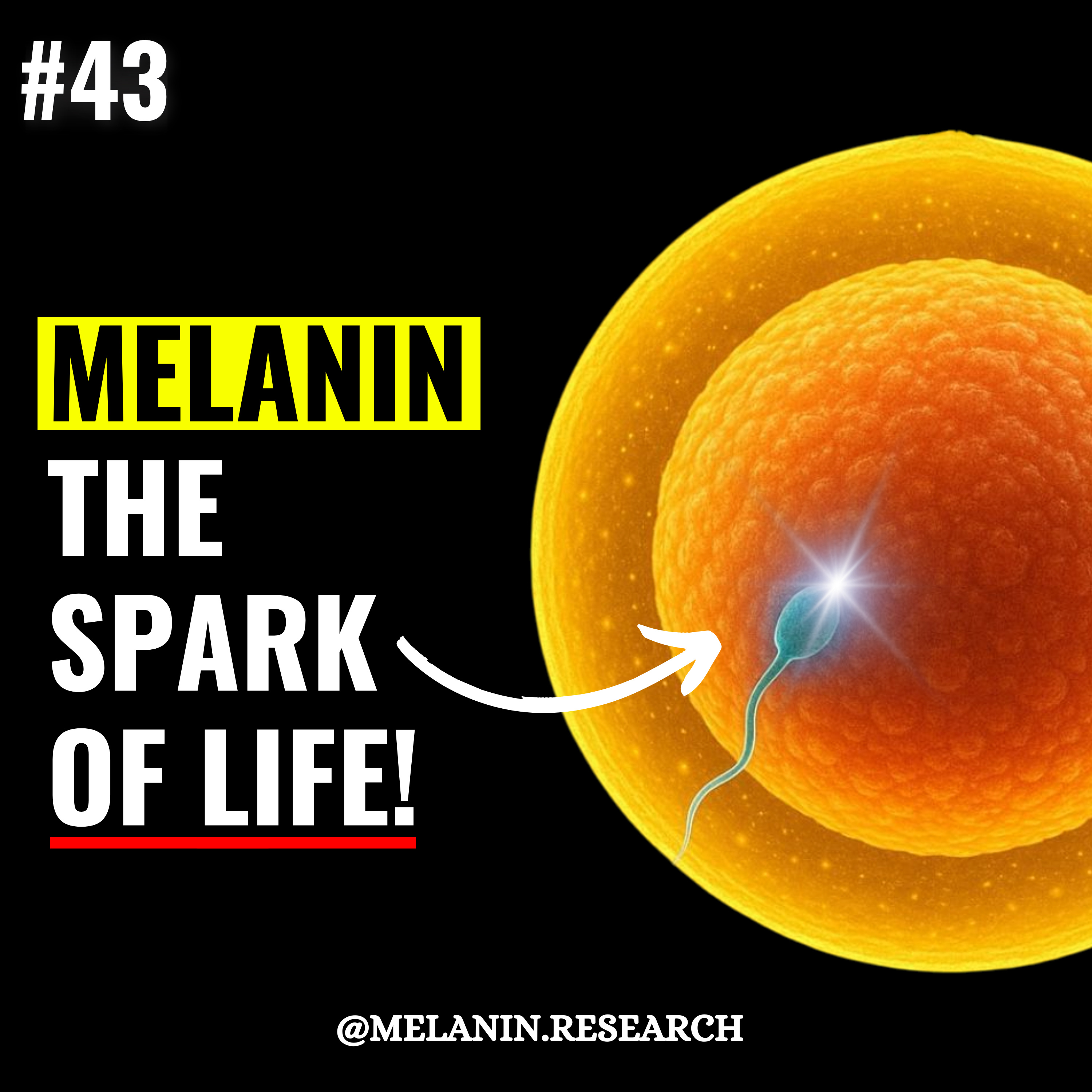
So why don't you tell us a little bit about the role of melanin in an early embryo and also its role in the in the sperm as well? Yeah, this is a very interesting topic. What many people don't know is that melanin is present from the very beginning. It's present from conception, long before skin color is even a factor. While it shows up, yeah, it shows up in the earliest stages of embryonic development. So it's found in a structure of the embryo that's called the neural Crest. This is the group of stem cells that don't just form the brain, but they migrate away from the brain to form the spine, the organs, and many of the vital, the body's vital systems.
Melanin is heavily concentrated in the neural crust. If you were to look at the neural crust from a microscope or from an instrument, it would appear black. That's how much melanin there is there. But more than melanin, I think what's more fascinating than that is what melanin is doing in the neural press because it's it's acting as the central regulator in that environment. It's like you have a long line, right? You have a long line of stem cells that form the neural crusts, and let's say it's like a long black line that eventually leads to the formation of everything else.
That leads to the brain, the spine, the skin, the organs. However, what melanin is doing there and the reason why it's there is that it's organizing the movement of ions and cells signal, yes. So this goes back to its ability to conduct electricity, to generate electricity and to regulate electricity and the body has bio electricity and this bio bio electric signals is what the NVO needs to depart to develop properly. So you can think of melanin in this way as being like, it's like the president in a large company.
You know, unlike, let's say in a company, you have your managers and you have your directors, and let's say those managers and those directors metaphorically in the embryo would be your signaling proteins, right? It's the signaling molecules. But overseeing that whole network and guiding the activity of those directors and those managers is your president. And that's melanin because it does these very fundamental things like controlling, transforming, absorbing, regulating, transferring energy, all types of energy, regardless of what it is.
And then also at that same time, it's performing as the central regulator of the energy. So it's not just interacting with energy, it's determining where it goes, how it's distributed and ultimately how how useful it is. So you have stem cells that eventually migrate to, you know, become lung cells, become tissue in the kidneys and etcetera, etcetera. And that really depends on signals, on timing, on the electrical district. And so you have to have an intelligent interface, you have to have an intelligent system to control all of this, because none of this is happening randomly.
And that's what melanin comes into play as, as, you know, an intelligent molecule.
But then you also asked a very interesting question about sperm. Yeah, that's super fascinating is the fact that there's melanin on the very tip of the sperm, and it's you melanin. But just to clarify here, when we talk about melanin in the body, it's always you melanin, it's you melanin. So I see you have internal melanin. That melanin is you melanin, just like as a disclaimer, because we know we talked about different types of melanin in our earlier podcast. I don't think I made that reference.
Is that internal melanins? Are you melanins with the exception of neural melanin, which also contains you melanin, but you know and then by its by itself is found at the tip of the sperm. It's in a region called the aquasome. And this is the part of the sperm that makes the first contact with the egg. So now and then in this exact, you can imagine what it's doing when you have an egg, sorry, when you have a sperm cell penetrating an egg. And what you need to happen in that moment is you need a massive amount of energy transfer and you need for electromagnetic signaling to take place.
So at that very moment of conception, melanin is there generating that first spark. I was what I was, I was an Instagram the other day and something popped up on my feet about how when the sperm penetrates the A, this is a spark of light. Yeah, that happens in that moment. And I kind of like it made me, it reminded me of the fact that melanin is there, like that spark of light, light generating from darkness again, from the very moment of contact between mother and father, between two bodies becoming one.
It's right there. So I mean you, we literally would not even exist without melanin. So it's very important though, to know these things because,
you know, there is definitely a growing misconception that only certain people have melanin, right? Or that only, only darkest skinned people have melanin. They're only people from certain environments have melanin. But that is that's far from the truth. Every living thing has a melanin. Whether it's a human being, lizard, and or even a bacteria, All of it has any. If it's alive, it has melanin. And even after it dies millions of years later, the melanin will still remain. It's the only organic molecule that can last hundreds of millions years after you die, so long after you're gone, your tissues will be gone, your blood will be gone.
The only thing that will be left of you are your fossils and your melanin. Well. If you actually care about your health, you want to stop putting and using toxic personal care products on your hair, skin, and in general your entire body. Your skin is one of the largest organs of your body and absorbs pretty much anything that you put on it. The more aware you are about these topics, the better choices you can make for your health and well-being. This is why I only use blue hair wash on my hair. It comes with only six non-toxic scientifically packed ingredients for hair health and potentially growth.
It comes with none of the nasties and all of the good stuff that your scalp. And hair needs to be healthy. Grab yourself some non-toxic and super effective hair wash and use the promo code mobility fitness for a 15% discount as well. That's incredible. Well, what a wonderful breakdown. Thank you so much for all of that. And I had so many questions as you were going along there, especially when you mentioned about the bioelectricity in the body and you you said about melanin being responsible at conducting the role of distributing and generating that energy for the creation basically of specific organs in the body.
And I've seen these videos before where they do these experiments where they have this kind of like a Petri dish with water or whatever substance it is. And then they have these metal particles in there. And then they generate a current, you know, from one point to another. And then you see the electricity try to find the least, you know, the least path of at least resistant basically to get to the other side. And then these particles, these metal particles, they form together and they make sort of like a neuron looking thing.
So it just made me think about that how basically electricity or energy is basically what drives life. And we are so caught up in this biochemistry model that we forget to realized that actually everything is governed by electromagnetism. First. There is a greater force that is governing our biology beyond biochemistry because if everything was governed by biochemistry, it would be so slow. But as you said at the beginning, there is a spark right there. The spark of life is basically the melanin on the tip of the sperm.
And I have a question about that as well. But do you think that basically the amount of energy that is generated or distributed by melanin to create the organs is what determines the organ formation? So for example, what determines a lung cell becoming a lung cell, if you know what I mean, or a stem cell becoming a lung cell because a stem cell at the beginning is sort of like neutral, right? And then eventually it takes on a role of forming a specific type of cell. What what do you think determines the role or what, what programs the stem cell?
Do you think that melanin has a role in this? It's definitely genetic. It's genes. So the genes assign the program, right? So you have genes that are also involved here, but where melanin comes in is that again, it's the central regulator, right? So even those genes that are regulating are that are signing, giving assignments to these sent spells to determine when they divide, how they differentiate and where they go, what they become. What's regulating those genes or the activity between those scenes is the melanin.
So the melanin is ultimately it's playing. I would say it's, it's kind of like an orchestra, right? You have an orchestra and then you have a conductor. So you have all these moving parts to make a great Symphony of sound, but at the helm or at the the leadership, you have to have one, right? You have to have one that's unifying all the parts, right? So the genes, the proteins, all of the signals that are taking place and to properly distribute this bioelectricity, they're all being unified by the activity of this melanin that is intelligently organizing the energy, the electricity within that environment.
But then I think he made a very interesting point a couple of moments ago when you mentioned that it's not just biochemistry, right? It's somewhat downplaying the bigger role here. And that reminded me of the work of Arturo Solis Herrera. He was a researcher who has some very interesting work on melanin in the eyes and how in the retina, specifically how he was observed that melanin can split the water molecule and this generates electrons, it generates electricity that the body can use. So that is a game changer on many different levels, not just in terms of energy metabolism, but life in general, how life is formed, right?
Because when that spark is happening between the sperm and the egg, you know, we know that melanin is regulating the energy transfer, but now we're entering another possibility that it's generating the electricity. So it's generating the spark from the water that is present on that aid. So it's a very, and I mean, even if you look at the environment of the womb with the, you know, the sack that the, that the NBA lies in, it's water full of water, right? When the woman gives birth, she drops her water, right?
So again, melanin and water equals intelligent management of this bioelectricity. Well, it's basically how life began in general, right? It's it all began with water, right? Without water, you basically don't have life. It's one of the one of the elements of the three leg stool, as Doctor Jack Cruz calls it. You know, you've got light, water and magnetism. If you don't have them all together, you can't possibly have life. And that's what we have on this planet on Earth. And you know, there are some human beings like Elon Musk, for example, who wants to go and inhabit Mars.
But if you don't have a strong enough magnetic field or if you don't have the the correct light of the correct water, then you can't have basically life. Life can't exist. Yeah. And I would take it a step further. I would say it's, it's more than a trisecta. It's a, it's a quad factor, right? It's light, water, magnetism and melanin. Nice. So you put it as up there with all the top three. That's awesome. Yeah, definitely. There's definitely understated significance that every form of life has Melan.
Wow, I love your audition. This is an absolute game changer. I hope Doctor Jack Cruz listens to this Part 3 series. It's it's so, so important. I'm sure he'll agree with most of the things that we're talking about. So the basically you talked about how I guess the melanin is generating potentially this electricity, this bioelectricity in the body. And you could assume that this bioelectricity as you said, is, is it acting like an epigenetic factor, meaning that it's determining which genes are sort of going to transform or going to carry out their process versus not.
You know, like how in life when we are adults, we we can control our epigenetic environment that will determine which genes we keep on and versus the ones that we switch off. So if we are turning on the good genes and turning off the ones that we don't want basically for disease manifestation, do you think that that's what's actually happening in the in the embryo, it's actually turning on specific genes? And do you think that there is a potential for children or the embryo to not have sufficient melanin in early embryo development and then 'cause some problems later on?
Well. Absolutely. There's just a lot of research that speaks to that, that like a melanin to be present at sufficient levels during in Biogenesis if you want to have a successful pregnancy. And there's also some emergent evidence that miscarriage is linked to disruptions in these melanin levels that are occurring during these very early during the first and 2nd trimester. So yeah, that's, that's definitely that's beyond the possibility that you need sufficient levels of melanin during in bryogenesis in order for the embryo to even form.
And when you don't have that, when you have an adequate levels, this leads to not only miscarriage, but also to birth defects, you know, like to the fidia, spinal fidia, different things in terms of developmental disorders like mental disorders, mental retardation, etcetera, etcetera. Because again, the neural press right, originates making the brain and then forming these other right from the central nervous system and then to the peripheral nervous system. But it really goes back to the brain having a proper neural development.
And then you see how that manifests when you have a melanin shortage. You see these different neurological deficiencies that appear to be, you know, cognitive and the person is born like it's, you know, they're born in this way because something was amiss during development and that was melanin. And I do agree, I do agree that that the bioelectricity can turn can influence how genes are turned on and off and specifically the bioelectric signals, right? And because these electrical fields, they influence how cells differentiate so long before the itinerary of the organ is even activated, you have the cells being directed by electrical patterns.
The cells are being moved, are being oriented and where to go and what to become just by these very specific electrical patterns. These patterns, you know, they're like a pre genetic code. So it's organizing the embryo and shaping the genes that are going to be expressed, right? But then melanin plays into this because it's electrically active itself. That's a molecule, it's a semiconductor. So it's not just responding to light or to energy, it's conducting and it's regulating that electrical energy.
So in melanized tissues like the neural crust, it's going to influence those cues between the bioelectric signals. So how they distribute it, how they're interpreted, it's going to regulate them, right? So that's why the neuro tube is so heavily melanated. The melanin is there. It's, you know, it's there as a system. It's like a master control system, right? You know, like you have AI. Think we mentioned this before. You have a city, and the city functions well because you have the power. And and basically all of the cities are the different areas of the body where there is also melanin found as well and they are cross communicating with each other.
Yeah, they are. And you have the, it's like New York City, you have 5 barrels. You have Manhattan, Brooklyn, Queens, NY, and I believe the Bronx and Staten Island. And connecting all those barrels that form one big city. You have bridges, right? So you have power grids beneath each barrel and then a bridge across each barrel. Let's say melanin is the grid and the bridge all at once. It's the master control system. That's so cool. Yeah, I had a question in mind, but it kind of I lost my train of thought.
Let me see if it comes back to me. OK, We'll move on and then hopefully it comes back. So the next thing I wanted to talk about was the role of melanin in metabolism. Do you, how do you think that melanin is contributing to metabolism? Why is it important for us to build our melanin on the exterior and also the interior? Thank God. It's definitely very, it's an understated role, right? It's a very overlooked role throughout the body. But melanin has a metabolism. We know that it absorbs energy across the entire spectrum and then transforms that energy.
So it's making use of what needs to be, and then it's also storing away what's not the most useful in that moment. But this also goes back to what I was mentioning about Arturo Solis Herrera's work. Regarding its ability to generate electrons by water splitting, because that influences my function, you know, like on a very practical level, if you have this instrument in the cell that can produce energy beyond the mitochondria and that makes the mitochondria more efficient because now it's not it's not working as hard.
So you know, like that's, you know, you have it's melanin is creating internal energy, right? So this is elevating that baseline metabolism. So you have the baseline metabolism and you have melanin also creating wall, you don't create energy also generating electrons, right? So it's raising that that baseline level that you have. So I would say, you know, like the role that it plays in energy balance and even fat metabolism is definitely not far fetched and it needs to be studied more. It's not being looked at that way in medicine, as, you know, like a regulator of energy metabolism, certainly not in the body for sure.
But I think melanin needs to be integrated into these, into the discourse in terms of mitochondrial function and how this influences health as a whole. And I think that would be revolutionary the day that that happens. Absolutely. And also the way that we, we build our melanin, I believe like our habits and our behaviors because we talked about last time how you can also get melanin by just simply injecting or taking some peptides and how we talked about how that's definitely not a good idea, especially if you're living at a high latitude.
But it just turns out to be so that in the pursuit of us building our melanin on the exterior, at least through sun exposure, for example, I find personally the more tanned I get, the the leaner I get. Is it? Is it possible that the sunlight or the melanin, the increase in melanin is sort of raising my metabolic rate, making me burn more energy at rest? Do you know anything about this? I think it's possible. I know for sure that you're melanocytes. So these are the cells that produce melanin. They when they produce and that goes, that gets deposited into your skin.
Some of that melanin also spills over into your blood vessels. So you have a super, you have a circulatory system and then you have a superficial circulatory system. These are the blood beneath the skin, directly beneath the dermis. And so those blood vessels contain melanin from the melanocytes that are on your skin. So as you're increasing your level of external pigmentation, you're also raising your level of internal melanin because that's blood is circulating throughout the body. It's going to your heart, it's going to different organs, it's influencing your calcium regulation.
So, you know, like that's definitely a possibility in terms of how melanin is influencing or possibly enhancing how your body is managing its energy metabolism. But I would probably take it a step further though, and I would say that melanin, in addition to managing energy, it may be helping you manage fat as well. It's not very well known, but melanin does also bind to lipids. These are just fat cells, so, and darker skin. People are known to store fat more subcutaneously, meaning directly under the skin rather than around the organ in in different patterns that can make the muscles look more contoured or more visible because the fat is being stored right beneath the skin, right, as opposed to around the organs.
But melanin stores abused fat, right? So it's managing that too, very subtly. So it's binding to fat cells and it's present in adipose tissue. So it's in brown fat, it's in white fat, and this is in both lean and obese individuals. Actually, in these individuals, they tend to have higher levels of melanin in their fat issues. Really. Yeah, Yeah. Do you think, do you think that sorry, continue, I cut you off? Go ahead, go ahead, you. Could I was going to say that do you think that the reason why obese individuals develop more brown fat is actually a compensation mechanism from the body to try and burn off more energy to solve the problem?
That's possible, definitely possible. I think it could be a factor for sure. You know the body has its ways of compensating and trying to return back to order, so that may be the body trying to the pendulum in the other direction by creating more brown fat. So for example, as you mentioned that if you spend more time in the sun, some of that melanin can go into the blood and then spill over into other tissues inside of the body. So you could assume that a lot of that melanin could go to the fat tissues as well, even your white fat, turning it more into a beige fat.
And would that make it more metabolically active, allowing you to, you know, lose more body fat? What do you think? Absolutely. Yeah, I would say that the evidence points in that direction. Sure. It would be great if there was a study on that exact question just so we could see the finer details. But I do think that that's probably happening right now, you know, on a very, very global scale. So, you know, like you have the fat that's also in, in the throat too, right? That's where a lot of the brown fat is concentrated and the melanin binds to the fat.
So as it's being distributed through your blood vessels, it's binding to fat wherever it, wherever it encounters it, right? It's binding to it. It's sequester. It's sequestering it. So it's helping your body, then helping your body intelligently manage. So cool. Oh. My your mitochondria health and performance love molecular hydrogen. In this modern world, stress is inevitable. In small amounts, stress can be very beneficial. Long term stress can be very damaging on our body. This is why we must find ways to assist our body as much as we can.
This is why I love to use molecular hydrogen on a daily basis. Molecular hydrogen is known for its anti-inflammatory, anti apoptotic properties. It's also incredible for the mitochondria and it's also an electron donor and does so much more. It has the capacity to scavenge harmful free radicals while leaving the beneficial reactive oxygen species that our body needs for cellular signaling, this making it a safe antioxidant. Some benefits which I have noticed by using molecular hydrogen on a daily basis is increased energy levels, better recovery from workouts, better sleep, better hydration and an overall feeling of clarity.
Check out the Trivalve bottle that I love to use on a daily basis and use the promo code MUSCLE at checkout for discount as well. But I'm totally mind blown. I'm sure the audience is as well. The, the question actually came back to me now what I was wanting to ask you earlier as it relates to the children born with defects or, you know, with loss of melanin in early embryo. So the question that a lot of mothers, I guess would be, you know, having is that how can they make sure that their, their child or their, the embryo has sufficient amounts of melanin to prevent any of these defects?
And what contributing factors do you think that people are doing on a daily basis are actually causing a degradation or an overwhelm of the melanin and, you know, contributing to this problem? I think a lot of it has to do with lifestyle choices. So, you know, you have, let's say you have many different environmental stressors that degrade balloting over time, do it very acutely and then some that happens. It's been chronic, chronic exposure like heavy metals, for example, being in an environment that has high levels of pollution, low levels of UVB exposure and just environments that don't support natural sources of sustenance.
So on again, when we talked about in a previous podcast was diet and how important that is eating foods that are pigmented, right? So eating fruits and vegetables that have all these different anti Chinans and all these different pigments that are essentially antioxidants, right? So whenever you see a fruit, you see a blueberry or an apple, those pigment cells are antioxidants. And melanin, as we know, is an antioxidant. So you're not just amplifying its function when you consume foods that have the same properties, but you're also helping to free up melanin as well.
Because if there's another antioxidant in the room, I don't need to work as hard, right? I don't need to expend so much energy trying to offload the toxins that you've introduced into the system because now I have some additional hands to help. So it's really about, you know, like what you consume has a huge effect on your internal on, I would say the on the, the strength and the integrity of your internal melanin levels and also what you expose yourself to. So those non negative EMS, for example, it just gives your body more to defend itself against and you know, it leads to you reaching that tipping point sooner than you otherwise would.
And then also heavy metals accelerates the process considerably because, you know, like your body can only handle but so much of that. And eventually that's going to lead to disruptions and melanin levels internally. So it's really important, you know, for women who are pregnant to be in environments where they're getting healthy amounts of sunlight and they're getting, you know, the right foods that they're not just feeding themselves, they're also feeding the baby as well. And the nutrients are being transferred into this environment, into this bioelectric environment, right?
So we need pigment, we need the right level of metals so we can conduct the electricity at safe amounts. That's really cool. Yeah. Really great tips. Thank you so much for that. And yeah, it's so important for people to understand that they must eliminate the stressors. They need to be put themselves in an environment which is healing and regenerative and is as ancestrally appropriate where we have come from as human beings so that we can reconnect back with nature because that is where it seems to be so that we thrive.
The you know, we thrive basically are the most healthiest when whereas when we remove ourselves from that natural environment, we put ourselves in a closed box with, you know, micro plastics, as you said, heavy metals, non-native electromagnetic fields. And then we are limiting our solar exposure, which is contributing to that melanin pool inside of the body. Well, obviously there's going to be a lot of consequences to that as well, right? So important for people to minimize the stressors and to get, you know, healthy amounts of sunlight as well to just make sure that you are building up your internal melanin stores.
And as we mentioned in our previous podcast episode as well, that you can also utilize cold exposure to build your internal melanin. I'm not sure about the safety of, you know, women while they're pregnant and doing cold exposure. I'm sure it is safe, but obviously make sure you do your own research before you decide to dive into that. So the next thing I would like to talk about is you notice generally around the globe that athletes are the ones who are the people who come first in competitions are normally dark skinned.
Do you think that melanin has anything to do with that? Yeah, that's a very interesting observation, some of which some of it is related to melanin, but I also think it has a lot to do with evolutionary reasons as well. First, people with higher melanin levels, they tend to have denser skin and connective tissue because the melanin in the skin, melanin in the skin, the melanin is a very, it's a thick sticky molecule, right. So it's helping to helping the collagen to be more integrated with, with the dermis and with the skin cells with the melanocytes.
So you have denser skin and more connective tissue. So that can enhance the appearance of muscle definition, which I'm guessing is, you know, like why many bodybuilders still like spray paint the bodies, put the brown paint on the bodies to make them to increase the muscle definition, to mimic that effect, mimic that effect of, you know, the structure of the skin. When you have that melanin, it makes the muscles appear more defined. But then, you know, collagen connective tissue is running throughout the body as well.
So if you have melanin in the muscles as well, you also have that same level of integration between the connective tissues and between your muscle fibers. So, and then it's also properly storing and distributing fat, right? So then you also have this added factor of, you know, like the fat is being properly managed, is being stored efficiently. So this frees up, you know, a lot of the metabolism that's happening in that environment where you can potentially, you know, perform, you know, in physical activities with probably more dexterity if your muscles aren't so burdened in that way.
But again, going back to the evolutionary factor, I would say that that's probably plays a bigger role more so than melanin is where people evolved, like where you trace your ancestry to. So people who are darkest and they tend to trace their ancestry to equal to our Equatorial or tropical regions where the environments impressed, like environmental pressures, you know, like they favorite things like strength, like speed, agility, having to survive in a very harsh humid environment, but not just survive but thrive in that environment.
It required, you know, like a very intense amount of physical activity and that it favored things like strength, speed or just agility in general. So over generations, these adaptations can become encoded genetically, but I think a better term would be epigenetically, right? So it's the environment interacting with whatever genes you may have developed from being in that environment. So the environment is shaping the gene expression in real time. So things like muscle fiber density and then elasticity and bone density patterns, really they reflect ancestral adaptations.
And of course, melanin is, you know, it's the big regulator in the background. So it's making sure that you're properly adapting to that environment, right? So it's making sure that whatever you need to develop those, those dense muscle fibers, that it's available and that it's working properly. So I would say, you know, it's a it's a multi layered answer in terms of, you know, like why are you see so many athletes across the spectrum and are, you know, top before top tier athletes tend to be darker skin.
I think it has a lot to do with environment. But you can't divorce melanin from that because you can't divorce it from anything, anything that's happening in your body. Wow. Well, that what a brilliant answer. Thank you so much. And it's probably influencing people's hormones as well, right? As you mentioned, I think was it maybe on the first or second episode you mentioned about how the role of melanin in hormone production as well. So if it's regulating hormone production, you can imagine that if you have more optimized hormones, that's also going to enhance someone's physical abilities too.
Oh yeah. 100% definitely it's, yeah, it's regulating hormones in spread in the adrenal glands, right, which produce the stress hormones, right, like cortisol and adrenaline. It's there in very high amounts where it's acting again, as a modulator and it's protecting these, you know, it's the internal, it's a high activity zone. So when you're exercising, when you're, you know, you're burning fat, your adrenal glands, you know, it's going into OverDrive. And so having melanin there to regulate that activity is especially, you know, it's, it's critical.
And this is in everyone, every. I think it's, it's not just humans, it's across the animal Kingdom. Melanin, It's in the adrenal. So cool. And another thing that you mentioned about the elasticity of the skin and the collagen, I found that super fascinating because this is something that I tell people all the time, that if they want to become more explosive, you need to stop stretching so much and focus on doing more dynamic stretching or stretching basically with strength, utilizing strength, or not do so much passive stretching.
Because passive stretching, basically it just forces the body to do something that it doesn't want to do. And you're working against the brain. But when you're working with the body with strength, going through full range of motion and all the way back, you are teaching and programming the muscles to work with the nervous system to feel safe. And then that's allowing the muscle to function as it should, even at rest and also during exercise. So yeah, I'm a very big fan of removing slack from the system because as you mentioned, if it actually makes the skin and the collagen tighter, you can imagine that that energy transfer, the mechanical energy transfer from the muscles into the connective tissue is happening so much quicker.
So basically your intention from your brain now the signal is going to be able to be performed at so much of A greater effort. Yeah, Yep, 100%. That's yeah, definitely. Yeah, you just, you just explained it so well. That can be an infographic. Yeah, this is something that I'm super passionate about, you know, because I'm a movement specialist, so I'm very passionate about movement and anything to do with the fascia, the connective tissue. Because when you actually realize that performance is so much to do with the fascia system, it's actually very little to do with the muscles.
Of course, it has to do with the muscles as well, but the if you know how to leverage your connective tissue, you can outperform basically everybody. And the David Weck, the guy who invented the Bosu ball, is actually very famous for making this subject very well known that you need to utilize your facial system in order to be able to perform at the highest level. And you look at people, especially in Africa, Ethiopia, where you see them jumping up and down, you can see they are able to jump up and down without bending their knees at least 1m of the ground.
And you think, how are they even doing that? You know, it's not because that they necessarily have, you know, bigger muscles, but it's the fact that they are connective tissue, as you mentioned, must be so much more efficient, so much more resilient. And they're able to, you know, utilize the absorption of the impact to give more output on the next repetition, which is pretty awesome. Yeah, and again, it goes back to bioelectricity too, right, Because you have the bioelectric signals within the fasket.
So that's making the body more sense to the subtle shifts in energy and posture and movement and even emotions, right. Because when you're exercising, you're like you're not static emotionally, you're intense, you focus, right. So, you know, so that could, you know, that definitely has plays a part, you know, in terms of the somatic awareness and the body being able to fine tune the electric signals within the fascia on having increased melanin levels can can facilitate that, right? Or could help that system feel more respond faster or just move with deeper coherence, right.
So it's kind of, you know, it's what happens in the skin really like everything no one does in the skin is doing in the body too. So the scan is really just, you know, it's like as as without, so within or as within, so without as above, so below like the skin is, it's a, it's a mirror, right. So what's happened with the melanocytes are doing on the skin, they're doing the same exact thing in the body. So if it's helping to make the collagen matrix more sophisticated in the skin, it's doing the same thing in the muscles.
Well, light influences every single system of your body from mood, skin health, cognition, energy levels, gut health, sexual function, training, performance, recovery, wound healing, body composition, and so much more. This is why I make sure to block the harmful artificial blue light and expose myself to the beneficial wavelengths of light. Optimized my biology? Upgrade your biology today by upgrading your light environment. Head over to emrtech.com/mobility Fitness and use the promo code MOBILITY for a massive 20% discounted checkout for the best red light therapy panels on the market and the best blue light blocking glasses.
So basically it's acting like a sensory organ, let's say, or it's allowing the energy to be recognized by the brain at a faster rate or something like that. Do you think that do you know about the piezoelectric effect? Basically when some when 2 objects strike together, specifically crystals, they're able to generate free energy. Is that the reason why we are experiencing piezoelectricity when our bones are hitting the ground? Is it because of melanin? Or is it just because our connective tissue and our bone structure is a little bit like crystals?
So we're able to generate free energy from doing movement, I think. So I think it plays a role for sure because melanin structures allow it to not only respond to light and radiation, but also to mechanical stress. So it absorbs mechanical energy as well. That means that melanin containing tissues right in your bones or in your blood or in your muscles, they experience movement, vibration and pressure. So like during exercise or even like just listening to music or even when you breathe, this can generate electrical signals, right?
And then you have melon in there to modulate that. So it's, you know, it's definitely functioning and it's definitely helping the body to absorb that mechanical energy and to transduce that energy into electrical activity and then doing the reverse as well because it converts energy across across the spectrum. So. Cool. So that's stressing observation, but you made an even more interesting point before that when you spoke about the brain skin connection and you know, like signals between the brain and the skin.
I think we spoke about this in Part 1 is how the melanocytes are shaped like neurons. The melanocytes have something called dendrites. These are like tentacles that are attached to the melanocytes. These dendrites, they facilitate electric electrochemical signals between each other, right? And so these signals are transferred to the brain as well. So you have melanocytes acting. They're basically like neurons in the skin. They're shaped. If you look at a melanocyte under a microscope and you look at neuron under the microscope, they look identical in terms of their structures.
So those dendrites, those tentacles on the melanocyte, that's facilitating in information processing. So information for your environment, be it sound, light, mechanical energy, movement, gravitons, gravity, like any form of energy that the melanin is absorbing then can be transferred or can be, you know, utilized by the melanocytes, probably with a different level of efficiency. So, you know, it's kind of like if you increase the levels of melanin in your skin, it's almost like, you know, like you're adding a second brain to this environment.
Yeah. It's like you're adding like the brain has a helper. Brain has many helpers, but now it has a helper who can think on its level. Yeah. So basically we can give it a role as a as a sensory organ. Really. So the way that we perceive our reality is because of our melanin. You could say that because melanin is found in so many locations. And when you said about the breathing, it made me think that when I inhale, I can actually feel the air traveling through my nostrils all the way to my lungs.
Is that because of melanin? That sensation? I would say the reason I'm laughing though, is because like, it's, it's like melanin is, it's so amazing, right? It's like, oh, why not, right? But I would say it's, it's, it's, it's central to the process, right? It's a, it's a very, it's a system, but melanin is in the center, right? It's a complex system, but what makes that system, makes that system successful, What makes it thrive is that you have, you know, melanin that is allowing, you know, these electrical signaling that's occurring.
It's allowing it to happen coherently. So you could say that. You could say that like, yeah, because I have melanin in my lungs and I have melanin, you know, in my brain. I can interpret this breathing and I can breathe, right? And I can seal it, You know, I can seal that vibration. Like, yeah, you can say that it's melanin, but then it's melanin with the support of many, many proteins, you know, many different molecules that are also maintaining this system, right? So it's like the body is so sophisticated.
It's such a sophisticated machine, but it needs like any machine, it needs a power grid, right? So you could, I guess maybe a more maybe a more precise way of saying what you just mentioned is, you know, I can feel the vibration in my breathing because of the power grid that I have in my system, which is melanin. So then this way, it's like you're acknowledging the melanin is ultimately, you know, it's the, it's the deeper intelligent that's happening. But then there's, you know, there's a whole complex web.
It's a whole network, and it's organizing that network, yeah. So since it's such a massive regulator in the body, I can imagine that it's critical for the autonomic nervous system then because, you know, in this day and age, so many people's nervous systems are not regulated anymore. They're not able to come back to baseline. They're all the time stuck in this sympathetic fight and flight state. So I can imagine that if your melanin is sort of overwhelmed from all the lifestyle environmental factors that would contribute to a dysregulated nervous system, I can imagine those are the same things that are overwhelming your melanin and making autonomic nervous system regulation more difficult.
So it's easier for your body to stay stuck in fight and flight than to be able to shift back into a parasympathetic state, which is basically rest and digest. Would you agree on that? 100% Andreas That's such an overlooked aspect. And when it comes to neurochemistry, much of the discussion on neuro melanin has revolved around etiology of disease and specifically Parkinson's disease, right? Because we see like a loss of dopamine and Parkinson's. And so that, you know, like that also coincides with the loss of neural melon because dopamine contains melanin.
If you look at dopamine under the microscope, it looks black because this is full of melanin. But going back to your question, the dysregulation of that dopamine system absolutely impacts neural melanin levels and vice versa, because neural melanin, it's synthesized from dopamine. So when dopamine is released and when it's broken down, the portion of it is converted into neural melanin, which is then stored in neurons. And we both know that neural melanin is so central to the core of the brain functions in terms of protecting the neurons and regulating the electrical activity in the brain and just reducing damage.
So you know, when that dopamine system is over stimulated by things that we mentioned, right, like chronic stressors, excessive even excessive social media use, you know, like stimulant drugs, like anything that's not necessarily enhanced by nature can lead to that dopaminergic burnout. So the brain can start flooding dopamine too often, and that disrupts the natural rhythm and that creates the oxidative stress. And over time, this creates, you know, more, more work for neural melanin. And so neural melanin ends up reaching its tipping point and then it burns out itself.
And so you don't just get a dopamine burnout, you get a neural melanin burnout. So the whole system degrades when you have these excessive stresses. But you know, sort of even beyond dopamine, melanin is regulating not just that one neurotransmitter, it's regulating also things like your adrenaline and your noradrenaline. So things like the stressors, like the hormones that help us regulate our response to stress, the hormones that help us regulate our fight or flight response, melanin is regulating those hormones as well.
So when you have healthy, healthily functioning neural melanin, you can have proper regulation of the stress hormones. So when you're in these stressful situations, they're not going into OverDrive, right? Like you're not producing too much nor gentle, you're not producing too much cortisol, which then can therefore affect your immune system and weaken it because you have the central regulator that's keeping those levels in balance and keeping those levels in check. So it's definitely, it's a field of neurochemistry that I learned about in college when I was studying Parkinson's disease.
But it's just a window into a much larger room because you have, you have melanin like all throughout that autonomic nervous system. It heavily depends on melanin for coherence. So, you know, disruptions in neural melanin, that's why it's linked to things like Parkinson's, even Alzheimer's, Huntington's, even schizophrenia has been linked to abnormal levels of neural melanin. So it's all, you know, it's all very interesting when we get into how melanin impacts, you know, the brain environment, the, the organ that we can't see.
But that's the most important one. It's it's it's a field within itself. Oh yeah, so fascinating and so important to understand that actually our behaviors on a daily basis can have a massive influence on the neural melanin. And as you mentioned, if it reaches a burnout point, a tipping point, I can assume that that's actually when the brain is open to damage, right? It's more likely to experience this oxidative stress that if the melanin is not gone there that barrier of protection which was actually there to defend the brain.
If it's so overwhelmed from our daily life, habits, acts and behaviors and also our thought patterns as well, you know, I can imagine it can be quite detrimental and can lead to disease manifestation very quickly. 100% it accelerates disease and it worsens the diseases that may already be present when you remove it's melanin is the, you can think of melanin as the original, the body's original protection system. The body has evolved many different defenses, but melanin is the original 1, meaning that when those other defenses breakdown, when they serve their purpose and they're not serving it anymore, melanin is there, right?
It's the, it's the, it's the underlying protection system. It's regulating all the others, right? So when you have these disruptions in melanin, be it in the brain or in the skin or in the heart or in the blood organs, wherever it is, if it's not, you know, if it's not functioning optimally, then you're going to have issues across the board. It's like a domino effect. So would you say for example, when you have a manifestation of a loss of melanin on the skin, like especially in dark skinned people with that when they are supposed to have a lot of melanin in the skin, Would you say that it's gone like really, really far somewhere internally or do you think it's happening just on the surface level?
I think it's happening internally for sure. Again, the skin is really just a mirror of what's happening internally. So especially things like vitiligo, for example, right where you see the selective loss of pigmentation across the skin environment. And this is happening because the melanin cells are being destroyed by the immune system. And so you know the question then why? Why is the body doing that? Why is the immune system attacking the skin cells, attacking the melanin in the skin, Right? So now there's a, you know, there's a miscommunication or there's a misunderstanding within this broader system in the body because they're all supposed to be working together as one.
But the answer often lies in things that we know a lot about, things like chronic inflammation, like oxidative stress, right? Autoimmunity, so little vitiligo. It's not just about melanin disappearing, it's about the melanin producing system breaking down in response to this overload of stressors of inflammation. Naturally it manages those things, but when it's bombarded, when it's overwhelmed, that can throw off the whole system, right? It's like a House of Cards and you move one card, you can either cause the whole thing to collapse or one part of it to collapse, right, very slowly.
And then vitiligo, we see that one part is the skin. So you know, it's, it's, you know, it's like a melanin is, you know, it's regulating this very large ecosystem in the body and where it's regulating the stress adaptation, the immune signaling and ultimately the detoxification system that we have is depends heavily on melanin. So when melanin disappears from the skin, that can point to maybe there's too many toxins in the system, maybe there's too many toxins in the gut, maybe there's too many toxins in the nervous system, maybe there's too many toxins, you know, in the blood.
And so that that's, it's an area of research that definitely it's recognized that the issue was not skin deep at all. It's 100%, it's internal and there's also another layer to it where, you know, I think you spoke about this, the emotional aspect, right? That's very interesting because many people who have it, a LIGO, like many of them, they report that the condition worsens when they're sad or when they're experiencing or, you know, when there's, you know, like a very, very traumatic life event, the condition can exacerbate.
And so that tells us that melanin is sensitive not just to sunlight or to toxins on the skin, but to the body's internal energetic state. It's since it's extremely sensitive to those things to the point where if you are depressed, that can disrupt your melanin system or if you are experiencing, you know, some very acute trauma or, and very acute stress from trauma, that can also cause an imbalance in that internal energetic state that melanin is responsible for regulating. So when we talk about it, like in terms of appearance, like how it shows up on things like vitiligo, it kind of, you know, it's it's really like a, it's kind of just goes back to the broader criticism I have of how melanin is treated, you know, through mainstream medicine as this surface level molecule.
It's the complete opposite. It's the total opposite. Vitiligo is it's a reflection of internal disorder. It's like when melanin Walters on the skin. It's a It's a sign that something deeper needs attention. If there was 1 substance that could increase your energy levels, optimize mitochondrial function, boost ATP production, help to optimize your hormones, re mineralize the body with ionic minerals, boost cognitive function, assist detoxification and support your gut health via the microbiome. This substance is Sheila Jit, known as the destroyer of weakness.
Sheila Jit is a herbal mineral substance made from the decomposition of plants and bacteria. This process taking place over thousands of years. It is harvested from high altitude low, primarily the Altai and Himalayan mountains. And what makes Shilajit so unique is that it's made by Mother Nature herself. I call it nature's methylene blue. That's all Shilajit that you find on the market is created equally. This is why I only use and trust Mountain Drop Shilajit. They have an extremely high quality shilajit product that has been rigorously tested for heavy metals and impurities.
Grab yourself some Shilajit, the Destroyer of Weakness today and head over to Mountain Drop Comm Use the promo code Mobility Fitness at checkout for a nice discount as well. So you could assume basically based on everything that you just said, that it's like the last thing that presents itself on the outside for you to pay attention to, right? When things have gone literally so far that now the body is literally screaming for health showing, showing it to you on your surface so that you can pay attention.
Exactly. That's such a beautiful way to frame it. Things have gone so far. Now the body is saying, look, I'm going to now you can't. Now you can't ignore it. Is there any other topics that you would like to cover before we end the show? I think when we ran the gamut, there was a question that you mentioned or maybe mentioned outside of the podcast regarding molds. Oh yes, regarding the molds, like why do we have molds? And the reason I hesitated on that question is because there's still a lot of research in terms of determining why, like why is, you know, a mole or a never.
I like this concentration of melanocytes, the cells that produce melanin. Why are they? Why are they clustering in one spot? And the answer is we don't know for certain why that happens, but they're knowing everything that we know about melanin. I think that can point us closer to the answer because the moles that we find, it's usually in areas of the body where there's high energy conversion, like things like like near the ribs, right, near the pancreas, near the joints, right, or on the neck, right.
So you know, you have melanin. We know what melanin does at a very, at a very basic level, it's organizing energy, it's amplifying energy and it's protecting. So, you know, I think it's important, you know, if we can trace the source of the moles, where they located, the pattern in terms of where they're found, and then you understand what melanin does. Why would melanin cluster in that area? Why would it do so, you know, in such a, you know, in such a precise way, You know, because usually when someone has a mole, they don't just have one mole, they have multiple moles.
You know, it's, you know, the reason for that. I think, you know, it's not random. It's not random dots on the body, which is how it's often more or less. That's how it's framed by, you know, many dermatologists, you know, it's, it's there, it's benign. The reason I think why there is not more investigation into it or a more deeper analysis is because it's benign. So it has, no, it presents no issues in terms of it's not harmful to you. It's not going to cause you to, you know, become sick or anything of that nature.
It's benign. And the reason it's benign, it's because it's melanin, you know, so it's, you know, a huge cluster of melanin. That's, that's got to be a good thing. But you know, it's, it's happening, you know, it's abnormal at the same time though, right? Like it's the melanin is not being evenly distributed across your skin. It's clustering in a certain part and that's abnormal, which warrants, in my opinion, that warrants further investigation, whether you're looking at it from the perspective of potential axiology of disease or if you just want to learn more about melanin function.
Maybe it's helping people to have to have moles, maybe it's benefiting them. Maybe that can be utilized, you know, from medicine in the future. So, yeah, I definitely think that ending it on that question. Thank you for giving me that opportunity. Thank you so much, Melanie Research. This has been such a fantastic conversation. I actually wanted to add one last thing before we end the conversation. So based on what you just said about the location where they are found in the body, especially if they are in some specific area like you said, it's not by accident, it's actually on purpose.
Do you think that the meridians and you know the Chinese meridians and, and all of these cross currents in the in the body are aligned where molds would actually be located in the body? Because you can imagine that as you said that they are benign. But some of the molds for example, that stick out. Do you think they stick out on purpose so that you are able to stimulate them with your fingers or with something that basically rubs on your body? Because this would then in turn channel energy from the mole to the to that circuit, basically to that organ which actually needs more emphasis or more attention.
What do you think I? Think so, Yeah. I think you might be on something there and various because here's where it gets interesting. Though moles usually are found along the meridians are the oh wow. Right. That's so cool. Yeah, yeah. And so, you know, while science or mainstream science might write them off, you know, as just these random, these random things, these random deposit points, I think knowing what we know about melanin, that there's reason, there's reason to believe that they may reflect energetic or hormonal activity beneath the skin because remember, melanin is highly responsive to energy.
So that's light, sound, vibration, even emotions. So when the mole forms, it may be a signaling spot where energy is being stored, right? Or where it's being converted or just concentrated. It's being heavily concentrated. So you could think of it that way, that the mole is sort of like a mini. It's like a mini marker, like a mini energetic marker, right? A visible, like a visible expression of how your body is managing internal flow. And so, you know, I think like in Chinese medicine, they have like healing systems in meridians.
In Chinese medicine is, is understood to be an energetic pathway. So you know what, what you call the chi, the life force, like, like it's not just blood vessels and nerves, but it's subtle energy channels that they, that's how they interpret it. And so the fact that mold appears so often in these areas, to me, it points to, you know, a deeper role that melanin may be playing in that area in terms of just helping to to regulate the hormonal activity that may be happening there and, you know, the energy.
It's almost as if the body on purpose put this acupressure point there for you to pay attention so that maybe if you get interested by looking at your body or touching your body, you feel like, what's this weird thing here? And you know, because as human beings, we have this tendency to want to pull things, you know, like pull scabs and, and do these weird things with our body. So you can imagine that when we have something on our body that doesn't feel like it's supposed to be there, we always sort of naturally tend to touch it and, and rub it and do all these weird things.
It could be just a way to stimulate and, and give our body actually what it needs. I don't want to take this podcast episode any further melanin research because I want to be respectful of your time, but I want to thank you so much for coming on and giving so much of your time to spread this incredible knowledge and wisdom with the world. And there is probably still some stuff that we didn't talk about on the on the subject of melanin. So maybe in the future again, we could do another, another one for sure.
I would love for you to send to me some, send me some suggestions and we'll definitely dive in. So where can people find you, connect with you and and work with you if they wish to do so? Andreas and people can find me on through e-mail and my e-mail address is [email protected] and you can also contact me directly through the Instagram page melanin dot Research at So Melanin dot Research is my IG handle or through e-mail. Awesome and your. Websites that's still under construction, but it's going to be launching pretty soon and it's the URL is just melaninresearch.com.
Awesome. Thank you so much. I will definitely make sure that I let you know when this episode is published. And I'm sure that the audience is absolutely going to love this, you know, three-part series. And I hope it goes absolutely viral because this is such incredible knowledge that needs to be spread across the globe because we demystified so many things and we gave practical tools and, you know, applications for people to do right away. So thank you so much and let's do it again in the future.
Absolutely, and thank you for inviting me on. You guys enjoy the topics and guests I bring on the show. I would really appreciate it if you left me a 5 star review on Spotify and also subscribe to Fitness Wisdom podcast on YouTube as well as this helps to spread the knowledge and wisdom with the world. Until next time. This is the Fitness Wisdom podcast.
 Apple Podcasts
 YouTube
 Spotify
 Castbox
 Castro
 Goodpods
 Moon FM
 Overcast
 Pocket Casts
 Podbean
 Podcast Addict
 Podcast Republic