Muscle for Longevity: Fat Loss, Metabolic Health, Blood Glucose, Hormones, Stress Management, Anti-Aging, Best Strength Exercises & Circadian Health | Fitness Wisdom Podcast
What's This About?
Muscle for Longevity: Fat Loss, Metabolic Health, Blood Glucose, Hormones, Stress Management, Anti-Aging, Strength & Circadian Health!
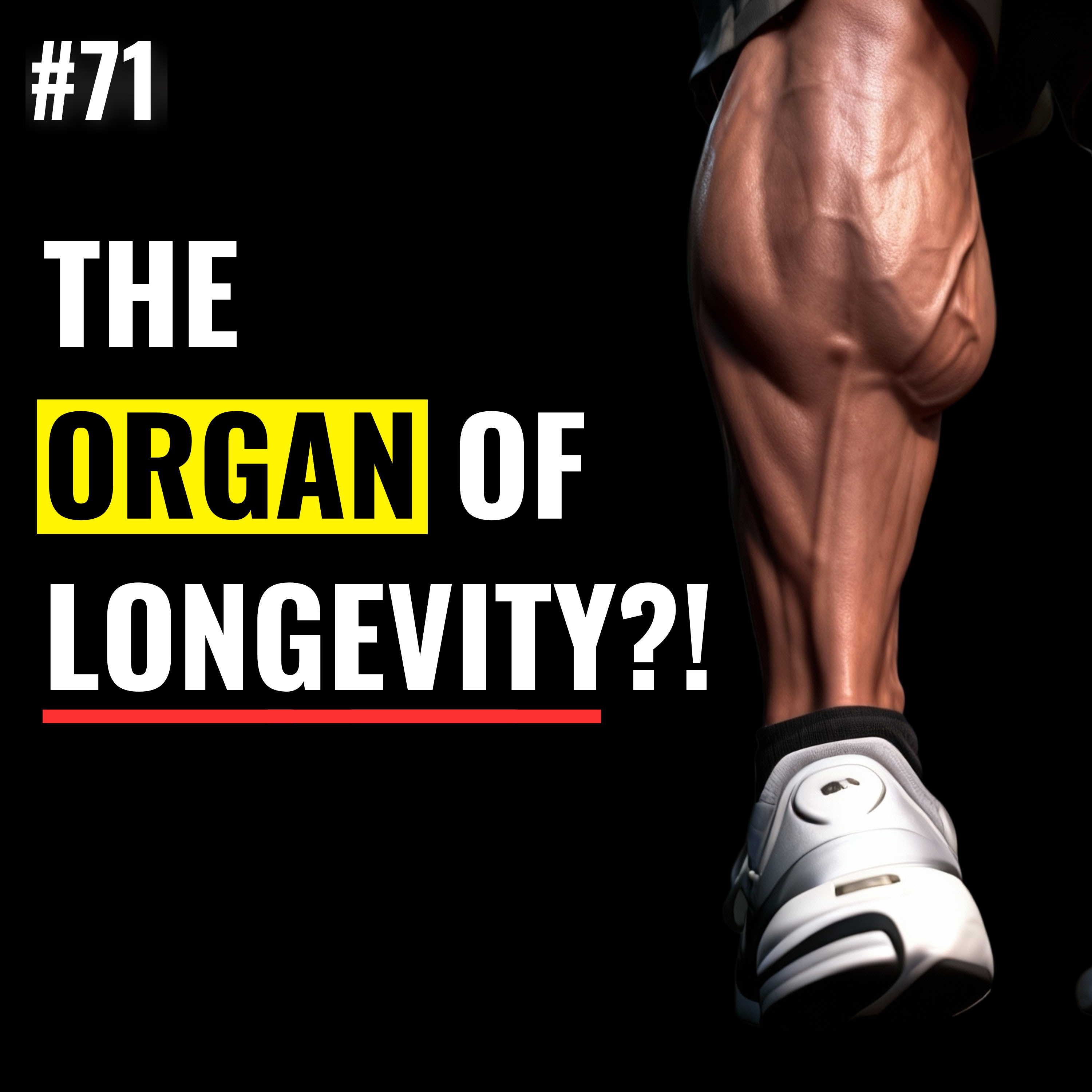
Muscle is the organ of longevity. In this episode, We explain why building muscle is key to fat loss, metabolic health, blood sugar regulation, hormonal balance, and anti-aging.
Learn how muscle improves insulin sensitivity, boosts metabolism, supports thermogenesis, and protects long-term health. Discover training, nutrition, and lifestyle strategies for sustainable muscle growth, including protein, carbs, calorie balance, stress management, and recovery.
Whether your goal is fat loss, strength, energy, or healthy aging, this episode provides the science-backed tools to transform your body and optimize longevity.
🌿 What You’ll Learn:
• Why muscle is the organ of longevity
• Muscle’s role in fat loss, metabolic health, and blood glucose regulation
• How muscle improves thermogenesis, metabolism, and hormone balance
• Training principles: volume, frequency, progressive overload
• Nutrition for muscle growth: protein, carbs, and calories
• Managing stress, circadian health, and recovery
• Anti-aging benefits of building muscle and optimizing hormones
🔔 Follow for more episodes on muscle, longevity, fat loss, metabolism, blood glucose, hormones, strength, circadian health, and anti-aging
---
🔥 12 - Week Body Transformation Program: Personalized Nutrition, Training & Lifestyle Optimization to transform your body from the inside-out ✅️ Start your Journey Today
---
‼️Join my Free Fitness Wisdom Podcast Telegram Community HERE: I look forward to seeing you in there!🤗
---
📥 Join my Newsletter for FREE Educational & Empowering 🧠 content straight to your inbox: FIND IT HERE
---
⬇️ Find & Connect with me Here:
https://www.bio.link/move_with_andreas
👉🏽 For Discounts, Offers and Freebies: HERE
---
⏱️ Chapters:
00:00 Intro
00:50 Benefits of Muscle
01:00 Muscle as the Organ of Longevity
01:45 Metabolic Health & Muscle
02:20 Blood Glucose Regulation
03:40 Muscle & Mitochondria
05:00 Muscle and Heat production
07:00 How Muscle Boosts Metabolism
08:45 Fat Loss as a Byproduct of Muscle
09:00 Calorie Burn Factors
10:29 Sustainable Fat Loss
11:30 Do Calories Matter?
12:30 Body Composition & Muscle
16:30 Do Muscles Make Women Bulky?
19:20 Muscle for Strength
21:20 Strength for Muscle
24:00 Muscle & Immune System
24:30 Inflammation’s Role in Muscle Building
28:40 Why You Can't Build Muscle
29:26 How to Train for Muscle
30:50 Weekly Training Requirements
31:50 How to Transform Your Body
32:25 Progressive Overload
35:10 Protein Requirements
37:30 Carbs for Performance
42:00 Eating Enough
44:40 Catabolism vs Anabolism
47:15 Optimizing Hormones
51:20 HRT vs Circadian Rhythms
53:25 Stress Is Catabolic
56:30 Melatonin & Anti-Aging
01:00:00 Chronic Stress & Muscle Breakdown
---
👇🏽 Find the SHILAJIT I use & recommend HERE ⚡
Use promo code: MOBILITYFITNESS for Discount ✅
.
➡️ For my favourite Blue Light Blocking Glasses, use promo code: MOBILITYFITNESS for 15% Discount ✅ HERE
.
💦 My favorite Magnesium Supplement HERE⚡Use promo code: MOBILITYFITNESS for Discount ✅
.
👉🏽 Find Best Red Light Therapy panels, Blue Light Blockers & Circadian friendly bulbs 🚨Use promo code: MOBILITYFITNESS ✅ for 20-50% OFF your order HERE
---
*None of the content / statements in this Podcast are Medical or Personal Advice & is not intended to cure, treat, prevent or diagnose any medical condition. All my videos are for Educational & Research purposes only. If you decide to try anything discussed in this video, you agree to do so at your own risk & responsibility*
This is the Fitness Wisdom podcast, the reason why you're still skinny and can't build muscle. These are the factors that we're going to be talking about today in this episode for men and especially for women. But before we dive into that, we're going to be talking about the importance of having muscle in the 1st place. So let's talk about why it's so important to have more muscle on our frame. Muscle improves metabolic health. Muscle sucks up glucose from our bloodstream. Muscle is loaded with mitochondria.
Muscle can improve our insulin sensitivity. Muscle can talk to our immune system through myokines, lowering inflammation. Muscle increases strength. Muscle improves body composition. Muscle contributes to thermal genesis, so that means that it can regulate your body temperature. Muscle can improve your self-confidence and self esteem. No wonder it's the organ of longevity. Did you know that? Why it's actually so important to try and maintain and even build more muscle, Especially as we age beyond 30 years and older, we start losing up to 8% of our muscle mass per decade.
So that's quite a lot if if you add it all up. So therefore it makes even more sense to work hard for the muscle. Amazing. Those are some incredible facts of why we should consider of building muscle. You see, muscle is not just for appearance and on the outlook, although that is an incredible byproduct that we get from acquiring more muscle on our frame. But as Tina mentioned, there are so many incredible benefits of having more muscle because it is the organ of longevity, because it gives us so many metabolic benefits, as Tina actually mentions.
And so now we're going to be diving into the details. Now we're going to be expanding all of those factors 1 by 1 and explaining to you how muscle actually does all of these things. So let's start with the metabolic health. How does muscle improve metabolic health? So muscle acts as a glucose sponge, so it takes up any circulating blood glucose into the tissues and muscle also can improve our insulin sensitivity. So those are super important factors when it comes to the metabolic health. That's so cool.
So basically what you're saying is that we have like a bigger area to store the glucose in our body because we know that actually glucose doesn't have many places to be stored in the body, right? The only places are the liver and also in the muscle. So the more muscle we have, that means it's like a bigger surface area for our body, sort of like a bigger bucket in a way for us to store that circulating blood glucose. And we know that chronically elevated blood glucose is not a healthy thing, right?
And this is how metabolic health and muscle are tied together because the insulin sensitivity and then the ability for the tissues to utilize the fuel all depends on how sensitive they are, how receptive they are to the fuel. So if we have chronically elevated blood glucose, always the tissues always become insulin resistant. And so this is what we call poor metabolic health, right? And our bodies not able to utilize the fuel efficiently. So good metabolic health would mean that our bodies able to get the fuel that we are eating and putting in our body and to metabolize it and to give us energy, cellular energy.
But when it's not able to do that, then the body has to pump out other substrates into the bloodstream such as fatty acids, and to produce its own glucose from the liver as well, which further elevates the blood glucose even more and we can run into some issues. So having more muscle is an absolute game changer for blood glucose regulation and metabolic health overall. Did you want to add something? Absolutely. And muscle is also very much filled with mitochondria and we know that mitochondria, they are really important for ATB production.
They are super, super important in keeping us in check and also muscle contributes or training the muscle actually contributes to mitochondrial Biogenesis. So actually we can make more mitochondria in that muscle. So muscle is really like also your mitochondrial reservoir. That's amazing. So basically the more mitochondria we have, basically you're saying we've got more factories and places for that fuel to be metabolized in the 1st place, right. So another thing that you actually mentioned there, which was important is the fact that you're saying that somebody who is untrained can actually have less mitochondria in their muscle.
Am I understanding this correctly? Absolutely. So training and actually we can, we can have better quality muscle mass. So the more we train that muscle, the better it actually becomes the more dense with mitochondria and that is also quite important when it comes to the metabolic flexibility. So muscle can drained muscle can really keep us metabolically flexible, able to switch in between of fuel sources as well. That's amazing. So when you talk about metabolic flexibility, you're basically saying that the body can efficiently switch between using fats and carbohydrates as a fuel.
And we know that this is absolutely important because this prevents like energy crashes and then feeling jittery and like low on energy in general. So your body to be able to efficiently switch into your for body fat, it's a really, really big deal, especially if you care about like having good energy levels, good cognitive function and just in general thriving in daily life. Guys, if you haven't already, smash that subscribe button and the like button. Now back to the show. And the mitochondria in our muscle, it also regulate, helps to regulate our body temperature.
Did you know that? So people with adequate muscle mass, they can regulate their body temperature better to people who actually don't have enough muscle in their body. Would that be because the muscle actually like shivers, like when, you know, when we get cold, for example, if we get in an ice bath or, or if we get in, you know, in just cold temperature in general, Is that because the muscles contract in a way so that they can, you know, produce heat? Is is that how it works? Absolutely. You hit the nail on the head actually with that one.
So but but also we know is that the muscle can contribute to the non shivering thermogenesis as well. So that is something that we think that only brown, brown fat can do. But actually muscle plays a role as well. But shivering thermogenesis is definitely a big piece of this puzzle. So the non shivering thermogenesis, does that occur due to the mitochondria producing more energy because the muscle are more mitochondria dense? Is that the reason why? That is how I understand it, yes. That's so cool.
Yeah. It makes you realize, you know, when you think about the mitochondria, it's so fascinating, right? They're not just responsible for making cellular energy for our cells to function and thrive in general, but they are, you know, sending cellular communication through the form of light and vibration and frequency in the system, you know, creating coherence, but we're also creating heat for us to be able to survive our environment. It just makes you realize how our body is evolved to adapt and respond to the environment, right?
It's so intelligent. How does muscle boost our metabolism? Well, basically, as Tina said previously, the muscle is loaded with mitochondria, right. So they have more energy factories and the bigger surface area we have in the body and the more energy factories we have, that's going to increase our resting and total daily energy expenditure because our resting metabolic rate is greatly determined by our overall mass. So the the amount of mass that we carry on our body and specifically our muscle mass.
Now fat is not as metabolically active as muscle, right, because it has way lower mitochondria, but we know that brown fat has way more mitochondria in it. And This is why actually brown fat is known for improving metabolic health as well. So it all really comes down to having more mitochondria in the body, having more efficient and healthy mitochondria. And we more, the more we have of that, we burn more energy by sitting down and doing nothing, which is your resting metabolic rate. And then you've got your total daily energy expenditure, which is how much energy in terms of let's say calories you are burning across the entire day.
So no matter what you're doing, if you are a person who has more muscle and you weigh more in your body in terms of muscle and you have lower body fat, this is actually increasing how much energy you're burning by just doing the same tasks as someone else who has less muscle than you. So that means that, for example, that you can be climbing stairs and be burning one 100 calories by climbing stairs and another person can be burning 50 calories by climbing stairs just because of the fact you have more muscle on your body.
And this is incredible and very advantageous, especially if your goal and aim is to change your body composition and appearance and lose body fat in the long term. Now, something that me and Tina we talk about all the time, especially when it comes to body transformation, is that think about fat loss as a byproduct of everything else that you're doing. It shouldn't be like your main focus. You should be aiming to build your muscle and become more capable, become more strong, become more mobile, functional and have a healthy diet and healthy lifestyle.
And fat loss comes as a result of that rather than striving all the time to, you know, search for that fat loss by doing strict elimination diets and very low calorie diets and also, you know, doing insane workouts, you know, they are promising you're going to burn thousands of calories. Our workouts and everything that we're doing should be aimed for a higher purpose for, you know, building strength and muscle over the long term rather than trying to burn calories. This is why when you see things online about, you know, this workout is going to burn 1000 calories in like 1 hour or something like this.
That's great. But that varies from person to person, as we mentioned, based on the amount of muscle mass, based on the gender, based on the age, all of these things play a massive role on your metabolic rate, your baseline metabolic rate. And then obviously that will determine how much energy you will be burning during the activity as well. So This is why people can have very different outcomes when it comes to exercising in general. So we should actually use exercising, resistance training and muscle building as a way for us to improve our function and our strength overall and our appearance and our body composition and our fat.
Our fat loss or losing the body fat will come naturally over time. I love it the way you explain it because to me it just makes sense that muscle makes your fat loss as well way more sustainable because as I understand, we can maybe eat a little bit more food but still remain with a pair of body compositions, so leaner body compositions. So that all just makes so much sense. Yeah, that's absolutely right, because a lot of people, they try to starve themselves, right when they're trying to lose body fat.
And one thing that you know, me and you were really big advocates of is that people shouldn't have to starve themselves. They need to choose a diet where they can sustain consistently for the long term. And we know that that's actually how you get real results, right? It's not by sticking to something just for four weeks and then quitting and then, you know, taking break and then going back to it doesn't work like that. You need to find something that you can stick to for a minimum of 12 weeks because if you can stick to it for 12 weeks, most likely you are going to see incredible results by that time, especially if it's designed specifically for your body and goals, right?
If you're not obviously seeing changes and you've been very adherent, you know, for such a long period of time, that means that the plan wasn't specifically designed for your body, all right? And so that means that you need to find what actually works for you. So one beautiful thing of having more muscle, as Tina said, is that you don't have to restrict yourself as much with the food, but your metabolic rate is naturally higher, which naturally puts you in a calorie deficit. Now, you know, a lot of people like to argue about this calorie topic.
You know, it's calorie discussion. No one likes to talk about it because no one likes to take responsibility. That's my personal opinion on this. By tracking your food and knowing how much you're taking in, you're taking personal responsibility and ownership of what you're putting inside of your body. It's very hard to know how much fuel and energy we're actually expanding on a daily basis, but it's very easy to know what we are actually putting in. And that is 1 very big predictable thing that we can control in our daily life, such as our breathing and you know, our daily habits that we do.
So it's another thing that can take you very much forward. So when you have more muscle on your body and you're able to control how much food you're taking in, you're, you're able to increase the possibility of having positive impact basically on your overall outcomes when it comes to reaching your goal. This is fascinating and this leads me up to the body composition. So as you are explaining, this metabolic rate is super important for better body composition as well. And This is why when we acquire more muscle mass on the frame, we are ending up with a better body composition in general.
And even if we have slightly higher body fat, we can get away with that in a way because we have more of that muscle mass on the frame. So we can still look rather lean and the Poly fat percentage will be lower even with the same kilos of fat on our frame if we carry a little bit more muscle mass. And yeah, for metabolic outcomes, this is super important. And then that translates to health hugely. Correct. Based on my research, this is the best Shilajit in the world. Here's why you need to know about Shilajit.
Shilajit is a herba mineral substance made from the decomposition of plants and bacteria. This process taking place over thousands of years. It's harvested from the Altai and the Himalayan mountains. Think of it as a hyper concentrated plant matter that is made by a Mother Nature over thousands of years. In many cultures and traditions, it's known as the destroyer of weakness. Let me tell you why. Shilajit is loaded with ionic minerals which are the most bio compatible with our human body. It also has a very high concentration of folvic acid.
This folvic acid allows those minerals to get into the cell and do their work. Minerals are absolutely essential for all processes of the body, from having good energy levels, enhanced cognitive function, hormone optimization and so much more. You name it. This is why I use Shilajit on a daily basis because it works on a foundational level, on a mitochondrial level and we know that we need healthy mitochondria in order to produce cellular energy. Something very important to mention is the quality of the one I use has been tested for heavy metals and impurities, ensuring the highest quality shilajit.
So if you want to experience this incredible ancient substance and find the one that I use on a daily basis, head over to the description below and use the promo code attached to get a discount on your entire order. Because basically it's about the ratio, right? So for example, if we take a person at the beginning of the year in January, let's say they weigh 70 kilos, or let's say 50 kilos for a woman, right? And then she has 20% body fat and she builds 10 to 20 kilos of muscle in a year, which is like in insane, that's like probably not possible naturally, right?
You can probably build 5 to 6 like on a really good year, if you're doing everything right, you can probably build around 6 kilos of muscle in one year. And so therefore that means that your metabolic rate will naturally rise even if your diet, let's say is that maintenance calories. And you're not even trying to diet down, but you've focused on building your craft, building your body over time, over the entire year. And because of that, now you have a, a resting metabolic rate and a total daily energy expenditure which is greater than where you started at the beginning of the year.
So let's say you weigh 56 kilos at the end of the year compared to 50 kilos where you've started. Let's assume that the body fat is the same, which it probably won't. It probably will have gone down because your metabolic rate is rising all the time throughout the entire year. So then the by the end of the year, not only will you look leaner, but you'll also have like way more muscle, you'll be way more metabolically healthy, metabolically flexible. That means that you can enjoy, you know, eating different kind of foods that you wouldn't normally be able to eat before, and it just makes your life so much more pleasurable.
So it's absolutely essential that you acquire more muscle on your frame. This is not an option. This is like I feel a non negotiable. I totally agree on that. And beyond all the health benefits, you do get more shapes in the body as well. So that's another addition. And also I need to mention that that's those small amounts of increment in our muscle size are not going to, even though we, we talk about building muscle and building whatever you even mentioned 5 kilos in the year, if we do everything right, that's not going to translate to huge physique.
So those are still quite subtle increments when it comes to the size and actually which is in the end up having more structured and shaped body rather than huge bulky muscles. I think it's just important to mention that because a lot of ladies especially do not really, they won't end up bulky. So that's that's not really what's happening. Yeah, I think that the issue lies in the fact that people are lacking structure and consistency in general and lack of knowing, lack of trust within their body and within themselves.
They're not willing to put, you know, the time and effort, you know, for a two to three month period to see what happens. You know, by being consistent, people are just reading stuff online and they're not willing to experiment with their bodies like you and me have over the years and to be to see what actually happens when you do this process. You know, and it's not like magic. You don't build muscle overnight. It takes time. It takes months and years to actually build a significant amount of muscle where you can get to a place where you can be metabolically healthy and flexible and you can have transformed your body and your physique.
You can achieve so much in one year time if you do everything correct from training plan, nutrition, lifestyle and habits. All of these things, they are essentially, if you don't get those things, these three things right, you're not going to achieve the physique that you want in the shortest amount of time possible. And if you see this more for the long term, like for longevity benefits beyond the outlook, then it makes you stay way more consistent to your actual plan. And for ladies who are actually concerned about looking bulky, you just need to remember that muscle is what actually gives shape to your body, right?
It's not actually what makes you look massive. And muscle in general is way more dense inter compared to body fat. So meaning that muscle is way smaller in size. When we when we say 1K of muscle, for example, can be very small versus 1K of fat, it's significantly bigger, bigger, it's almost double in size, which actually shows you that you are not going to get massive by building, you know, muscle and it's only going to make you metabolically healthy and it's going to set you free from, you know, your dieting prism that you're in basically.
OK. So now let's move into the next factor that we mentioned of why it's so important to have more muscle on frame, which is actually acquiring more strength. Yeah, that's quite important. And actually it is known that grip strength, leg strength, muscle mass, they are all important predictors of our health, span and even lifespan. So, so this is actually something that we shouldn't negate. And I think a lot of times strength is probably something that we start appreciating only later in life, when actually where the absence of strength is actually quite noticeable.
A lot of times, for example, floor risk is higher, you know, maybe we don't have a lot of strength getting up from the floor, these type of things, just functional strength in general. So that would really be the base, even without thinking about like how much we can we lift in the gym and can we do like some extreme lifts, but just simply. The strength to handling our body weight in different situations. I think this is just some something very important to consider when it comes to the strength.
So basically being capable, being being able to be functional and capable in daily life. I think everybody wants to be be able to be functional and capable until a very old age, right? But no one thinks about it in their 20s and 30s because naturally we acquire or we have quite a good amount of strength, even if we don't exercise to be honest, you know, at a young age because our body is just youthful, you know, it acquires a lot of strength from when we are children. You know, the strength to body weight ratio that we have as as kids is incredible.
And then we slowly lose that as we get older, especially if we don't participate in any kind of sports. And, you know, the older we get and the less we do actually resistance training, which can be, you know, either with body weight or with weights, you don't actually have to use weights in order to resistance train. You just need to find a way to push your body close to failure. As long as you're going close to failure, that is very, very effective at building muscle and building strength. And muscle and strength go hand in hand.
I think that's something very important to mention that when we are actually exercising, we should be focusing on building strength. And as a byproduct of that, again, like not focusing on building the muscle, just as we said, not focusing on losing the body fat. But actually when we focus on building strength, a by product of strength is actually to have more muscle because actually the body needs more muscle in order to generate more strength. Because where the strength come from, strength actually comes from the fact that you have more tissue to recruit through your nervous system state, but you also have more energy factories basically in that muscle, which actually generates the power.
And so the power is the strength, right? And so the more strength and power you have, inevitably the more muscle mass you have. So as your capability improves, so will your muscle mass increase as well. When you place a demand on the body, the body has to respond in a positive way for your survival. Because it actually doesn't like it when it feels that you're weak and that you're under a lot of stress. Because actually when you're under a lot of stress, the body thinks, hey, now this is dangerous for my body and I don't want to experience this again.
So your body basically makes you stronger for the next time you do it, but then what you keep doing is you keep on going a little bit harder than the previous time so that you can keep on going forward. But if you always give the body the same intensity, you're always just going to stay on the same level. That's why you see so many people who go to the gym year after year after year, and they look the same because they are not actually challenging themselves, but they're also not eating the right amount of food or eating the right amount of protein.
They're probably not sleeping. So all of these factors together. Did you want to add something to this? No, I, I think you are absolutely on point. Of course we can. We can gain some amount of strength without gaining a lot of muscle, muscle size. But those two factors do come handy 100%. But of course we can, like you said, we can build higher quality muscle, we can make the mitochondrial Biogenesis and we can recruit the muscle better as well to a certain extent. But yes, of course they go handing on it.
One thing that really is quite worrying when it comes to the modern life is that we don't need to do a lot of things with our physical bodies anymore. So I would actually like to challenge like is it actually aging that is happening to our bodies or is it a lot to do with the lifestyle factors as well? So that's why I think some form of physical training, it's almost like a non negotiable in the modern world. And evolutionarily our bodies would have endured a lot more than we do in the modern day.
And of course, also we have a lot more metabolic consequences when it comes to that. So, so yeah, I think a lot of the things can really be, you know, negated, negated in the long, long term if we do things right. 100% OK, so now let's move on to the next factor. So how does muscle actually help with our immune system? So muscles actually produce something called myokines, which are like these little messengers for our immune system. So that's how I would like to think of them. And so they can really help to regulate inflammation in the body, which is very important because unregulated inflammation can be really harmful and even aging for our bodies.
So. So this is really an undervalued benefit for having more muscle or trained muscle. So basically like you're saying that when we have rampant inflammation, which is out of control, it's going to create more damage and chaos than than benefit? Absolutely. If it's unregulated, of course inflammation is really important and helps to repair tissues, but unregulated inflammation is something that we don't want in the long run, Chronic. Yeah, I think it's so important to talk about this, you know, nuance, because a lot of people when they hear inflammation, they all of a sudden assume that inflammation, you know, equals bad.
But in reality, nothing happens by accident within the body. Everything has a specific purpose. So things that feel like they are working against you, they are always like working for you. It's just that when they get out of control because we have created cellular chaos, cellular incoherence, or we are bombarding our body all the time and not giving it the room, Then we think that, you know, that our body is just trying to, you know, harm us. And then this is what we call, you know, when we talk about autoimmune conditions and we say that the body is attacking itself, is it actually attacking itself or is it just trying to regulate as much as it can based on the, you know, the circumstances and, and the capability that it has in the situation?
Muscle cramps, eye twitching, headaches, agitation and stress. Those are all signs that I have magnesium deficiency. I can always tell when I haven't taken my magnesium. You see, magnesium is an absolutely essential mineral and is required in over 600 biochemical reactions across the body. I'm pretty sure we've all experienced that calf cramp in the middle of the night and that is most likely due to a mineral or magnesium deficiency. And the reason why most individuals are deficient in magnesium these days is because stress depletes magnesium.
And tell me a single person in this world who is in stress right now, whether that is physical or psychological stress. Magnesium is something that I'm very religious about taking every single evening before I go to bed because I don't only want to sleep 8 hours, I want to have a deep and restorative sleep. I know that when I've taken my magnesium, I wake up feeling relaxed and refreshed. So if you want to discover the magnesium that I use on a daily basis, you want to make sure that you head over to the description below and use the promo code attached to get discount on your entire order.
Yeah, I always think of it like our body is actually not doing something against us, but it's actually responding correctly to its environment. And that could based on situation. Exactly. So that could be any situation, but it can be uncomfortable. But I personally like to look at it at, OK, this is somewhere we need to pay attention to. So if we talk about muscle, just simply, you know, repairing and building more muscle requires inflammation to some certain extent because inflammation, it's kind of like a signal for your body.
Pay attention here, repair this thing. If we get a wound, whatever, it's going to get slightly inflamed so that our immune system can be like, OK, wow, here guys, we need to do something. So so inflammation is not a bad thing, but the regulation is a key. Yeah, because when you break muscle down, you know, because most people think that you build muscle in the gym, right? You actually don't build the muscle in the gym. You break the muscle down in the gym. That's the whole point. Or you don't have to be in the gym, right?
You can do a body weight work, you can achieve the same results as long as you're pushing yourself close to failure. That feeling that you feel the next day is that muscle soreness. It's not only the muscle damage, you also have that lactic acid buildup. You have metabolic waste buildup in the tissues. You feel that soreness, right? But in general, your body actually needs that inflammation in order to repair the muscle damage to come back stronger and better than before and more capable. Because if you don't actually have the inflammation, we know that many people who take actually anti inflammatories and train, that actually can be very dangerous because then the body does not get the signal to repair the body after the exercise.
This is why it can be potentially dangerous, you know, taking certain like medications and and exercising. This is why people need to always work with their their doctors if they actually are, you know, considering, you know, using these things while they are exercising in hard intensity. So why are people still skinny and can't build muscle? Well, that can be due to many factors, but I think let's focus on the most important ones. Lack of training, consistency and frequency in general. You're scrolling your phone late in the night and you're basically not sleeping.
You are not prioritizing recovery and regeneration. You're not eating enough protein, and you're not eating enough calories and food in general in order to create an anabolic environment. You're not progressively overloading, meaning doing a little bit more than the last time every single time. So let's get into it. So what are you actually meaning about the training? I'm not consistent enough and I'm not doing enough intensity. Can you expand? Yeah. So basically the consistency is so important, meaning just showing up, like if you have a weekly schedule show up, like whether you feel like doing it or not doing it, you need to still show up.
And even if you go 50% of the effort, you are still putting in the efforts, right? Your body keeps the score. So it's so important for you to keep showing up because eventually over time, you know, the majority of the time, most people don't actually feel like exercising. And this is the absolute fact. Even for me and Tina, many, many times we are tired from doing a lot of the other stuff that we're doing. You know, we are content creators, we have our clients, we have a lot of stuff to do in our daily life, right?
And, but we always prioritize our training. We always have like a weekly schedule that we follow. No matter how we feel, we always show up and do it unless we are very, you know, sick or something like that. We need to take time off. That is the only time that we actually take time off. Rain or shine, we are going to be training, right? And this is super, super important for getting you closer to your goals because we know that in general in life, no matter what it is, whether it's training, whether that's like financial, whether that's got to do with any single aspect of your life.
If you want to see results, you have to be consistent, whether that is one time per month or three times, you know, every single week, or it depends on what you're, what we're actually talking about here and then the frequency of the training. Now let's talk about that. So a lot of people go one time to the gym per week and they think they are going to see meaningful changes. You know, yeah, sure you can achieve, you know, incredible results, you know, from not doing anything to doing one time per week.
You are going to see a really big difference for sure because obviously your body just perceives that difference from doing nothing to doing something. But in order to actually see meaningful changes in the fastest amount of time possible, we want to be hitting a minimum of three times per week in terms of hard, intense exercise in the form of resistance training. Let's not confuse this with movement. We know that movement is a biological necessity. It's something that we need to do on a daily basis, such as, you know, yoga, stretching, walking, swimming, cycling, all of this like gentle form of movement which doesn't break muscle down is actually extremely beneficial for our blood flow, our lymphatic system, our immune system, our mental health.
All of these things, they're super important. But in order to transform your body, like we mentioned previously, you need to build the muscle so that you could improve your metabolic rate, so you can lose the body fat, so you can get the shape that you want in your body and you can be metabolically flexible and metabolically healthy. You can't achieve all of those things by just doing movement. Movement is going to maybe just burn a little bit of energy, but what's going to burn the majority of the energy is actually acquiring more muscle.
And This is why consistency and frequency of training is super duper important. Love it. Tell me a little bit about the progressive overload now that you are on the training topic. So this is super important, right? Because if you're not doing a little bit more than the last time, you're just going to be stuck in the same spot. This is why you see people in the gym, you know, when you, you see them like year after year after year, the same individuals doing the same exercises on the same machines, they have the same habits and routines where they are comfortable with.
They are not going out of their comfort zone. But we know that we actually don't grow if we don't go out of our comfort zone. When we exit our comfort zone, that is actually when we grow and we actually become better in every single aspect of life, whether that's strength, whether that's muscle mass, whether that's explosiveness, whether that's mobility, whether that's endurance. All of these factors require you to exit your comfort zone. That doesn't mean that you need to be killing yourself in the workout.
It means that you need to have strategy. So for example, you set yourself a goal. You say I'm going to do three sets of 10 on squats this week with let's say a certain amount of weight. The next week you use the same weight and you do three sets of 11 reps. The week after that you do three sets of 12 reps and then once you get to a certain amount of reps, you can cap it and go back down, increase the weight, and now climb the ladder again. That is one form of progressive overload by increasing the amount of reps instead of increasing the amount of weight because it's not guaranteed that every single time you will be able to increase the weight, right?
Because that would mean that in one year you would be like pro strongman or pro power lifter if you were able to increase the weight every single workout. But once you plateau in the amount of weight that you can lift, you can change the variables you can, you can change which factor is the progressive overload, whether that is more time under tension, less resting time, you know, adding more reps, There are always ways that you can find that you can progress. I wanted to add on the progressive overload.
Is the reason actually why you want to progressively overload is because if you don't do this, your body doesn't see a reason for you to change. So basically you can't build more muscle if you don't give your body a reason to build more muscle. So muscle is a doing organ, you can think of it as that. So when you do something and there is a demand for it, you will have more muscle. You know that saying use it or lose it, right? Well, it's come is very, very true when it comes to muscle because try laying a couple of weeks in bed, not doing anything and tell me how flat your bum is.
That's just like from not walking around like doing daily movement, you know, and probably all of your muscles as well. So that just actually shows you that how important it actually is to do, you know, give the body a reasoning to actually change. Love it, thank you so much. Now for the protein piece. What do you mean? So most people are obviously under doing protein. We know that, you know, lately, like there are a lot of people in the space who are, you know, big proponents of protein. And I feel like that's really, really great because the awareness has increased, but still the majority of people are under doing the protein.
You know, a good rule of thumb is about 0.7g per pound of lean body mass. That is a really good, you know, starting point for people, you know, to actually start preserving and building more muscle mass. You don't need to go so much on the higher end because I feel like it doesn't benefit so much, but more about thinking about the other macro nutrients as well. Because a lot of people are under eating calories in general. Because if you actually eat the right amount of protein that you need to build muscle and preserve muscle, if you're not eating enough calories, your muscle is not going to have the fuel that it needs in order to perform in the exercise.
And obviously, as we mentioned previously, you need to be able to perform in order for the body to change in order to build more muscle, in order to have more strength and capability. So if the capability and strength doesn't increase, obviously your muscle mass will not increase. Right at the beginning. If you haven't been eating adequate protein and all of a sudden you eat the right amount, you will start to notice a massive difference in your overall health and well-being, in your hormones, your mental health, your skin.
It's important for everything. It's not only for the muscle. So This is why I'm saying it's it's another biological necessity, something that you can't just mess around with and you have to also be consistent. So another thing is that a lot of people do is they eat one meal or one day they eat very high protein, another day they eat very low protein. They are lacking the consistency. Your body has a nitrogen pool, so where it's actually storing all of these amino acids in the body. And if you're not keeping that pool top top, your body is not going to have adequate amino acids in order to recover and regenerate that muscle that you're trying to build.
Love it. Yeah, I think it's a fine line with protein as well. Like we need adequate amount, but then the excess protein doesn't really serve because I also see that a lot of people in the fitness space, they overshoot the protein way up there. And I think that's taking so much attention away from the fueling macronutrients. So from your carbs, especially carbs for lifting weights, I think it's this is also something that people neglect. And of course, fats, we need some fats for sure. So. So yeah, I think digging into account the overall calories and how much protein.
So make sure that we cover our protein and then spreading the rest of the calories smartly for for carbs and pets. So I just wanted to add one thing there about the the excess protein is that we don't want to be thinking about the protein as a fuel source. We want to be thinking it more of as a building block of because that is actually what it is. But in times of emergency, the body is very intelligent. It can actually break down protein in order to make glucose. And when you think about resistance training in general, which is actually what you need to build muscle, like I said, no movement resistance training, it's an anaerobic activity.
And what does anaerobic activity require? It requires glucose. So that quick fuel you actually, yes, you may use some fats, but actually the majority of the the movement and the exercise itself is anaerobic. So that burning feeling that you get is meaning it means that there is a lack of oxygen or there is a, there is an absence of oxygen in the muscle. So at the beginning when you start doing an exercise, you don't feel so much of A burn right when you're doing it, especially like if it's the beginning of the workout.
And then as you get into the set, you will start to notice that, oh, I'm starting to feel like my muscles are really burning and they're hurting. But why is that? It's because the the muscle is literally running out of oxygen and now it needs to switch metabolism into anaerobic metabolism. Anaerobic means absence of oxygen and aerobic means presence of oxygen. And this is actually what determines which metabolism your body is using. And a lot of people like to argue that, you know, when you eat a certain way, you can be in a certain type of metabolism.
But the body is very intelligent. If you put the body under a certain demand or stress, it's going to shift metabolisms accordingly so it can survive that stressor. And so we are, what I'm actually explaining to you is that sprinting and hard intense exercises and eye spots and all of these things, they actually use a ton of glucose because you are shifting into an anaerobic metabolism, whether you like it or not, right? And so when you're doing something that's very easy and relaxed, you are using primarily fatty acid oxidation, you're using more fat.
But then when you do something hard, you're going to be using glucose because that is the fastest form of energy the body can use in order to actually perform the task. And this could also explain when a lot of people, they overdo the protein, but they don't seem to get those results in the team or in the training that they are looking for. So actually a lot of people struggle even on very high protein diet, they struggle to build the muscle. So that could be one reason there. So actually it is not preferable for the body to, especially if carbs are too low, then the body has to convert some of those amino acids into glucose and that is absolutely not beneficial in terms of that.
Yeah, that's like an energy costly process, right? Obviously when we talk about breaking down proteins to make it into glucose, it doesn't mean only from food. If you're not eating adequate amounts of protein from food, you're going to sacrifice, you know, your own muscle tissue, your own organs, your own tendons and ligaments. And you know, we don't want to be doing that, right? Especially like if you are restricting carbs, there is a risk of this. And This is why we don't want to be risking this, right?
We want to actually be eating an appropriate amount of protein for our body mass, our lean body mass. And we need to be giving the body the necessary fuel, substrates, which is carbohydrates primarily, and fats. Think of fats more as something that your body needs to optimize hormones for skin health and tendons and ligaments and all of this kind of stuff, but not so much as the primary fuel source. Because as we mentioned, the body prefers glucose to use it quickly in times of stress. So anytime when your body is under stress, if you have glucose available, that makes it actually so much easier for the body and it's not so stressful for the body to actually use that fuel.
Yeah, I think that This is why I mentioned that it's so important to eat enough calories in general and not focus so much on losing the fat when trying to build a muscle. I think that's a very important distinction to make because a lot of people are trying to build muscle and lose fat at the same time. You can 100% do that, especially if you're a person who hasn't been doing hard, intense resistance training before and all of a sudden you start doing 100%. You can build muscle and lose body fat at the same time, but the more experienced you become, the more you actually require for you to eat more food and to train even harder than ever before in order to actually build a substantial amount of muscle.
But this is like also the fastest way for you to see results as well. So if you don't actually restrict yourself, if you eat the correct amount of protein and sufficient amount of calories in general, the rest coming from the fuel sources like we mentioned, moderate to low lower fat and weigh more, higher carbs so that you can actually have the energy to perform. Then that will give you the energy to be able to perform in the gym or whatever form of exercise you decide to do to actually, you know, come back stronger than ever before.
But you actually can't do that when you're in a calorie deficit because obviously you are depriving your body and it's having to use the body fat as a fuel. And it actually doesn't like doing that. And that is a more inefficient way of, you know, fueling the body. And then again, so as we mentioned that the body is thriving from having more carbohydrates in terms of performance, But when we are giving, you know, relying on our own body fat, it's the performance is going to suffer inevitably. This is something that's very hard for a lot of people to accept, especially when they're dieting.
Especially if you've been training for many years and you've gained a good amount of strength and then all of a sudden you go through a dieting phase to reveal your hard earned work to lose body fat and then you see that your performance is decreasing as well. That is just something that you kind of have to accept because you in general have to lower your total calories, you know, from that's primarily going to come from your fats and your carbs, not necessarily your proteins. And so those are your fuel sources, right?
So when your fuel source goes down, that means your your fuel availability is less, which means your performance is not probably going to be as good. So eating a sufficient amount of food is vital in order to guarantee or you can guarantee as much as you can from that aspect, from the nutrition aspect. OK that you've covered your bases and that you know if you have low energy in the gym it's not actually due to a lack of food, but it's most likely another lifestyle factor. And it is such a shame if you are really putting the intensity in the workouts and you have a consistent, consistent training routine and you are under doing the calories and just from that aspect, you are not creating this anabolic environment.
So I think that's just such a shame because you might be missing out on some great gains in the Muslim as if that is your goal, yes. Oh, I like you that you mentioned about the anabolism because that's something that, you know, it kind of left my train of thought, but it's so true there because fat loss is catabolism, right? When you break things down, that's catabolism. And obviously when we are losing body fat, we are breaking things down. We are breaking the fat down. We are releasing it into the, you know, bloodstream to be metabolized in the mitochondria to be used as a fuel.
So that's basically where the where the fat goes and then we are going to exhale the majority of our, you know, fat because of metabolism, you know, through the, through the breath. But basically, like when we are in a calorie surplus or a calorie maintenance, we are creating an environment within the body where there is excess or just the right amount of energy substrate, which is anabolic and anabolic means building. And so this is a beautiful environment. The body loves to build and it doesn't like to be chronically in a catabolic state.
When we are chronically in a catabolic state, it's really, really not a good place to be, trust me, because that is where you can lose hair. That is when you can, you know, like have like aging skin. Like you can have all of these things that are occurring in your body. There are looking like they are aging rapidly because they are not having that regeneration that they actually need if you are chronically in that state. So This is why I'm a very big advocate of spending the majority of the year in an anabolic state and then doing short bursts of catabolism in terms of fat loss to reveal your hard earned work.
But the majority of the time, I feel like people should be more in an anabolic state. And naturally your metabolism is higher when you are more in an anabolic state because your body has the food and fuel availability. So metabolism naturally rises to burn off the excess fuel that it doesn't actually need. But when you're in a catabolic state, your metabolism naturally lowers. Even if you have a good amount of muscle too, it still lowers because your body sees, OK, there's less energy substrates coming in, so I should just preserve my energy a little bit.
And the lower you go, the more it goes into that self preservation mode. Now from that, I think it would be a great transition to go to optimizing our hormones. And as it relates to the anabolism as well. So you mentioned a little bit how we shouldn't be scrolling our phones in the middle of the night. And could you explain to me why that is important for our hormonal health? Well, as we know our circadian rhythm, it's literally controlling all our hormones. So the timing of our hormones, our production of our hormones, and release of our hormones is all dependent on the light and dark cycles.
And this is what governs our circadian rhythm, which is our body's biological clock. And every single system and organ of the body and cell of the body has its own unique timing mechanism. And if that mechanism is thrown off, literally everything is thrown off because literally everything runs on timing. As I mentioned. Like as my friend Zaid, the Hajj says that there is not a single hormone in the body that is not under circadian control. So all hormones are circadian hormones, which means that they have an appropriate timing to be released in the body.
And why hormones are important is because they serve different functions in the body. So for example, cortisol is what makes you alert and makes you awake. That's what gets you out of the bed in the morning. Melatonin is your repair and regeneration hormone and the hormone that actually makes you feel sleepy and makes you fall asleep and cleans the body up in the night. So if you don't actually have those hormones in place, those two master circadian hormones, you're not going to be able to get the timing right in the body.
And why like laying in bed and scrolling your phone until 8 hours is a really, really, really bad idea is because it fucks up this mechanism in your body and you cannot fall asleep, right? So you're going to stay there scrolling in bed until you exhaust yourself and then you fall asleep due to exhaustion. That is not recovery and regeneration. That is going to sleep because of exhaustion. That is a completely different mechanism, let's say, and you're going to wake up feeling like you are hungover and basically trashed, right?
So in order to wake up feeling energized and positive and optimistic and feeling like life is amazing, you need to optimize your hormones. And to optimize your hormones, you need to have healthy light and dark cycles and respect when the light is up outside, you should be spending as much time outdoors as possible. And when the light goes away during the day, like sunlight, you should be indoors and you should be making everything as dark as possible and respecting these light and dark cycles. Because if you don't do that, you're actually going to mess up your hormones.
As I mentioned, you're not going to release testosterone at the right time. You're not going to release growth hormone. You're going to even as a woman as well, you're not going to have the correct hormones at the correct time released. So even your cycle can be influenced as a disruption of circadian rhythm disruption. So if you're not getting these things right, you're not going to optimize obviously muscle building, fat loss, regeneration, healing and tissue repair. This couldn't be for anything, right?
Doesn't mean for only muscle. For example, if you're recovering from an injury, that recovery process is actually optimized due to circadian rhythm timing or having healthy circadian rhythms. This is why it's so important for you to spend more time outdoors, less time on your screens and darkness after sunset as much as you can by having red lights in your house, wearing blue light blocking glasses and you know, optimizing your sleep as much as you can and just minimizing stress as much as possible.
And for all of these things that I just mentioned, I will be having some links in the description below as well to the ones that we personally use. We've probably heard about red light therapy before and all the incredible benefits that it has to offer, but unfortunately, not all panels on the market are created equally. And This is why I only use and trust the ones that I have put in the description below. They have the highest quality panels on the market from build quality, a aesthetics and functionality.
So if you want to a massive 40% discount on my favorite red light therapy panels, hit to the description below and make sure to use the promo code attached to get a massive 40% discount. I have a slight frustration about this topic because a lot of times when we go here, like when we start talking about hormone optimization, the anabolic hormones and all that, and people are thinking like, OK, yeah, it's hormone replacement therapy, I might need to take some TRT, all this. But honestly, like who is doing the circadian rhythms correctly?
Like nobody, and especially in the winter in a little bit more darker countries, people just don't think that it's worth it going outdoors and all that. And they spend their days under artificials of blue light 24/7. And that is so damaging to our hormones. And why do, Well, people do struggle with hormones these days more than ever. And when testosterone goes, it's so much harder to build muscle. That's why also women build so less muscle compared to men, like women have way more harder time in retaining their lean mass.
So. And now it also of course it relates to men as well because testosterones are tanking and yeah, certain rhythms are just such an E simple way to do and they are in my opinion. They are the foundation for everything. And the more you understand, the more you realise that it is true, then before those things are correct. I don't think we should pinpoint any specific hormones without actually having the foundation correct. So I think that's where it always begins from of course, everybody's individual and everybody's in their own journeys and, and discussing with their doctors and all that.
But, but I think that's just the general approach that we should flip our mindset slightly. So our bodies always want to adapt to the stimulus that they are given. So for example, from training, our bodies want to get stronger because they want to adapt. So next time when we have to endure what we need, we are going to get back stronger and it's not going to hurt. But if the signals from our environment are not supporting that, then what's going to happen? We just end up breaking the body down more than necessary and we are not strengthening our tissues, Rebuilding, rebuilding.
Yes, exactly. And so, so yeah, it's not what our body wants. Our body is just doing its best in the given situation. Well, actually that was something very important that you mentioned there, because actually a lot of people don't realize that stress is also catabolic. So when you're in a catabolic state, your body's willing to break down anything in order to survive breakdown any tissues, anything that it needs to get quick fuel, quick glucose to the tissues there where they are required. Because stress in general puts your body naturally in an anaerobic state.
And if your body's in an anaerobic state, as I mentioned before, you're going to favor glucose metabolism, right? And so this is exactly what I was saying earlier is that you don't want to be in a catabolic state all the time because that is not when you heal, That is not when you regenerate, when you repair and when you build, you only do that in an anabolic environment. And so this is the beauty of circadian rhythms that during the day you don't have so much anabolism going on, right? You are, you are enduring a lot of stress that is more light intensity.
We are breaking stuff down. We are creating a lot of cellular chaos and damage during the day. And when we sleep, we create an anabolic environment in combination with catabolic if the body needs to clean things up and stuff like that, because catabolism is obviously required to eat things, you know, cells that are mutated or damaged, you know, get rid of things and stuff like that. But you're not going to be doing so much of that during the daytime if you're not exposed to natural sunlight. This is why cellular melatonin, melatonin that's made on a cellular level, not pineal melatonin that's made it after sunset, but on a cellular level you actually get from red and infrared light.
And This is why it's so important to spend time outdoors that optimizes you see these essential hormones so that your body can function properly and repair in real time. So your body doesn't have to do the entire repair in the evening. Because think about breaking your body down or damaging your body the entire day and not getting any natural sunlight at all or any infrared light in general. You don't do red light therapy. You just spend all your time under artificial blue light. You're going to create so much damage, you know, accumulated damage, that now your body now has to supposingly repair that in eight hours.
If you sleep 8 hours per night, and if you sleep at the correct times as well, then that's not going to occur adequately. So you're going to wake up the next day feeling like trash, even if you supposedly aim to sleep for 8 hours per night. So it's not optional, like it's, it's foundational. So if you're not getting this right, then everything else is going to suffer. Your performance is going to suffer no matter even if you're eating the right amount of calories, right, your recovery is going to suffer.
So you're not going to be coming back stronger and better than before. And so that means you're not going to be performing in the gym and that means you're not going to be going forward. And that's going to be very discouraging for you. That's going to affect your mental health. So it all adds up, one on top of each other. So addressing the foundations, which is the circadian rhythms and your connection with the light and dark cycles is absolutely crucial if you will actually want to build more muscle and if you want to, you know, transform and get the body of your dreams.
I'm at this point right now when I'm really observing my own environment and actually starting to appreciate the role of melatonin so hugely as an anti aging hormone, as a repair hormone, all that good stuff and simple. Because now it's winter and we have gotten used to using our technology for so late in the night as human beings that we don't know how it feels to be without. So I actually challenge anybody to try have those nights when you don't touch your phone after sunset and you just let yourself get bored, whatever it is.
Because everybody keeps asking me always like what am I supposed to do all that? I just feel that we are not supposed to be doing all the time. And that is part of it because we are supposed to wind down our brain waves as well. We are not supposed to stimulate ourselves all the time. So the reason why I'm so fascinated about this is because I just see such a huge difference. So now when it's winter, I am compelled to work a little bit after sunset or something like that. But I built myself strict rules just because I wake up refreshed.
I wake up with having had vivid dreams. I wake up with like so much clarity in my mind. I noticed that my eyes are less poofy in the morning. I I feel that my like everything is just being repaired so much better. My muscles are not so sore. All of this. So I just think there is so much benefit in utilizing the power of melatonin in the night beyond muscle growth as well. This is super important, but I just think we need to pay more attention to how our habits are making us feel. So, so that's just when it comes to muscle growth, it's so important.
I just want to add there about the melatonin, it's very important that we're actually mentioning about this body's own production of melatonin because many people will hear this and they will just take a little small aspect of our discussion and just go and take melatonin pills. Now we're talking about the endogenous production of melatonin, which is the cellular melatonin from red and infrared light during the daytime from sunlight or from red light therapy panels. And pineal melatonin, which is actually produced and released from the pineal gland when there is an absence of blue light and when there is low light intensity in our environment because the the body needs those conditions in order to release the melatonin into the bloodstream so we can feel tired.
So it can actually put us into this regeneration state, this natural relaxed regeneration state that we're supposed to be in, in order to have restorative and regenerative sleep. But we can't have that if our body is not going into this deep and that like you know, as you mentioned, these vivid dreams and all of that, like your body's not actually going undergoing that repair if we're not having that melatonin. So it's so easy for us as humans, as Tina mentioned, to like use our phone after sunset, especially in the winter time because in the summertime we have longer light cycles and we get used to a certain habit of doing things using our tech until quite late, right?
But when the seasons shift and the days get shorter, it's so important to respect, you know, that shortness in the day and actually to go to bed earlier as well. So to try and sleep even more hours than before, to try and sleep 910 hours if, if needed, you know, and you can probably get up earlier, yes, in the morning, but that it's probably more desirable for you to go to bed earlier too, in order to, you know, maximize that recovery and regeneration. Because another great quote that my friend Zaid mentioned was that winter is a prolonged period of, you know, recovery and regeneration literally.
Like you have more darkness, which means you have more circulating melatonin if you appreciate that darkness. You don't have the melatonin if you don't respect the darkness, and if you don't if you have a presence of blue light in your environment. So you only get the benefits if you respect nature's rules. So it's an important factor and also a lot of people think that if they don't look at their screens, they are not damaging their melatonin production. But we are under LED lights in our normal homes these days.
So we have our red light bulbs. Oops. But red lighting, Yeah, red lighting in the home. But but many people don't. So chronic stress. I just want to mention that our body is built for survival, like I mentioned before. So if we are chronically stressed, do you think our bodies are putting any focus and emphasis on growing? No, actually our bodies are putting emphasis on running away from that threat, whatever it is in our in our environment. And chronic stress is really, it's not going to allow us to build nice physics.
I have worked with countless of clients in the past who have lived this very stressful lifestyle and who really struggled in building muscle. No matter if they are doing everything right, they can build muscle, but it's just not going to be as efficient. And they might need to go into this more hardcore, hardcore bulks in in pursuit to in order to actually build muscle mass. And, and that's just really demanding when in, if a person is living more in line, in alignment with their natural, you know, parasympathetic sympathetic rhythms, they can build muscles so much easier.
And this is just something that I personally have observed. I don't know if there are some, I'm sure there are some studies out there as well to look into that. But but yeah, chronic stress would be super damaging. And as we mentioned already, the good way to start approaching it is to get our light environment in check because that's just going to support our natural cortisol release and all that. And in the daytime anyway, we are a little bit more responsive to blue light and all that because we are in this more high alert state in the daytime naturally.
So, So yeah, that that's just the basis. I'm I mean, I don't think we should dive into super much deep, but is there something you can? Yes. I just wanted to say that basically when you're under stress, you are like in survival mode or especially chronic stress, you're going into the survival mode. And obviously when you're in survival mode, you're not in a thriving mode, right. So anabolism as well as I mentioned previously is not going to take place. You're all the time breaking the body down.
Your body just doesn't is not putting the resources in the right place to create an environment within your body which is assistive for muscle building right. Again, going back to our original topic of what we started, everybody might be thinking like, oh, how is this all related to muscle? But building muscle is a byproduct of a healthy internal state, of a healthy internal environment. When you create that healthy internal environment, not only do you build muscle more efficiently, you lose body fat more easily, your immune system works better, you're less stressed, you've got like less cortisol, Your mind can think more clearly.
You know, you can have you can have a more optimistic mindset about life. All of these things go hand in hand. And This is why we can't talk about one thing without talking about everything else. So it just sounds like, you know, all of our podcast conversations that me and Tina have, you know, whether it's about fat loss or the best fat loss foods or about circadian rhythms, they all sound the same. But that's because you can't like not talk about the foundational principles, you know, where especially when you're trying to address an important topic such as building muscle.
And a lot of people, This is why, you know, they may be doing everything right or think that they're doing everything right, right. They're doing training, they're eating adequately, but they're not sleeping and they're not appreciating the circadian rhythms. They're not managing their stress. And because of that factor, they're not able to move forward. And this is exactly what we teach our clients. We build them a personalized training plan specifically for their body and goals and frequency, which they can stay committed to.
So if they can only train 2 times per week, then that's great as long as they keep showing up and they keep on doing those workouts. We're not going to make a person do something like 5 trainings per week and then they can only commit to 2 and that's going to stress them out even more and then they're going to quit. In the end, it's all about sustainability when it comes to, at the end of the day, right? Finding a plan which is specifically designed for your body and goals. This is what we create for our clients.
Personalized nutrition plan, super, super important. Again, sustainability and consistency, same principles. Can you stick to it on a daily basis and are you sticking to it 95% of the time? If yes, then you are going to get closer to your goal. Lifestyle optimization. Another thing which we give our clients, this is what we offer in our 12 week body transformation plan. So if you are actually interested in transforming your body from every single aspect and transforming your health from the inside out and then therefore reflecting the results, then we will have a link in the description below and you can contact us and we can get you into the best shape of your life.
Thank you so much, this has been a fascinating conversation and like you said, all the pillars matter when it comes to building muscle as well. And if you guys enjoyed this episode, make sure to smash that like button and the subscribe button and share it with a friend who still thinks that building muscle is genetic. Guys enjoy the topics and guests I bring on the show. I would really appreciate it if you let me a five star review on Spotify and also subscribe to fitness wisdom podcast on YouTube as well as this helps to spread the knowledge and wisdom with the world.
Until next time, this is the Fitness Wisdom Podcast.
 Apple Podcasts
 YouTube
 Spotify
 Castbox
 Castro
 Goodpods
 Moon FM
 Overcast
 Pocket Casts
 Podbean
 Podcast Addict
 Podcast Republic