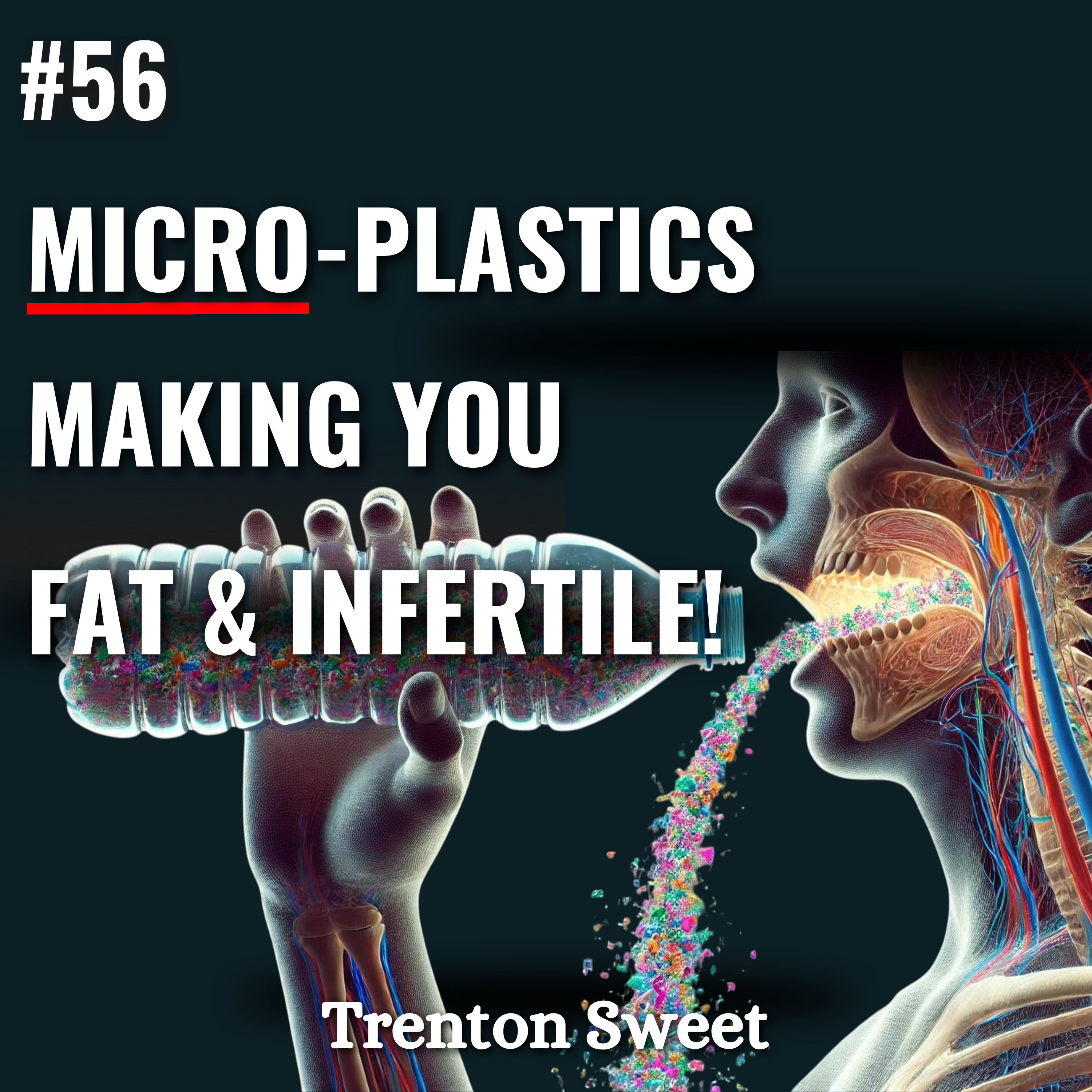
Microplastics & Your Health: How Plastic Pollution Impacts Hormones, Fertility, Detox, Environmental Health & Body Wellness | Detoxification Strategies, The Microplastic Plague by Trenton Sweet
What's This About?
Are microplastics silently harming your body? 🧬 On the Fitness Wisdom Podcast, Trenton Sweet, author of The Microplastic Plague, reveals how these tiny plastics affect your hormones, fertility, and overall health—and shares practical detox strategies you can start today. 🌿 Join him as he breaks down the hidden dangers of plastic pollution and shares actionable steps to protect yourself
In this episode, Trenton explores the difference between microplastics and nanoplastics, the most common sources of exposure, and the shocking ways these tiny plastics can disrupt your hormones, affect fertility, and harm overall wellbeing. He also dives into the history of plastic production and the environmental impact of plastic pollution, showing how this global problem connects to your personal health. 🌎
Learn how to naturally detox your body from harmful microplastics, strengthen your resilience, and reduce chemical exposure in everyday life. Whether you’re concerned about health, fertility, or environmental toxins, this episode gives you practical tips and strategies you can use immediately.
🔔 Follow the Fitness Wisdom Podcast for more episodes on health, wellness, environmental toxins, and practical strategies to improve your body and mind. 🎧
Definitely SAVE & SHARE this episode with a friend, this knowledge is extremely important & potentially life changing!✅
⬇️ Find & Connect with me Here:
https://www.bio.link/move_with_andreas
👇🏽 In this Episode of the Fitness Wisdom Podcast we discussed:🎙️
00:00 Introduction to Quantum Cupping and Holistic Health
00:56 Mila's Journey: From Illness to Healing
03:36 The Evolution of Quantum Cupping
06:31 Understanding Energy and Frequency Medicine
09:22 The Benefits of Quantum Cupping
12:11 The Role of the Fascia System
14:54 Connecting the Physical and Energetic Bodies
30:15 The Fascia System and Belief Systems
32:23 Meridians and the Fascia Connection
34:00 Miracles in Healing: Real-Life Stories
36:16 The Role of Bioelectricity in Healing
38:16 Lymphatic System and Its Importance
42:20 Self-Care Tips for a Healthy Fascia
46:16 Nutrition: The Balance of Protein and Hydration
53:46 Embracing Seasonal Eating for Health
59:00 Final Thoughts on Health and Wellbeing
👇🏽 Find & Connect with Trenton Sweet below 💎
📲 Instagram: https://www.instagram.com/trentonsweet/
▶️ Book: The Microplastic Plague available on amazon
🔥 Find the Hume Body Pod HERE Full body analyser I use & recommend to my clients to help them understand their body fat percentage, muscle mass, cellular hydration, visceral fat & more. It comes with over 40+ actionable health metrics! Get it at a great discount with promo code: MOBILITYFITNESS at checkout ✅
👉🏽 Find the Best UV + Red Light Therapy panels, Blue Light Blocking Glasses & Circadian friendly light bulbs 🚨Use promo code: MOBILITYFITNESS ✅ for 20-30% OFF your entire order 👇🏽
https://www.emr-tek.com?snowball=MOBILITYFITNESS
👇🏽 Here is the Methylene Blue I use 🌀🧠
www.merakimedicinal.com/MOBILITYFITNESS
Use promo code: MOBILITYFITNESS to get 15% Discount on all products ✅🧠
👇🏽 Find the SHILAJIT I use & recommend below ⚡
https://mountaindrop.com/order/?ref=5873
Use promo code: MOBILITYFITNESS for Discount on your entire order ✅🧠
Get yourself a personalised Nutrition, Training & Lifestyle Optimization Plan designed for Your Body & Goals! Let's Transform your Body & Health from the inside-out! ✅
💎 The Link is Below👇🏽
https://bio.link/move_with_andreas
*None of the content / statements in this Podcast are Medical or Personal Advice & is not intended to cure, treat, prevent or diagnose any medical condition. All my videos are for Educational & Research purposes only. If you decide to try anything discussed in this video, you agree to do so at your own risk & responsibility*
This is the fitness wisdom. Podcast Hello and welcome back to another exciting episode of the Fitness Wisdom Podcast. Today we have a very special guest, Trenton Sweet. He's an author and most importantly, a father and a husband, and he's also the owner of Energy Studio Gym, I believe, from what I can see from the background. Welcome to the show Trends and it's a pleasure to have you. Yeah, thanks brother. I appreciate you having me. So we're going to talk about a very important topic today. You know, we're going to talk about plastics.
You know, it's in our brain, it's in our testicles, it's in newborn children. You know, it's absolutely everywhere. And it's having all of this massive havoc on the ecosystem and also inside of our bodies. Why don't we start off with a little bit of a background or history? If you know, when did the plastic industry actually begin in the world? And you know, how has it progressed? Yeah, So plastic actually was invented in 1907. It's called Bakelite. The guy named it after himself. And it was like synthetic things mixed together.
Even though it was that long ago, it didn't become widespread until after World War 2. That's when World War 2, they realized that plastic could be used for a lot of things. They realized it can be made extremely cheap. It's really valuable, and they can be turned into pretty much anything, which was great for that time. You know, the whole world was not doing so well. And so cheap products that could do multiple things seems like a savior. And that's when it become really widespread. And you know, at this point now the world has created roughly 9 billion metric tons of plastic and we make about 430 million metric tons a year globally, which is a, a pretty big problem because it doesn't decompose, it doesn't biodegrade.
It just gets smaller and smaller. And then those as it gets smaller and smaller ends up in ecosystems and human bodies. And like you said in the intro and testicles and follicular fluid and breast milk and, you know, first feces for babies and in our brain and everywhere else that you can imagine, it's become a real problem. Wow, that that's really insane. So basically the problem is, especially when it comes to the human body is isn't, I couldn't believe it's particularly the size. So maybe you can give us a little bit of a definition about what a microplastic is.
What's the difference between, you know, plastic and a microplastic? And I'm sure there is all these other fancy names as well that you see on, on different products, you know about BPA free and all this kind of stuff. So maybe you can give us a bit of a definition. Yeah, absolutely. So, and that's a good question too because microplastics really they're a problem, but our real problem are nanoplastics. Microplastics is just the term that's been kind of widespread use that everybody understands.
But microplastics are about 5mm or smaller and then your nanoplastics are like 1 to 100 nanometers, which is very, very small. But basically you can think of a microplastic is something that you can you need to see under a microscope and there are lots of different names in the plasticizers and there's so many different ways you can wrap it in. I just use microplastics a lot when I talk because that's a term that everybody understands. But our big problem is really the nanoplastics cuz the microplastics get into your body through ingestion, mostly because that's the bigger particles now, a lot of them, as long as you have a decent diet, you can wash out.
As long as you don't have leaky gut and you don't have a lot of other irritable bowel syndrome and issues like that, you'll flush it out to your feces. So that's not as big of a problem. But the nanoplastics, those are the ones they get through. They get out of your gut. They you know, you breathe them in, they get into your bloodstream through your lungs. They you get them dermally through your skin. You know the nanoplastics are the big problem. And that's every plastic that ever gets created will eventually become a nanoplastic.
So those 9 billion metric tons that have been created since the introduction of plastic in 19 O 7 will become a nanoplastic and it just gets smaller and smaller. The smaller it gets, the more places it gets into with it. We have built in biological barriers that shouldn't allow that to happen, but they just get so small and they get mistaken for estrogen more often than not. They can also coat themselves that the plastic is sticky. It's it the way it's ionized the sticks to a lot of things, including heavy metals, which is another big problem like we see in the ocean.
So it's a big problem, but also sticks to biological material as well, which then tricks the body. It's almost got like a coating around it that it looks like it's something it's not. So the body accepts it and puts it in a place that it doesn't belong. If that answers the question about. Oh, yeah, that was fantastic. Yeah. Thank you for that breakdown. And so, yeah, it's so important to actually understand that it's not only from, I guess, from the ingestion, as you said, but it's also coming transdermally, like we're breathing in.
So it's actually in our environment, right? So it's polluting the environment. So I can assume then it's in the air, in the water, in the soil. So it's actually everywhere in every part of our ecosystem and affecting our bodies, right? Yeah, and that sounds all doom and gloom, huh? That sounds pretty bad, but it's true. And they're everywhere. We we and that. And that's a big reason why I wanted to write the book was because, like, it's ubiquitous. It's everywhere. You can't escape it. Even the Amazonian tribal people that still live off the land, there's plastic in the Amazon River, there's plastic in the resource, there's plastics in the in the Mariana Trench, in the Arctic icebergs.
You know, it's on the top of the Himalayan mountains. It's literally everywhere because it the smaller it gets, the more easily it can ride through airstreams through our ocean. And yeah, and incineration is a big problem because most people think that incineration means that the plastics gone, it's gone forever. But what actually happens is most of it becomes ash. And so all those plastic particles just become ash, which now has to be put in a landfill or getting rid of some other way, which just ends up in our land somewhere.
And then the rest gets broken down small enough that it flows away and fumes. And so you breathe it in all day long. And that's not including just like your tire or your brake dust and stuff like that from the roads and the asphalt and the chemicals that actually go in the road and all of that stuff as well. But yeah, it's it's literally everywhere. It's on the clothes that we wear. Like this is tensile. I don't know if you've heard tensile before. It's like eucalyptus and Beechwood. Oh wow, that's cool.
That's a big one. Yeah, it's, it's super good. It's a little expensive and it doesn't fit exactly like polyester, which is a problem too, because we we wear our plastic. We yes, in our vehicles, in plastic, we stand on plastic. It is, it's everywhere. So it's, it's something that you, you really can't escape. Even if you wanted to just go live in the forest, then be a hermit. You, you know, you're still going to breathe it in. You're going to get it in the water that you pull from the streams, unfortunately.
And production is not slowing down. In the beginning, I said, you know, we make about 430 million metric tons a year is the estimated global production of plastic. And they're expecting by 2060 for that to be tripled. You know, that's like 1.2, almost 1.3 billion metric tons of plastic produced globally per year and it it doesn't go away. Yeah, as I was preparing for this podcast today, I was looking around at my house and I was, I was actually thinking like, OK, there is actually so much stuff that is made from plastic, including this microphone right here and my earphones and my glasses.
You know, it's like there's like so much stuff that is made from plastic. It's literally like everywhere. It's unavoidable, right? And I guess it's because of, as you mentioned, it's like very cheap, it's light, it's affordable, it's convenient, it's easy, like even all like modern cars and stuff like that have it in. And you talked about obviously some common sources, you know, which are, you know, I guess from drinking bottles, you know, Tupperwares like these kind of things. Maybe you can just rattle off a list of all the things that people are using every day which are loaded with these plastics, and maybe some of the more uncommon sources which people might not be aware of.
Yeah, that's, that's a really good question. I I would say the thing that most people aren't aware of, I already mentioned would be clothing, but most people know our water system sucks. Like where are you located? Are you in? Are you in the UK? In Cyprus, which is in Europe. OK, so you guys likely have much better water than we do in the United States. Our our tap water system is, is quite horrible. But for the most part, pretty much all the water you get. Like right before I published the book the microplastic plate, I saw came across a study that even glass bottled water can have up to even 50 times more plastic particles in it than plastic bottled water because of the production process, the lids, the painted lids, like, yeah.
So this whole time I was drinking glass bottled water thinking that I was, you know, saving myself. But turns out it could be worse that that's a big one. You know, I think everybody should invest in either a whole house or just under their tap water where they're drinking from, you know, a filtration system because it's that that's your biggest source is going to be bottled water or tap water for sure. It's in a lot of things, though. Like I'm a big coffee drinker. If anyone's a tea drinker or a coffee drinker, excuse me, if you're drinking from like a Keurig coffee machine or something like that, you got your plastic cups to go through a plastic filter and the whole machine itself is plastic.
Everything that the water runs through is plastic. The whole thing is plastic. That's a big one. Those ones are pretty bad. I highly suggest, you know, brewing it the old school way if you can, using the filters that are, you know, percent organic, endocrine disrupting, chemical free, which they're in the back of the book. The very last chapter I, I kind of made a joke of a chapter and wrote about how our world could change this. And one of those things that they could do is they could create some kind of EDC endocrine disrupted chemical free certification that products could put on their tags so the consumers could know.
Okay, this is plastic free. There's no endocrine disruptors in this. This is a toxic free, but currently there's no legit certification for that, whether it be for consumables or wearables or anything like that. But also the coffee cups. A lot of people here in the States, everybody stops at, you know, Starbucks or Dunkin' Donuts, and they drink out of these plastic coffee cups. Well, the inside is almost always lined with BPA's, which are one of the worst offenders when it comes to plastics. They only stay in the body for about 6 to 8 hours, depending on the way that your your facial and your lymphatic system work.
But while they're in your body, it's like a massive overload of estrogen. And your body responds to that at a high level. And most people are drinking multiple hot beverages out of those to go cups every single day. So it just stays in your body. And then clothing, clothing's a big one because pretty much are wearing clothes all day long. And those clothes are plastic and you wash them over and over again. Every time you wash them, they break down more and more, you know, and you're breathing it in, you're soaking it in transdermally.
That's a pretty big problem too,
I think I think a lot of people get surprised about like the tea bags. A lot of your tea bags, the bag itself is actually made out of plastics and so you're steaming that in hot water. Anytime you get a plastic heated up, it's going to leach and all those chemicals, the salads CPABPSS that's a funny thing. Everybody knows BP as are bad. So a lot of things will say BPA free, but instead of using BPA, they'll use BPS, which it's the same thing they're doing with like, OK, oh, so you guys are going to ban red 40.
Oh, OK, well, let's use red 39 instead. They do the same thing with BPA. BPS is actually in some study that's showing that it might be worse than BPA. So you kind of got to look for all of it. Light influences every single system of your body from mood, skin health, cognition, energy levels, gut health, sexual function, training, performance, recovery, wound healing, body composition, and so much more. This is why I make sure to block the harmful artificial blue light and expose myself to the beneficial wavelengths of light.
Optimized my biology? Upgrade your biology today by upgrading your light environment. Head over to emrtech.com/mobility Fitness and use the promo code MOBILITY. Fitness for a massive 20% discounted check out for the best red light therapy panels on the market and the best blue light blocking glasses. So in general, like your advice would be then like, instead of trying to obsess about the, the names, you'd rather just decrease your exposure, then that would be more like, you know, one of the solutions, I assume, rather than trying to look for the, you know, BPA free or whatever plastic, it's just rather, you know, make some hacks and swaps.
But maybe it was What are some symptoms that people are experiencing that you are aware of it or that you have researched in connection to microplastic exposure? Yeah, First off, I would absolutely agree with that. Yeah. It's, it's better to instead of trying to find a plastic that doesn't have those things, just don't go with the plastic at all. So you're absolutely right. Just go with glass, stainless steel, cast iron upper, you know, something that is something you know is good for your body.
And then, yeah, a lot of people actually like. OK. So there's a, I think you mentioned this previously in a conversation about the, it's been estimated that people consume about a credit cards worth of some plastic per week. That's quite exaggerated in the research. It's not, it's more like between .1kg and 5 milligrams a week, but that's a huge scale from .1 milligrams to 5 milligrams. Yeah. And that depends on how you live. You know, that's a big scale. You're talking like from a credit card to a paper clip.
You know, it's, it's a, it's a big range. More generally, it's about probably a credit card's worth of plastic per month for like the, the people that really like they live maybe close to a landfill. You know, they're drinking tap water, they eat highly ultra processed foods. You know, that's like the really high end. But a lot of people have microplastic issues. They have issues from the Ppas, from the phthalates, from all the other plasticizers that they don't realize because it's how everybody feels now.
You know, most people that aren't health conscious would say that they're tired, they are fatigued, they get brain fog, they're tired in the afternoon. You know, they, their energy levels are crap and those are like your baseline levels. But like here in the United States, fertility is a huge issue right now. Most couples are having a really hard time getting pregnant. Well, that's something that these endocrine disrupting chemicals influence on a massive scale is they disrupt your hormone production.
They, they're hugely stressful, oxidative stress, they're all sorts of internal inflammation. They block the anti-inflammatory hormones and they act as estrogens inside the body. They're anti androgenic. So for any man out there who's trying to be strong, build muscle, they're anti all of that. And they also manic estrogen in the body, which is going to cause a lot of issues, you know, and men, it leads directly to infertility. You know, sperm counts are extremely low right now. I, I forget, I don't have the stats directly on me right now, but they're in the book on that.
The fertility rates are really low. And it's one of the difficult things is it's hard to just say it's caused entirely by endocrine disrupting chemicals that are from plastics because our, our entire life, there's so many things, there's so many people like you talk about circadian health all the time and that's a big thing. Most people live indoors That obviously influences your fertility. So it's like a, people also don't move as much. They're not exercising as much, you know, they're not eating as well there.
It's a whole cacophony of crappy things that we're doing to ourselves. And they all coalesce into this. You know, nobody can have babies anymore without medical assistance. And you've probably read Shana Swan's book Countdown. It's predicted that in less than 100 years that if we keep going this direction, hardly anybody will be able to conceive a child on their own without medical assistance because fertility rates keep going down. Polycystic ovarian syndrome, PCOS, super common. That is something that is directly correlated with extremely high estrogen levels, which can be caused by these endocrine disrupting chemicals.
And a lot of, a lot of women are kind of the culprits when it comes to drinking, you know, 7 or 8 Starbucks, the coffees every single day. And that's, that's extremely high in those BP as so that's a, that's a big one right there. I think a lot of people have the issues and they don't know it. But what people will realize is once they, if you change some of these things, you change up your, you know, your Tupperware's, your, you know, your bottles, whatever, you start using cast iron or stainless steel, copper, glass, you know, all these containers, you don't put anything hot in plastic, you know, ever again because it just leeches.
And now your food is all plastic. You do your best to avoid food from the grocery store that's wrapped in multiple layers of plastic packaging because there's absolutely no regulation on any of that. There's no regulation on the cellophane that wraps your cucumbers at the grocery store. Absolutely none. And so they use the, the cheapest products they can possibly use because it's a business and they're trying to make money. And if it costs more to wrap their stuff with paper, then they're not going to do that.
And they also want it to be see through. You know, there's, there's a whole selling point to that, but you, you stop using all those things, you get away from all that stuff and you will start to feel better. First, you will have less brain fog. You won't crash in the afternoon as much as you used to before. You'll find that you actually want to live like a human being again because your hormones will start to optimize themselves. You'll want to exercise, you want to go outside. You'll have the capacity to handle a little bit of heat and a little bit of cold, and you'll want to be in your environment.
So those are those are things that I've definitely noticed with a lot of people. And I actually don't have a copy of The Microplastic Plague with me right now, but I do have a couple copies of Rewilding the Modern Man, which was the second book I wrote in the that book led to the microplastic plague because this book, Rewilding the Mono Van was all about optimizing hormones naturally for men. And you can't talk about hormone optimization without learning about endocrine disruptors. And so that led me down the huge rabbit hole that was the microplastic plate.
So I talked to a lot of guys that are a lot, a lot of fellows are, you know, in their mid 30s and they're trying to figure out why they have no libido. You know, they have no give a crap. They don't have any motivation to go to the gym. They got man boobs. And so if that's, that's one of the big things that I'm always telling guys like #1 just like you're always talking about, like you need to get yourself out in the sunshine. That's extremely important. And then you need to exercise. Even if it's hard, you still got to do it.
And then you need to get away from all these plastics because you, we can't avoid them entirely. But if you can limit your exposure to a massive extent, you're going to help yourself a lot. And then you do the detox pathways, which I know you wanted to talk about as well, but I rambled down a little bit right there. I hope that I answered your question. No, no worries at all. I love it and thank you for that breakdown. It's super important for people to be aware about the symptoms associated with this exposure because a lot of people might be experiencing a lot of symptoms like headaches or brain fog or.
Or not feeling good, you know, feeling like lethargic or not optimizing, you know, or feeling like more feminine as a man, you know, when you're, you know, you don't feel like you have the drive or the, the motivation or the discipline to do things in your life, right? And you're, you're wondering why is that? And you just want to lay down on the couch all day. Of course, as you, as you mentioned, it's multifactorial. And also women are experiencing more of these hormonal disturbances as well with their, with their reproductive organs too.
But men, it's more like to men, it's more like a silent war, right? It's more like the feminization of man, which is happening without us even realizing it. You know, just by simply going about our daily life, we're just living modern life and we're just attacking our bodies and we're not even realizing it. So that's why I think it's so important for us to have this discussion because and to bring the awareness about the symptoms, where it's coming from, the exposure. So let's maybe get into the mechanisms then.
So for example, we are exposed to these microplastics. They get inside of our bodies. Once they get inside of our body, what happens? Where do they go? What's actually happening? Why is it bringing about all of these issues? Yeah. So they go everywhere. That's the easiest answer. So they go everywhere. So it's also like you just said too, it's that cacophony, it's multifactorial because all the other things going on. But the higher inflammation you have in general, if you are an average Western person and you eat a crappy diet, you don't spend time outdoors, you don't exercise, you probably are super inflamed.
Your whole body is probably super inflamed in your immune system is struggling just to keep you alive. And so that makes it even worse, you know, that more likely or not, this person I just described that doesn't exercise, eats crappy food and, you know, doesn't care about what they put in their body so much. They probably have some type of irritable gut syndrome, probably have leaky gut. And so that's probably your first pathway because, you know, we drink, we consume so much plastic through just ingestion, through drinking out of whatever your water source is, through eating food.
Any food that's ultra processed is going to have a pretty high amount of plastics in it from the machinery to process the foods. And then just from the lack of care that goes into producing those foods, that just ends up being plastic in a lot of that stuff all the time. And so you ingest it, it, you know, makes its way down in there, it makes its way into your intestines. If it's liquid, you know, it winds up in your blood pretty quickly. And if it's small enough, your blood is going to carry it into every facet of your body.
Depending on how good your circulation is, you know, those particles are going to get stuck in various places. Plastic has been found in pancreas, liver, kidneys. It's it's been found in every corner of the body. It's been found in follicular fluid. It's been found in oocytes. It's been found in the testicles in the brain. And it's literally been found everywhere in the body. And when it gets into those places, depending on where it goes, depending on where your blood takes it to or where, once it gets out of your gut, of course, where I was going with that, once it gets out of your gut, it makes its way into your bloodstream.
Pretty much every pathway that it comes in, it makes its way into your bloodstream. And then your blood carries it to wherever. And the blood's job in part is to carry minerals and, you know, vitamins and all of these different things to various parts of your body. It's the transport system. And it's just going to do that. Whatever gets in there is going to get transported through your body. And wherever it ends up, it's most likely going to act as estrogen wherever it goes and an excess of estrogen throughout your entire body.
But most people know, I, I would say, especially your crowd of people who are listening to your show, they already know that your hormones are very sensitive. It's, it's a, it's a sensitive hormonal game inside your body. It's very small. Things can change it. Like if you don't happen, if you happen to stay up super late one night, that's going to affect you for a couple days. You know, it's, it's, it seems really basic, but it's also kind of complicated at the same time. But essentially the more microplastics you have in your body, you can think of it like the more estrogen you have in your body, it's exogenous, which means it's from outside of your body.
And that's going to change the way in which your body produces estrogen. And for women, progesterone and all these things which are super important for a woman there. It's also important for a man to estrogen helps with the absorption of calcium and all sorts of other things. I've heard you talk about that as well. It's, it's a delicate balance. And when you throw off that balance, like you said earlier, you're going to have the feminization of men, women are going to find themselves unable to reproduce.
And with these, you know, like the Pocs for short, they find themselves infertile. And it's, it just piles into this whole mess of things. And then because we live in a world where there's so many other factors that contribute to crappy health, it's just next thing you know, there's disease, there's cancer. A lot of these like phthalates and things like that have been connected to have been connected to tumors and causing cancer. And there's a bits. It's a really fine line depending on where this plastic goes and how it accumulates in that area.
At chapter, excuse me, Chapter 11 in the Microplastic Plague is all about detox, which is the important part of that because we've been talking this whole time. It's not all doom and gloom, but you can't avoid it. But there's no reason to. That's scared. That's actually going to cause more stress, which is going to influence where the plastic goes. If there was 1 substance that could increase your energy levels, optimize mitochondrial function, boost ATP production, help to optimize your hormones, re mineralize the body with ionic minerals, boost cognitive function, assist detoxification and support your gut health via the microbiome.
This substance is Shilajit, known as the destroyer of weakness. Shilajit is a herbal mineral substance made from the decomposition of plants and bacteria. This process taking place over thousands of years. It is harvested from high altitude locations primarily the Altai and Himalayan mountains. And what makes Shila it's so unique is that it's made by Mother Nature herself. I call it nature's methylene blue. That's all Shilajit that you find on the market is created equally. This is why I only use and trust Mountain Drop Shilajit.
They have an extremely high quality shilajit product that has been rigorously tested for heavy metals and impurities. Grab yourself some Shilajit, the destroyer of weakness today and head over to mountaindrop.com. Use the promo code Mobility FITNESS at checkout for a nice discount as. Well, exactly, that's what I was going to say, that we've we've like scared the audience enough now I feel like, you know, we've made them aware about all, all the, all the mechanisms, all of the reasons like how it gets into the body and why they should be aware of it.
You know, why they should be avoiding, I guess they're, they're figuring that out now about their solutions, about how to reduce their exposure about the things that they're aware of. But yeah, I was going to ask you, is it possible to get rid of these things? You know, once they're inside of the body, can they actually get out? Because you know, there are some substances that are they not called forever chemicals, right, where they kind of like last forever. And then, you know, some of these substances, they stay in the body like like forever, you know, and This is why it's so problematic.
So I guess it's not only important to detoxify the body as you mentioned, but it's so important to build resilience. And maybe based on that, you can give us a couple of tips on how to build resilience. But before that, let's talk about detox. How can someone go about detoxifying their body? What are your favorite methods? Yeah, absolutely. That's entirely true. There's no reason to be too scared. Yeah. So the the best way you can detox from microplastics actually through, I think I said earlier on just through your gut, through regular gut bowel movements is the easiest way.
But in order to make that effective, you have to have a healthy gut. You need to make sure that what's coming in is staying inside of the gut. Nothing's leaking out, nothing's getting out that shouldn't be in there. So that's a huge thing. I'm not a huge proponent of things like fiber. I'm pretty much an animal based guy. But fiber does serve a big role when it comes to detoxing the bite. Like if you've ever done, I'm sure you or some of your listeners have done like parasite cleanses and stuff like that.
And when you do something like that, you do want a little bit of fiber just to help to help capture some of that stuff on the way out. So if there's, if you're doing like a big detox and and you're doing this like, OK, I'm going to dive into this head 1st and I'm going to change my products that I'm using. I'm going to change my lifestyle. I'm going to change my clothes, have glass stuff, drink out of glass, you know, whatever. Maybe you do a detox in the beginning as well. And you're like, OK, I'm also going to do like a three-week detox.
Number one, I would say eat some cruciferous vegetables. I wouldn't go crazy and like take fiber because you want fat soluble fiber. So you want to eat cruciferous vegetables, maybe asparagus, broccoli, cauliflower, you know, stuff like that. Something that also has some other benefits to it. And it is you're not just taking a supplement. So don't don't do that. But they eat some broccoli, stuff like that. Eat a good anti-inflammatory diet, something that's going to bring the inflammation down internally so that everything that goes in your gut stays in your gut.
It's used the way your body needs to use it and then exits properly without infecting the rest of your body. And then #2 if you don't already exercise, you need to exercise because exercise is, well, I in my opinion and in my research, exercise is the one thing that influences how long you're going to live and the quality of your life. Even if your diet isn't perfect, the more muscle mass you have, the longer you generally live and that's just a fact for the most case. As long as you don't develop cancer from your show you diet, the when you exercise, it moves your blood into different parts of your body.
You're going to get some vasodilation, you're going to get blood moving circulating through your body. It's going to pick up the trash that got stuck in other places. It's going to help circulate some stuff out of there. And then you also get a lot of anti-inflammatory responses when you exercise, especially the several hours after you exercise. And that's going to myo myokines to bring it down. Inflammation. In your body, yes, exactly. Yep. And so that's going to help massively for bringing down inflammation and helping your body detox.
And then you really need to sweat. Sweat is the the number two way. That is the best way to detox this stuff out of you. So it doesn't matter too much how you sweat. I just, you need to every single day, whether you go sit in the sunshine and you sweat because you're getting beat out by the sun, or if it's from exercise or if it's from a sauna. I'm a big fan of using saunas. Some of the research does point if you have access to an infrared sauna or a near infrared sauna, that those saunas can actually induce A deeper sweat and that it can pull toxins out from deeper in your body when you sweat.
But a big caveat when you are sweating is to make sure you're wiping the sweat off of you. Yeah, not letting yourself soak in it because you can sweat it out and then soak it back in. Exactly. Yes, you can reabsorb it. So just make sure you're wiping the sweat off as you go. Those are the biggest ways you can also a good bit of it does get urinated out as well. A big part of that is to make sure that you're drinking high quality water because you're going to go against yourself if you're drinking your typical, you know, gas station, really soft plastic water, that's going to be worse for you.
So drinking, drinking filtered water that's filtered with a good, a good filter. I'm not sponsored by them. I wish I was, but I use ice spring. Ice spring is my favorite. We've been using them for almost a decade now. We have a nine filter 1 and then a whole house filtration system. So it gets filtered through the whole house and then under the sink. Yeah, it's, it's, it's great. And that's my favorite. Make sure it's filtered and make sure you're changing the filters when you need to change them according to how much you use, because otherwise you end up with mold and stuff like that.
And that's no good either. That's a whole nother conversation. Yeah, but filter your water. Yeah. And that's a whole nother issue that also compiles into the inflammatory response. But you but drink, drink a good amount of water. You know, there's multiple different people say multiple different things for how much water you should be drinking, but just drink as much water as you need in my opinion. You know, if you're sweating a lot, drink more water. You know, I, I like to play that by ear, but those are the biggest things, you know, make sure that you get your internal inflammation down.
You're eating a good clean diet, so you're limiting your exposure. You're getting a little bit of fiber. I don't recommend a ton of fiber like throughout your entire life, but during like a detox period, I do think it helps a little bit. You can also do stuff like zeolite charcoal tanks. Yes, there's other things that you can use for extra detox as well, but I'm sure you're aware of those. That would definitely be like my protocol. My recommendation would be that make sure you're sweating every day and make sure you're exercising, even if the exercising is just going for a walk.
You can work your way into lifting heavier weights or doing more high intensity stuff, but you got to get moving. You got to get your factual system moving. You got to get your lymphatic system doing work in the way it's supposed to work. Otherwise these other detox pathways like sweating, you're not going to get a whole lot out of your sweat if you're not, if your lymphatic system hasn't been squeezed and splenched and you talk about the factual a lot. If that stuff isn't getting worked the way it's supposed to work, then you're not going to detoxify the most effectively you can so.
And talking about the importance of movement and exercise, I think a lot of people don't actually realize how important movement and excellent exercise actually is. Because people think that they associate exercise and movement always when it comes to some specific goal, you know, whether a lot is like just to feel better or to look better or to perform better, but people don't actually realize that it's a biological necessity. Like your body literally relies on movement every single day just in order to function normally.
Never mind optimally. And so to get optimally, obviously you need to optimize other areas of your life as well, which and then you can add resistance training on top of that, which is what I call hard exercise. But movement to like walking, you know, just doing some yoga, some stretching, some swimming, you know, like a little light movement constantly throughout the day is what your body craves. And when we are stagnant, that's when issues begin to show up in the body because we have stagnation of blood, stagnation of the lymphatic system.
And as you mentioned that with that movement of the muscle, your heart is not supposed to do everything. Your heart is not a pump. Like your muscles are literally meant to pump the fluids around the body and they're supposed to assist the heart. So you're going to have a a better cardiovascular fitness and condition just by simply moving more, even without running. You don't need to run to improve your cardiovascular fitness. You just need to move your body more. You need to nasal breathe and you need to move your lymphatic system in order to detoxify your body efficiently because that is what literally picks up the metabolic waste.
And all these things that we're talking about like the mold, the heavy metals, the microplastics, it gets excreted through our urine, our feces, you know, our sweat, like all our detoxification organs, our breathing. These are our major detoxification pathways. And if those are not all working as they should be, or if we're not taking advantage, for example of the sweat, or if we're not drinking enough and not peeing out enough, you know, we're, we're minimizing that detox, right? And obviously when you have an accumulation of metabolic waste in your system, even if you are moving a lot, you are basically causing stagnation in your lymphatic system, which then therefore causes inflammation, as you mentioned.
So when we have high inflammation, it causes all kinds of issues, aches and pains, nervous system issues, nervous system dysregulation. Even if you are a calm person, you know, you can feel like you're getting symptoms of anxiety or depression, all these things which are associated with physical manifestations, true to the fact that you're not taking care of your body. And a lot of people, you know, they associate mental health disorders just with their mind, but they don't realize that their brain is an, is an organ, right?
That's just literally sitting on your, on your body, which is the soil and it's feeding off of your soil. And it's like a feedback loop, a feedback system. So you can't take care of your brain if you don't take care of your body. So let's talk a little bit about how to build resilience then, you know, because of course we talked about how to what's the word extract or excrete all of the substances out of the body. But maybe now we talk about building the resilience to be able to tolerate more crap, right?
Because of course, living in fear is not a good thing. So in order for us to be healthy and vital, it's not only important to distance ourselves from all of this stuff, but we must, you know, build the strength and the resilience to be able to tolerate more stress. Yeah, absolutely. I love, I love this conversation so far. I'm totally on the same page with you on all of this stuff. It's so important to have the resilience because like we said, we live in a world where you, you can't escape it entirely.
There's, there's absolutely no point in living stressed out about it. You can't be stressed. Just like we all know at some point, unfortunately, we're going to die. If you live your whole life with that fear of death in every moment, then it's going to be a pretty miserable life. You know, you don't get to live that way. Building the resilience is crazy important because you will become exposed to them no matter how well you limit yourself, you will become exposed to them at some point in your life and maybe at a massive level.
Maybe you breathe in, you know, some really polluted air somewhere you go, maybe you drink a gulp of water that is, you know, whatever. So it's it's going to happen. And so the resilience is important. I just, I was trying to talk to my kids about the blood brain barrier the other day and I've, I've got 4 kids and they're the biggest blessing in my life. And I was talking to them about this nanoplastics making their way through the blood brain barrier and this blood brain barrier. I'm not a scientist, I'm a researcher.
I'm kind of a meathead. And these are all things that I've just learned. The way that I described it to them actually worked pretty well for me. It was like this, the blood brain barrier, essentially. There's these like guards or these like soldiers that are standing at the door. And if they're really well trained and they're very resilient and they're they're, they have diligence, they're good at their job. They're not going to let anything come across that is not going to serve the highest authority to the brain.
It's not going to provide everything that the brain needs. They're going to keep everything out. What if they're stressed out and they're overworked and they're tired, which is an inflamed and stressed out body? They're just, they're gonna be like those crappy bouncers at the nightclub. They're just like, yeah, whatever, come in, come in man whatever. Screw it. Like you kind of look, you kind of look like an amino acid. Screw it, come on in. Like what? We can try to use you. And so that's kind of where the resilience is cuz there's blood barriers all throughout your body, there's testicular blood barriers, there's barriers in all sorts of places that are meant to protect organs and protect certain parts of your body, especially like your reproductive organs in your brain.
This is really important. But when these barriers, when you have a high level of inflammation in your body, they're weakened and when they're weakened and now it's easier for these things to cross those barriers and to get into the places that they're going to cause the most disruption. Like in the in the testes or, you know, in the ovaries or in the brain or in the pancreas or anywhere that's in your endocrine system, your hypothalamus, any of these endocrine creating organs, it's going to cause a pretty big issue.
So if you have a good resilience, because you've been eating as clean as you can, you're not stressed out about your eating, right? But you've been clean about your eating, you've been clean about your water consumption, you've been spending time outside because inside, we haven't talked about it yet, but inside, pretty much anywhere you are inside, all the things that are made out of plastic are constantly reaching into the air. And so more often you're indoors breathing, you're breathing in those microplastics.
So spending as much time outdoors as you can, breathing nice fresh air that's circulating, super important. That resilience will come up because your body naturally, when you bring down inflammation, your body will start to rebuild and it will rebuild in those really important places which are those barriers. Same with your gut. Your gut does the same thing. Your your barriers from your intestines and where everything leaks out into the rest of your system that gets harmed through everyday living will repair itself and now you'll have the resilience.
So if you do, you know, you do accidentally eat a plastic bag or something crazy, your body will be able to work with it and get rid of it and detox it in a way that won't harm you as much as it would have before. So resilience is actually a really big deal because the less resilient you are, the more affected you are by these things, which is a big reason why babies like in utero can be so affected by the tiniest amounts of Bpas or salates. They can really harm and really affect it for any women that are listening and any men to that are trying to conceive.
There's very fragile phases in in the development of a child that you really want to stay as far away from plastics as you can. You want to have resilience before you even try to have a baby and then make sure you're staying away from a lot of those things because the hormone system is very sensitive. And when a newborn child is trying to become a man or a woman, it's even more sensitive. It needs a very specific amount of very specific hormones at a very specific time. And if that's that's influenced by an outside source, it's going to change things that may not be reversible.
And I know that sounds really horrible and that's scary, but that is, that is a fact. And that's something that people should be concerned about to a point where they start making changes. I actually is a, you know, you see behind me. I'm, I'm in, I'm in our gym and we, it's class based. So group fitness is around 80% women. So most of my clients here at the gym are women. And a lot of women, they're younger women. They're all talking about how, you know, they're trying to conceive that one of the big things is like, if you are trying to conceive, there's you need to get away from the plastics.
You really they do you, you really just got to get away from them, but you got to build the resilience at the same time as you're eliminating your exposure and then learning how to detox. It kind of all works together. I heard someone say the other day in a podcast that they believe that using a sauna should be something that everybody does now because of all the toxins in our environment between mold, the plastics, everything. And I, I agree with that. I do, I think it's important. I think a lot of people well, you know, you're a coach as well.
And so some people come to you and they can barely, you know, walk a mile. But for someone who can barely walk a mile, they can still sit in the sauna, you know what I mean? Yes. And I think so. I do. I think that's important. I really. Methylene blue, an incredibly powerful substance that has an affinity for the mitochondria. Discovered in 1876, at first as a textile dye, it didn't take long before it was noticed for its unusual biological effects. Here is a list of all the things that methylene blue is known for.
My personal favorites it is effects that it has on the mitochondria acts as a redox agent. What this means is that it has the ability to grab onto electrons, donate and transfer them anywhere where energy is required in the body. And we know that most Neolithic diseases these days are due to a lack of cellular energy, ATP. The more electrons we can get through successfully along the electron transport chain in the mitochondria, the more deuterium depleted water we can make as well as the end of energy production, which is ATP.
The energy that we need to power all our cellular processes come from electrons, so it only makes sense. The more we take care of our mitochondria and our energy production, the more energy we have for our overall health, well-being, and vitality. If you wish to explore the methylene blue that I use, head over to maragimedicinal.com/mobility Fitness and use the promo code MOBILITY FITNESS at checkout for 15% of your entire order. Oh yeah, fantastic tips. Thank you so much for that breakdown. And, and yeah, like, it's so important for people to to sweat for sure.
Because if you think about it, so many people are not sweating these days because they are not exercising, they are not moving, they are not being outdoors in generally, when you live a natural lifestyle, you're not indoors, right? You're outside. And when you're outside, you're more likely in the sun. And when you're in the sun, you're getting so many benefits on a mitochondrial level, which is giving yourselves more energy to do their job, which is to clean, to repair, you know, to destroy themselves if they need to, you know, apoptosis or in general like as well, if you are grounded and you're rebalancing your nervous system state, now your body has that resilience to take care of the problem.
But if it's lacking that cellular energy on a cellular level, if you're stuck indoors and exposed to the microplastics and all these other endocrine disruptors like the fragrances, the there's so much stuff, the non-native electromagnetic fields, the blue lights, all of this is impacting our hormones, right? And our lymphatic system and our immune system. It's all goes hand in hand. Then the outcome is going to be way worse and we're going to be feeling the consequences of those things so much more.
Like for me, for example, I'm exposed probably to quite a lot of microplastics like every modern human being is, but I'm also spending a lot of time outdoors as much as I can. You know, I'm sweating a lot every single day. I'm getting grounded multiple couple times throughout the day, you know, getting in the sea. I'm just making sure that I'm taking care of my detoxification, my immune system, my overall vitality, health and charge, which is giving my cells that energy that they need to function and thrive.
And then therefore they can function as they should. And how do you say identify the invader? You know, of course, a lot of a lot of times these things, they are unidentifiable, as you said, by the body. They can sort of bypass the immune system response and that is what makes them so dangerous. So I guess the biggest thing would be for sure to reduce our exposure. So now it's not only important to do the things to build the resilience, you know, to feel good and to optimize and to make our body thrive, but we need to also eliminate the stressors, the exposure, all of the other things that come along with the microplastics.
Because as well, a lot of things, what I tell my clients is when they go to the supermarket, just try and don't buy anything packaged. Just buy everything that's loose, You know, just buy meat, vegetables, everything that's loose, whatever, and just eat only that or seasonal local fruits and vegetables. Don't eat anything that's packaged because that way you can avoid not only a lot of crap, you know, processed foods, we are avoiding also a lot of micro plastics. And, you know, a lot of things that you don't actually need to be consuming along the process, which are these pre packaged things like, oh, here's 500 the grams of berries when you can get them yourself and put them in your own little net or whatever your organic net that you brought to the supermarket to take them home.
Or, you know, simple things like that. Because our convenience is killing us. You know, there's, we do a lot of things for convenience in our modern world, like temperature and the type of light that we're exposed to. And also these things, the packaging and also the the transportation as well. Instead of moving our bodies, we're just taking a car everywhere or instead of cycling, you know, And so it's it's really like super, super detrimental. So let's maybe talk a little bit about the impact of plastics and micro plastics on the on the planet, on the ecosystem, on the environment.
Why is it is it actually a problem on the planet and is it doing something to the oceans, to the fish? Let's dive into all of that. Awesome. Yeah, I agree with everything you said right there. And I love all that. Yeah. So human beings actually, we're, we're actually an extremely resilient creature. We really are. We're we're very resilient. The human body is, is beautiful and it's fantastic at getting rid of so many toxins. The human body is like, I could go on. The human body is just so beautiful.
And I and I and I love how resilient we are just as a species. But many species on our planet are not as resilient as we are, like amphibians and reptiles. Many other species on our planet are, you know, they're the, they're the Canaries in the coal mine, one could say, you know, like especially our fish, our fish, our amphibians and our reptiles get influenced on a massive scale by these endocrine disrupting chemicals, whether it be from pesticides, you know, herbicides or from plastics, from really anything that's endocrine disrupting harm them on a massive scale.
There's AI wrote about this lake in, in Florida, here in the United States, Lake Apopka for like 2 decades. It had just this massive amount of waste was just dumped and it all ended up in this lake. And alligators and fish were found to there was gender abnormalities issues where, you know, there's like micro penis and like all sorts of like horrible things were happening to the fish species and the alligator, the reptiles in this water. And people could say, you know, yeah, yeah. And everybody knows about how to Jones and the frogs.
Like that's a real thing that that's really, that really happened. Like he's, he might be a little crazy, but that's real. That really happened. And and I didn't want to dive deep into that, but that's that's a fact. And that happened with the fish, happened with the reptiles. You know, they because they're so they become so estrogen dominant, they they don't even know how to reproduce anymore. And so they're trying. There's a biological thing that says I need to reproduce, but they aren't reproducing with the right sex even, or, you know, just a whole host of disgusting things.
And humans are really resilient. But those are the Canaries in the coal mine. And there's a population in Brazil because of these type of pesticides, endocrine disruptors. And because what happens is a lot of the big countries in the world with a lot of money, they'll dump their waste on smaller countries. They don't have a good military service. They don't have, you know, the authority or the ability to say, no, don't dump your shit here. And so they just kind of get bullied and then they're left to handle these super toxic waste chemicals that, you know, the bigger countries didn't want to deal with.
So they do this out of sight, out of mind thing. And this ends up in, you know, rural places and it ends up in countries that can't really defend themselves. And they're left to try to figure out what to do with this. And they obviously don't have the finances to be able to do the most right thing because really it none of it really officially works in the long term. But they can't even, you know, get it out of their way. They can't really quarantine it and protect their people. And so there's this population in Brazil that is experiencing the same things at a massive level, 4544 times higher than that in Egypt, which is the 2nd next highest place to experience these issues.
Like we're talking about genital abnormalities where things are misshapen, they're not the correct proportions that they should be. Lots of really big issues that become huge mental health issues for these young children as they get older. Like not even able to identify the gender at birth or even until a couple years old because it you know, from visually can't determine because nothing is is visible. Really, really horrible stuff. There's a big population in Brazil that's that has to deal with this right now.
45 times higher, 44 times higher, sorry, than Egypt, which is the next highest. And then it's just, you know, it's just what happens to our wildlife will happen to they may happen to them first. You know, like we'll see frogs disappear and become extinct because of our actions, which is, you know, pretty heinous of us to continue doing. But it happens all the time and it ends up it kind of starts at the bottom. You know, you have your cephalopods and you have these creatures that kind of live deep.
They eat off the bottom of the oceans and then, you know, works up to like your plankton and stuff like that. And then everybody knows, like, you should try to stay away from like tuna and things like that because these are huge fish that eat a ton of smaller species. And generally they end up with like the mercury carrying all the heavy metals, but they're also carrying a ton of microplastics as well. And then the processing of them fish just adds to it. When you eat it, it just works its way through our ecosystem in a way that it like slowly kills things in the process and influences their entire ecosystem on a massive scale.
Because as a species, humans, we just hide stuff. We get stuff out of sight, out of mind. And so with all of our plastic pollution and all of our pollution in general, most countries hide it somewhere. They they put it somewhere out of sight, out of mind. You know, there are giant garbage patches the size of, you know, small countries in Europe, all throughout our oceans, throughout the whole world. The Pacific garbage patch is one of the biggest loading garbage patches on our planet. And it's destroying ecosystems in our ocean.
It's killing coral reefs. It's, it's destroying the things that provide us life, you know, in the end, we're killing ourselves, you know, and to be completely doomed if we don't fix this, you know, human beings could put themselves on the endangered list. And it it might take a while, it might take 100 years or so, but it's a definite. That's not a long. Ability between us, it it's technically it's really not that long. It's it's really not that long. We could, we could find ourselves infertile and then we could find ourselves without an environment they can provide for us.
It's, it's a huge deal. It really is a big problem. It's a big reason why I wanted to write this book. In the 1st place was the deeper I dove into the endocrine disrupting because that's what I really cared about. In the 1st place was natural testosterone And, you know, trying to be the best version of myself that I could be as a man moving into my 30s and feeling that like slow decline. I was like, I need to do some things to feel better. You know, I want to keep my testosterone high. I don't want to use it exogenously until, you know, maybe one day I'll have to and, and I'll cross that bridge at that point.
But I want to be as natural as I can for as long as I can. And but the further I dug into this, the further it became like a real issue for me and something I felt like I needed to get out there because, yeah, like I said, I have four children. And they're they're not only are my children our future, but everybody's children are our future. And it is integral to the species of human beings to have a place to live in the future. Even if Elon gets us to Mars, there's still no environment on Mars, right?
So we, we, we need to fix what we have here. We. And there's a lot of ways we can do it. I talked about in the final chapters of the book there are certain bacteria and microbes that can metabolize plastics, which is. I was going to ask you about the actual. Yeah, that's good. Yeah, it's a that's a great conversation because there are there are many microbes that can metabolize plastic. Just like some people are listening and maybe you have two heard like in the oil spill, still dump certain microbes and bacteria and they'll basically metabolize and clean up the spill.
It can be done. The problem is right now is that there's not much funding to help research because it can be done in a laboratory setting right now. But as everybody knows, the laboratory setting in real life are quite different. There's so many variables in real life. And then you also don't know the impact of that bacteria or microbe or enzymes that some some of our just enzymes what that will do to the environment afterwards. So there's, yeah, so many variables and when we need, there needs to be a lot of funding towards that.
I think that would be really important because you can, if you can only get bacteria to consume, you know, a coffee cup size of plastic in one day, that's not going to help our problem. But we're making 430 million tons every year. So but there, there is potentiality in that. There there is. That's, that's probably the one savior that we might have like, like a real savior to this problem. Besides obviously like companies resourcing differently and making products out of like hemp and eucalyptus and bamboo and other natural products that don't cause harm to our ecosystems but can be formed at a relatively fast pace.
Yeah, so, so I was actually thinking because there is the I feel like there is also a bit of a scam going around with these massive industries where they are shrinking their packaging down. They are still using plastic. So they shrinking their packaging down making you feel like you are using less plastic. But then they are dumping their massive production of plastic behind you, not knowing at all in these other countries like you mentioned or in the landfills or whatever. Out of out of sight, out of your awareness to make you believe that you are making a good decision.
Now when you go to the supermarket, for example, or a kiosk, you find these like water bottles with these caps on top. Instead of them being bigger like they used to be in the past, now they're super small. Like they shrunk them by like a cup, like half an inch or something. I'm like, what's that going to do? You know, if someone's going to throw the bottle in the ocean, they're still going to throw the bottle like as if that's going to make any difference, you know, And the way that they attach the cap on the bottle now so it doesn't come off, so it doesn't like fall off and all this kind of business.
Of course, it kind of helps to some extent that, you know, the pollution in your immediate environment that you can see with your eyes. But it's still not helping the overall bigger picture, which is this mass production that's probably happening, you know, in China. And, you know, these very, you know, very big developing countries where they are making all of this mass production, you know, products so cheap products that they are selling all around the globe and they are made from these plastics and they don't actually care.
So the solution that you are suggesting is they actually swap to plastic alternatives which would be so much more healthy for the planet and maybe bio compostable or something like this, you know, made out of cellulose. I've seen many brands actually, you know, when they sell clothing, for example, they put the in this plastic looking thing and it's made of cellulose and apparently it's biodegradable. You can put it in your plant pot or whatever and it can just, you know, dissolve and that's pretty cool.
And it's, it's a really good direction that, you know, brands are going in that direction. But unfortunately though, everybody's taking us seriously and the massive players in this like, you know, like the soda industry, you know, the massive, the fast food industries that are producing a lot of this plastic, They are not taking it as seriously as, you know, the smaller companies because they don't actually care. And they have so much money that they can hide a lot of the issues that they are creating.
So I feel like we really blasted the audience today with a lot of like, you know, truth bombs. I hope that people take this message extremely seriously and they and they start taking action against it and they start to avoid and eliminate these plastics from their lives as much as they can. And in general, the, the message is always reconnect back with nature, right? Be in connection, connection with nature as much as you can. Be outside, sweat, detoxify and move, gather, charge, become more resilient.
Don't be indoors because the more indoors you are, the more exposed to you are to these volatile compounds, these microplastics and just reduce your overall exposure through your lifestyle habits and practices. So where can people find your your book, Trenton? You're you're the the micro plastic plague. Yeah, thank you so much man. I appreciate you a lot and I appreciate your time too. Yes. So you can you can find it at Amazon. It's right now I'm exclusively through Amazon. I stopped going through all the other places I went through my books.
So everything is now directly through Amazon. It's available on Kindle if you're a Kindle reader and also it's it's paperback as well. So you can just just. Type in The Microplastic Plague by Trenton Suite and you'll find it right there and then and. How about the other books? Wants to follow same with them Yep so awakening the tranquil warrior was my first book. You can also find that on Amazon as well. And then same thing with Rewilding the Modern Man, which was my second book. The first book was was about my journey, my journey through like addiction and substance abuse and being a minor league football player and then becoming a fat shit and then getting back into shape and infertile.
That's a part of the story was my wife and I were infertile and we were going through all these different things to try to get pregnant and changing our life to to living the way that we do now. Fixed it. And now obviously I have four children. So yeah, but you can find all three of those books on Amazon and just just type in, if you type in Trenton suite in books, you should go. All three should pop up as well. Awesome brother. It was an absolute pleasure to talk with you today and I feel like, you know, I was really excited to talk to you because this is such a, you know, a crucial, important topic to share with the world and to to bring the awareness because the more aware people are, the more action they can take, right.
If you're not aware that there's this issue, you know, with your environment or these little changes and swaps that you can make on a daily basis that can have a massive impact on your health. Because you know, that stress is sort of, I mean, health is sort of like a bucket and that you've basically fill the book it up, you know, and, and you can do all the good things to fill the book it up. And the same thing. You have a stress book it as well. And you must make sure that you don't overflow that stress book it.
And micro plastics are one of those things that fill the stress book it. So we want to keep the stress book it as as low as possible, right. So where can they find you anywhere else on Instagram? Do you have a website? The only website I have right now is currently for the gym. So if you're local to Pittsburgh, yeah, you can, you can take an energy fitness studio and find us there. But for everyone else, I'm the most active on Instagram. I'm trying to be more active and better about that. But yeah, you can find me Instagram just at Trenton Suite.
That's pretty much it, man. And I'd, I'd love to return the favor and I'd love to have you on the Energy Fitness podcast as well one time. I think we could have a really fun conversation over there as well, so make something work. You guys enjoy the topics and guests I bring on the show. I would really appreciate it if you left me a five star review on Spotify and also subscribe to Fitness Wisdom podcast on YouTube as well as this helps to spread the knowledge and wisdom with the world. Until next time, this is the Fitness Wisdom Podcast.
 Apple Podcasts
 YouTube
 Spotify
 Castbox
 Castro
 Goodpods
 Moon FM
 Overcast
 Pocket Casts
 Podbean
 Podcast Addict
 Podcast Republic