Melatonin Science Explained: Cancer Prevention, Sleep Optimization, Sleep Hygiene, Natural Healing, Cellular Repair, Antioxidant Power, Circadian Rhythm & Seasonal Health | Carrie Bennett
What's This About?
Join Carrie Bennett as we explore the science of melatonin and its vital roles in sleep, healing, cellular repair, antioxidant defence, and even cancer prevention!
Learn how light, darkness, and seasonal cycles affect melatonin production, why sleep hygiene and sleep optimization are essential, and how to use winter for natural healing and repair. Discover the science of pH, voltage, and water in your body and how modern living can disrupt these natural processes.
✨ In this episode, you’ll discover:
- Why melatonin is essential for sleep, regeneration, and overall wellness
- Its role as a super antioxidant and cancer modulator
- Practical tips to optimize your circadian rhythm and natural sleep patterns
- How seasonal changes can enhance cellular health and holistic well-being
➡️ Find Carrie's Winter Challenge HERE 🔥
https://www.carriebwellness.com/a/2148166702/k4Exbbvw
🔔 Follow for more science-backed strategies on sleep, wellness, circadian health, and holistic living!
📥 Join my Newsletter for FREE Educational & Empowering 🧠 content straight to your inbox: FIND IT HERE
---
Definitely SAVE & SHARE this episode with a friend, this knowledge is extremely important & potentially life changing!✅
⬇️ Find & Connect with Carrie Bennett:
📲 Instagram: https://www.instagram.com/carriebwellness/
🌐 Website: https://www.carriebwellness.com/
▶️ Youtube.com/@carriebwellness
⬇️ Find & Connect with me Here:
https://www.bio.link/move_with_andreas
Let's Transform your Body & Health from the inside-out! ✅
👇🏽 In this Episode of the Fitness Wisdom Podcast we discussed:🎙️
00:00 Exploring pH and Voltage in the Body
02:13 Tissue-Specific pH & Microbiome Balance
07:51 Voltage and Cellular Health
10:57 Understanding Melatonin
13:57 Natural Production vs. Supplementation
26:33 Melatonin: The Super Antioxidant
31:15 Day & Night Dynamics of Melatonin
34:32 Cancer Cell Metabolism & Melatonin
38:05 What Suppresses Melatonin Production
41:53 Winter Health Optimization Strategies
48:42 Embracing Seasonal Changes for Wellness
⬇️ Fat Loss Diet Protocol 🔥 for Rapid & Sustainable FAT LOSS!! 👉🏽 FIND IT HERE
🔽 Circadian Reset Protocol ☀️ Your Step-by-Step guide to resetting the Circadian Mechanism for improved Energy, Metabolism, Hormonal balance, Sleep quality and overall Vitality! Find it HERE
👉🏽 Find the Best UV + Red Light Therapy panels, Blue Light Blocking Glasses & Circadian friendly light bulbs 🚨Use promo code: MOBILITYFITNESS ✅ for 20-30% OFF your entire order 👇🏽
https://www.emr-tek.com?snowball=MOBILITYFITNESS
👇🏽 Here is the Methylene Blue I use 🌀🧠
www.merakimedicinal.com/MOBILITYFITNESS
Use promo code: MOBILITYFITNESS to get 15% Discount on all products ✅🧠
👇🏽 Find the SHILAJIT I use & recommend below ⚡
https://mountaindrop.com/order/?ref=5873
Use promo code: MOBILITYFITNESS for Discount on your entire order ✅🧠
---
*None of the content / statements in this Podcast are Medical or Personal Advice & is not intended to cure, treat, prevent or diagnose any medical condition. All my videos are for Educational & Research purposes only. If you decide to try anything discussed in this video, you agree to do so at your own risk & responsibility*
This is the Fitness Wisdom podcast.
Hello and welcome back to another exciting episode of the Fitness Wisdom podcast. Today we have a returning guest, Carrie Bennett. She's the third time on the social show, so definitely go and listen to her previous episodes that we've done already. Those were absolutely mind blowing on the water inside of the body and also the liquid crystalline matrix, the fascial system, and how that literally connects us to the divine. So that network inside of your body is connecting to the network outside of your body.
But today we're going to be diving into hormones. We're going to be talking about melatonin specifically and how important that is for our overall health and well-being, performance and even cancer prevention. But before we even dive into that, I remember reading a post a long time ago on your Instagram, you talked about pH and voltage. And that really piqued my interest because I didn't know that the pH is governed by the voltage. And so maybe you can. And there is also a lot of this idea still out there that people think that an alkaline body like in general, overall is a good thing or that we should be drinking like alkaline water or eating an alkaline diet.
So maybe we can break that all down and and just maybe demystify this area. Sure, sure. So a lot of what I've learned came was spurred on by the work of Jerry Tennant. And what Jerry had said to me was pH and voltage are technically they're the same thing, they're just described in a different way. Whereas pH is the concentration of hydrogen in a given solution or a tissue or an organ, right? And that's a positive charge. Whereas voltage is more measured in terms of electricity or negative charge and that negative charge than being able to be in the tissue or to flow.
And so, you know, so, so we I think are myopic in the kind of mainstream, not even mainstream, it's alternative nutrition, but this alternative nutrition narrative that we must be alkaline. Well, OK, what does that mean in terms of voltage? Well, number one, it means that if we are alkaline, we essentially have an excess of negative charge or electrons. Whereas if we are acidic, that is a concentration of protons and that's a positive charge. So yes, there are certain areas of the body that we need to have alkaline.
Absolutely. And I think a lot of what they subscribe to the alkalinity are things like various minerals or, you know, eating, eating this food, not that food. I'm going to talk about how the water, I think is the main, the main way that we need to view this voltage and, and therefore pH as well. But it's a misnomer to say that we have to be alkaline or, or there's that, that book alkalizer dye, right? Because if my stomach was alkaline, I would have, I wouldn't be able to digest anything and I'd likely have H pylori.
If my vaginal canal was alkaline, it would be rife with fungal infections or bacterial vaginosis. So it's each organ itself or each tissue in the body has a unique pH and it needs to maintain. And if it deviates too far in one way or the other that that can cause issues. Yes, the blood has a slightly alkaline pH, but it's slight. And there's something called metabolic alkalosis where if you get too alkaline, the body will actually put more acid in the blood and vice versa if the blood gets too acidic.
So, so it's not this idea that everything alkaline, more alkaline the better. You know, we need to maintain tissue specific alkalinity or tissue specific pH. And then if we break it down even further, it's not just enough to say this tissue has to be a certain pH because we can get into the interior of cells and certainly the interior of cells actually need to be alkaline. They have to have a reservoir of negative charge, which we talked about through the lens of water in a previous podcast. But if we go into the mitochondria, the mitochondria themselves have a specific area where their proton gradient has built up.
It's a highly quote, UN quote, acidic portion of the mitochondria that's absolutely essential to maintain for mitochondrial water and energy production. We've got lysosomes that are like the garbage, you know, recycling plants where you can literally put broken parts into these organelles inside of the cell and breakdown damaged parts. And if we didn't maintain that very, very specific alkalinity and acidity in the various tissues and in the various cells, the compartments of the cell itself, we wouldn't work right.
We would be expressing some form of symptoms or disease. And so while we say that we need to be alkaline, I would like to say we need to have the correct voltage and the correct charge in our tissue. So we need to have that balanced charge. And that balance charge does come from things like water, sunlight on the skin, earthing, and grounding. I think that's a really key way that we maintain this voltage. Essentially, we can plug ourselves into Earth's different charges and receive those energies and they're very balancing.
But to say that we need to be alkaline all the time, if I were to drink a big old cup of baking baking soda water, if it was too much, that would create it could create a lot of dysfunction in my body. So it's just kind of a different way of viewing it that I think is more balanced. I love it. And so many people don't actually realize that all the symptoms that you mentioned at the beginning are associated with this change in the charge or the voltage in depending on the different tissues in the body and how they actually should be a certain way.
Or, you know, because it's clear that as you mentioned, the every single tissue has to have a certain type of pH, you know, based on its environment, based on its role and its, its function within the body, right. And it just seems that typically like new mucus areas of the body seem to be like more acidic to kill off, like pathogens and stuff like that. And areas like deeper inside of the body may be more alkaline for example, I think, I don't know is that would that be the case? Yeah, you know, absolutely.
You can use acid or a more acidic pH to to essentially what the the bacteria, for example, that live on our skin, they do like a more acidic pH. And that's and when we have that slightly acidic pH, we're able to we're able to harbor the correct microorganisms to create a balanced microbial environment on our skin. And then again, when we deviate one way or the other, we can get fungal infections or we can get, you know, yeah, you know, quote, UN quote, opportunistic pathogens and things like that.
So you could even say that that the microbiome itself could alter the pH of the skin and then that could also or the voltage or the charge of the skin could alter the microbiome like you know this bi directional relationship. Exactly, exactly. So in this may be more than your listeners want to know about, but when I was in undergraduate school, I had to write what was equivalent to a thesis, a master's thesis. And I, I wrote mine about the changes in the microbiome of the vaginal canal and the different ways that it could deviate.
And we found that there were certain instances where if the vaginal canal got too alkaline, that's when the opportunistic infections were able to thrive. They whereas that should be a Lactobacillus, like Lactobacillus acidophilus acid right there, acid loving, acid producing bacteria. And if you deviate too far from that, you've essentially given them an environment that they cannot thrive, so something else is going to take over in its place and start to thrive. And that's where we can get dysbiosis of the vaginal canal.
Light influences every single system of your body from mood, skin health, cognition, energy levels, gut health, sexual function, training, performance, recovery, wound healing, body composition, and so much more. This is why I make sure to block the harmful artificial blue light and expose myself to the beneficial wavelengths of light. Optimized my biology? Upgrade your biology today by upgrading your light environment. Head over to emrtech.com/mobility Fitness and use the promo code Mobility Fitness for a massive 20% discounted checkout for the best red light therapy panels on the market and the best blue light blocking glasses.
That's fascinating. I mean, it's great that you share this information. It's so important for people to know because I kind of feel like we always try and suppress this type of information because we feel like it's too much for people to hear. This is like all the stuff that people actually do want to hear me because it's not talked about. So it's great that you, that you brought it up when, when we actually changed because I've read before from based on Doctor Jerry Tennant's work, he was talking about the voltage and how the cells run on a specific voltage in terms of millivolts, right, negative millivolts.
And when that changes like we have like disease manifestation. So what does that actually mean? What do you think contributes to that change in the millivolts Well. Certainly there's a couple of different things we can look at. This goes into Jerry Pollock's work on exclusion zone water. I truly believe that that is a, is the key reservoir of negative charge and that does require, you know, adequate inputs. So for example, it requires infrared energy, it requires the mitochondria to be able to make that water in the 1st place, and it requires correct intracellular mineral status because those minerals really help to hold that charge, anchor that charge.
And so that's part of it. But what Jerry talks about is how that charge flows almost through these these meridians and organ systems that are kind of stacked together. And he originally his original hypothesis, and I mean, I want to make sure I'm, I'm quoting him correctly, but I believe his original hypothesis was that that flowed through the muscles. Like there are these muscle stacks and certainly muscle can create this piezoelectric charge. But really I believe that what is funneling charge that we go, we go back to the more ancient Meridian system, which he ultimately recognized that as fascia and that and that those, those coincide as we talked about before, right?
There's an overlap between the flow of energy and the fascia tubes and network to be able to funnel charge. And so I think things like scars, if, if you have a blockage in that, in that Meridian, for some people, it is having their teeth pulled or dental infections, you can prevent that charge from flowing. So we've got this body and we're designed through connecting to the earth and connecting through sunlight to keep our batteries charged throughout all of our cells. And if there happens to be a blockage or a lack of input, that's when you can start to get a drain in your voltage.
And as Jerry was saying, that critical level is if you have a cell, that's if you have a cell or a tissue that's physically damaged, you need even more voltage to ultimately heal it because it requires more voltage to create new. Whereas if you're you, and then you also need a healthy voltage to maintain and you know, kind of recycle what's in the cell and repair. And what Jerry Pollock showed was that if you drain to that threshold to a very critical point, you start to get cells that divide uncontrollably and become cancerous.
Wow, wow, that's that's insane. I you just blew my mind there. All right, so let's let's move into melatonin then, just because we are, you know, on a tight time schedule, but I loved absolutely everything, everything that you said there. Basic question for people who don't know anything about melatonin. What is Melatonin? First, the melatonin is a hormone and it's a hormone that's produced in a couple of different places in the body and it serves a couple of different roles. One role that I think most people think of when they hear melatonin is it helps us to fall asleep.
And certainly that is a portion of what it does, but that's a very small portion of what it does. The vast majority of what melatonin does is it acts as a key repair pathway signaler and a key antioxidant, meaning it really truly is designed to help our tissues and our cells stay healthy, reduce inflammation, keep our mitochondria healthy. And if we can do that, then we have cells that are thriving and we have tissues that are thriving. But if we're lacking in melatonin, then we run the risk not only of having poor sleep, but at the same we're not able to then repair our cells while we are asleep.
Or, and we're going to talk about this in certain repair ourselves during the day as well, because we make melatonin during the day. The vast majority right, of the melatonin we make is during the day or it's designed to be. And so, and if we're not doing that, then our cells start to accrue damage and they lack repair mechanisms. They lack mechanisms to essentially remove themselves from a tissue. Remove a cell has a program to remove itself from a tissue called apoptosis. And if that, that's a dysfunctional cell.
And if you can't remove those dysfunctional cells, they can divide uncontrollably and also start to create a cancerous environment. So, you know, melatonin is essential. And I think it's it's underrated that we assume that all it does is help us fall asleep. And certainly there's a huge supplement market that is, is kind of, you know, portraying that as the main message, whereas I want people to understand that melatonin does so much more. So let's get into that then let's talk about the differences between the external supplemental melatonin versus the body's endogenous production of melatonin.
Why do you think supplementation can be harmful? Or do you think there is a time and place for it as well? And like, yeah, is there? Is it somehow better if it's made by the body or not? So I think that I think that there can be a time and a place for supplementation, but only in the context of if someone is already doing everything they can to promote their bodies own natural production of melatonin and very few people who are on melatonin supplements are doing that. So for example, when we produce in response to darkness, which is perceived when the eyes don't pick up blue light, right.
So when the sun goes down below the horizon at sunset, there's no more blue wavelengths of light, though that is a direct signal to my pineal gland to say darkness has come and it's going to start to Rev up production of melatonin. And that pineal melatonin gets secreted into the bloodstream. And once it's secreted into the bloodstream at A, at a high enough saturation, that is what I call the chemical signal of darkness. It is the signal that is being kind of projected out that they're, they're circulating melatonin.
And all the organ systems now say it is night time. This is where we need to switch into repair mode or active mode depending, because I also have a traditional Chinese medicine background. And if you look at the organ clock, there are some organs that are designed to actually be more active at night. For example, liver, right, that liver gallbladder. So, so, you know, we have to view this as that chemical signal of darkness actually helps to inform all all of our tissues as to just the time of night and then what their specific task is at night, which for most of them is repair.
And so that pineal melatonin, we're that that's important because it does get secreted into the bloodstream. And while our microbiome does make melatonin for us, if we take it just via the gut and we have that gut absorption. My long term question, and it's not that it's good or bad, but my long term question is, is that somehow creating a faulty signal? Because I really think the pineal gland does more than secrete melatonin. I honestly think it's a seat of our intuition, right? And we can strengthen, you know, just a different type of knowing if you will be by tending to it.
And so I don't want my clients to think that I can stare at a screen, a blue lit screen until 11:00 at night and simply pop a melatonin pill and I'll be OK. So I want, I want that optimum pineal melatonin production, but that's only 5% of the body's melt melatonin production throughout the course of the 24 hour cycle. And so it's very important because it helps us to fall asleep it when it, when it, when it peaks. You're also peaking other key repair hormones like human growth hormone and you're triggering these repair cascades the like apoptosis, like autophagy, which clears out damaged cellular debris and cellular parts.
So we wanted this to elevate at night. But like I said, it is only 5% of the story when it comes to melatonin. That's fascinating. So do you think that when someone takes the supplements, it suppresses the body's own production? Natural production of melatonin in the pineal glands? Actually don't, I don't know actually, because when studies were done, no studies are controlling for the light environment to the extent to which we can, we can actually draw any conclusions. So like there's some tons.
Like, you know, I, I love Russ Raider. He is a phenomenal melatonin researcher and him teaming up with another optics researcher, Scott Zimmerman. I love the work that they are doing, but we hear things like melatonin production decreases with age. Well, are we? None of these studies are controlling for light. And now all of a sudden, within the past 30 years at least, we're getting tons of LED lit living environments, especially at night. You know, I know my grandparents were watching the 11:00 news, you know, all throughout their life.
So we're not controlling for it. So can we say that we can't make melatonin as we age or are or is that just another signal of faulty lighting at night? So I don't know. I just don't know if it's going to down regulate anything. In my short term experience with it, I have had clients who through working with their physicians, they were taking high dose melatonin for for some pretty serious conditions and they found a massive benefit to that high dose melatonin supplementation. But when they stopped, when they and and when they stopped, it didn't, it didn't impact their ability to then fall asleep naturally through our usual light hygiene techniques at night.
So that's really the only data that I have at this point. It's just anecdotal evidence currently. Yeah, yeah, it's kind of hard to know really. But of course what we are trying to do here in through this podcast episode, we're trying to give people the tools, the natural tools that they can use in a way that they don't necessarily need to even spend any money to optimize their their melatonin production. And, and I was thinking that if it did actually decrease the pineal's ability, let's say when you do take it specifically that day or that night, if it decreases your ability to make that pineal melatonin doesn't also the pineal gland needs that melatonin locally as well.
So I'm just thinking that maybe that's not getting the repair that it needs, you know, if, if it's actually produced by the pineal band and if it's somehow suppressed or something like that. So that's why I'm just thinking that there's all these things that we don't really know what's actually going on. I. Agree, I love that take on it. And there's other, I mean this is a completely different topic, but there's other potential substances in this pathway. So melatonin, this is a pathway, right? Where melatonin then can it breakdown and become something like DM, which could help with the dreaming experience, that type of thing, but it ultimately breaks down into tryptophan and then that tryptophan requires morning sunlight, that UVA light to then become serotonin.
And so it's a cycle. So anytime you put in something in the cycle, especially as a chemical, a full chemical that is not produced by the body, there's always right there's always questions. If I were like my current, my current line of thought is if I wanted to support someone's pineal melatonin production, I would start at the level of tryptophan. Because tryptophan is an amino acid that we would naturally be pulling in, in its amino acid form via the foods that we eat. And it might take a couple of days for that whole cycle and that whole pathway to kind of build in additional tryptophan to become serotonin, to become melatonin.
But I think that that's a very viable way to support it that doesn't involve supplementing directly with melatonin. Oh yeah, I can tell you that it absolutely works. You know when you eat more tripe tofan rich foods? I remember in university I used to eat 6 bananas a day and by the time I go to the like the last two bananas because I always used to eat bananas in twos. So when I used the last two bananas, I always used to fall asleep instantly, like instantly. It doesn't matter what time of the day it was.
I would just fall asleep. Even in the lecture rooms, you know, because they were super dim and they have a really bright projector, but the whole classroom was super dark. I would just fall asleep, you know, in class and I couldn't understand why. And then I figured it out that every time I ate the bananas, I fell asleep. So I stopped eating the bananas and then I wasn't falling asleep in the classroom. So. So I definitely know that it absolutely works what you're saying. I love that story. That's hilarious that that yeah, it makes perfect sense to me.
Yeah, I didn't know anything back then. So for me, I was, I just made the correlation that, you know, I ate this. So then this thing happened, so I stopped doing it. But then I realized, OK, it's useful maybe before bed. But going back to melatonin, how does it actually make us fall asleep? So for example, yes, it's produced in the in the pineal gland, it goes into the bloodstream. Could you explain to me the mechanism of what is the onset of of sleep do you think? Sure. So there's two different things that I think need to line up correctly in order for the body to get the signal to fall asleep.
One of them is adequate saturation of melatonin receptors and the other one is adequate saturation of something called adenosine receptors. And so these are essentially receptors that we have adenosine and I'll talk specifically in the brain, but we've got receptors throughout the body. So this. So if we have adequate melatonin docking to receptors, it's a signal and time of the opinion that receptor receptor docking doesn't necessarily need to be a physical thing. It could be more of a vibrational resonance field.
So let's say you produce adequate a field exactly. So you produce adequate melatonin for this vibrational field to register as that melatonin is elevating and it's elevated enough. So that's the chemical signal of darkness. We also have a chemical signal in the brain that is kind of telling us time of day that doesn't involve the blue light. The blue light is absolutely a mechanism. So we'll see that the blue lights missing and that's when the melatonin is produced. But in the morning we wake up with a, a low level of a certain chemical called adenosine.
Essentially it's like what ATP can break down into. So we start with it, we have start with a low level of adenosine and then that adenosine just over time in a fairly linear fashion, it's like low when we wake up builds up, builds up, builds up. And when it's it's rise correlates with melatonin's rise or there's a critical cross point and we literally cannot stay awake any longer. But nowadays there's a lot of things that can interfere with that. First thing that can interfere with that is obviously artificial late at night.
We're not going to get that melatonin to rise the way we need it to do. The other thing that can happen is adenosine, if adenosine caffeine competes with the adenosine signal. And so if we've got too much caffeine in our system, then again, melatonin may be rising, but we're not going to get the correct rise of adenosine. And so we're not going to get that correct cross point. So those are two key factors I think these days that are really, really impairing our ability to fall asleep at a circadian friendly time, which is typically starting to feel tired all, let's say around 14 hours or so after we wake up.
And then, you know, it's like, OK, this is wind down time and then you get that critical threshold to fall asleep, you know, to say you can get approximately 8 hours of sleep that night. If there was 1 substance that could increase your energy levels, optimize mitochondrial function, boost ATP production, help to optimize your hormones, re mineralize the body with ionic minerals, boost cognitive function, assist detoxification and support your gut health via the microbiome. This substance is shilajit, known as the destroyer of weakness.
Shilajit is a herbal mineral substance made from the decomposition of plants and bacteria. This process taking place over thousands of years. It is harvested from high altitude locations, primarily the Altai and Himalayan mountains. And what makes Shilajit so unique is that it's made by Mother Nature herself. I call it nature's methylene blue. That's all. Shilajit that you find on the market is created equally. This is why I only use and trust Mountain Drop Shilajit. They have an extremely high quality shilajit product that has been rigorously tested for heavy metals and impurities.
Grab yourself some Shilajit, the destroyer of weakness today and head over to mountaindrop.com. Use the promo for mobility Fitness at checkout for a nice discount as well. Wow, this is mind blowing stuff. I'm sure no one has ever heard about this before. I mean, I mean, some people will know it for sure, but you know, it's, it's really nice to hear it broken down like this, how the melatonin and the adenosine, they work together synergistically. And then I've heard it before that basically the reason we fall asleep is this source of like this saturation of energy, right?
It's, it's not rather than the lack of energy like most people think, but it's more that the mitochondria get to this point where they're like, OK, we're like totally maxed out for the day, let's go to bed. Yeah, yeah, exactly, exactly. And that melatonin is building up and that's an antioxidant. What's an antioxidant? But something that can give additional energy or additional charge, right. It's this charge building molecule. And so we reach this critical threshold where we have adequate charge in the body and the body says we can fall asleep and now we can repair because we have that redox quote, UN quote to be able to distribute the tissues.
Okay, so that means the next important question is then if your redox is low or if you don't have enough charge, that means you can't fall asleep easily, right? Absolutely or or absolutely likely. If you're, you're probably likely people can't fall asleep. They are on they're oftentimes on screens or what I found too is most people are not gathering charge right, Andreas, we know that most people aren't going outside getting the light on the skin, earthing, grounding, consuming water or food that will help to replenish that charge.
So, so those are all all possibilities. But what also what also sometimes happens is that, you know, we'll, we'll get someone who can fall asleep but not stay asleep or we'll get someone who ignores the initial signal of fatigue. I get this all the time. This is a very right, this is an interesting 1. So I get someone who essentially, oftentimes they'll start to do these redox type strategies and then they'll say, yeah, but then my body wanted to fall asleep at like 7:30 and like I just pushed through.
And it's like, no, that's not pathological. That's a good thing. Your body is finally signaling that you're getting the adequate energy. And what happens over time is if we ignore that signal, I get clients who are whose bodies are physically tired, but mentally they're wired in that monkey mind brain because again, it's like they think that they can't fall asleep before, like, you know, before 9:00 at night. They think it's like, oh, I can't possibly fall asleep before then. But their bodies are actually asking them to do just that so that they can finally get into those phases and have adequate energy and hormone signaling for deep tissue repair.
I also liken it to babies when I, I remember I, my first child, before I knew this stuff, right? My first child was not a great sleeper. And my thought was, well, I'm just going to keep him up longer, right? I'm just going to keep him up later. And then he'll, he'll obviously won't be so tired, he'll sleep better. That backfired completely. And what I recognize that what I was doing as I was controlling for my light environment better as he was a little bit older, I started to see that, Oh my gosh, I was ignoring that first sign of fatigue.
And if I can catch him at that first sign of fatigue and put him to sleep, then gosh, this, it seems like the Symphony of processes just syncs up and he falls into this deep, beautiful sleep. So there there's a maybe there's a lot of modern day stuff that we're doing, I think to to mess with this just built in sleep cycle and these built in sleep pathways that that, you know, we, we are blessed with, but we just ignore. Yeah, we're we'll definitely get into all of the sources that hamper or suppress our ability to make melatonin.
But before we get there, let's talk a little bit about its antioxidant properties because we know that the melatonin is a super antioxidant and how does that compare to vitamin C, for example? Or are there other well known antioxidants? Put it this way #1 I think the ultimate antioxidant in the body is actually charged water, exclusion zone water, because it is negatively charged and it has a positive charge to it. So it acts as the ultimate to pass electrons where they're needed, receive electrons, pass protons.
So it's as all, it's like the ultimate redox molecule. So I truly believe that we need adequate exclusions on water to have a healthy cell and a healthy antioxidant environment inside of the cell. But melatonin also contributes in this pathway. And what I like about melatonin is yes, it can. It can do multiple things. It doesn't vitamin C really can just it donates an electron and then it needs to be recycled, right? But with melatonin, you can donate an electron to calmer reactive oxygen, oxygen cascade.
But you can also use melatonin to recycle the glutathione pathway, which is another what we people would consider key antioxidant pathway. Melatonin can dock as a signaling molecule and then initiate different repair cascades as well. So melatonin acts almost like in an adaptogenic fashion where it's not just donating an electron and that needs to be recycled. It essentially can contribute to all of the different repair pathways in the body, depending. That all sounded incredible. Thank you so much for that.
And so basically, like when we think about repair and regeneration, then like how is melatonin contributing to that? Like when we think about, because we know that repair and regeneration goes on a circadian rhythm, right? Our, all our cells in our body are following this clock and this rhythm and they need this rhythm in order to repair and regenerate. But is that because the rhythm is what helps the melatonin and that's what actually helps the repair and regeneration? OK, Yeah, I think I know what you're saying.
So what what I do know is that we have multiple repair pathways in the body. So for example, there are certain repair genes that need the epigenetic signal of darkness before they are expressed. The gut, for example, has this gene pathway called clock and B mall. It's a great one to to talk about because people think, oh, my gut lining takes three weeks to repair. I need to do a three-week elimination diet like because that's how long it takes for the inflammation to go down. But my experience is that that was done, that type of clinical investigation was done before without people controlling for their light exposure.
When you control for light exposure, you turn on that those, those repair genes in, in localized tissues and the tissues can just essentially initiate this, this cascade of repair programs and heal within 2448, like up to maybe 3 days. So, so we've got a, we've got a lot of repair programs built into the body require that chemical signal of darkness to be initiated, which is that melatonin rise at night. The other thing that we get though during the day is naturally during the day we create what's called metabolic damage, which I think it's a, it's a misnomer that reactive oxygen species are all bad.
I think reactive oxygen species are signaling molecules, but we want the correct signal and it, it signals through light. Like these are bio photons, right? These are light molecules that are being produced and we we sometimes will have a cell that's releasing a little bit of light molecules. And we want that light to signal to the DNA about what's going on with our mitochondria. We want that light to signal to the exterior of the cell to say, hey, this is what's happening, you know, and a certain amount of light indicates natural healthy metabolic function.
But if that light show those reactive oxygen species are popping off like the finale of a fireworks, you know, show that's when that can create excessive damage. But that's where melatonin is available to essentially then during the daytime, if we're producing it, which I don't think the majority of us are producing it adequately during the day or at night, frankly. But but if we can produce it adequately during the day, we can start to calm those reactive oxygen species. Not enough that we suppress that light because if we suppress that, we're suppressing communication.
And that's where vitamin CI think has been guilty of. When we look at some of the studies on things like smokers taking higher doses of vitamin C or beta carotene, Vitamin E, we don't want if there's inflammation going on, we don't want to suppress it completely because otherwise that that's a tissue that's not going to get the signal that it actually needs repair needs tending to. But instead we want to just optimize that reactive oxygen species production. And that's what mitochondria or that's what melatonin produced by the mitochondria can do for us during the day inside of our cells.
It stays a localized inside of our cells. So what you're saying really there is that the body is producing melatonin 24/7 or it should be producing 24/7 melatonin if we're living in alignment with nature. Is that correct? It's very correct because we need the darkness signal at night and we'll produce that pineal melatonin that goes into the bloodstream. And during the day we need adequate near infrared exposure, which as you know is a wavelength range of light. We could even get in the shade around greenery and it penetrates the body deeply and stimulates the mitochondria to make our its own version of melatonin that stays in the cell and cleans up that metabolic damage during the day.
I liken it. I liken it too like the analogy that I always use is I'm running a daycare and I could either wait till the very end of the day at night to clean up the, the toys and the crumbs and the clothes or, you know, the shoes, whatever might be all around the place. Or I can tidy up all day long. And then at night I can sweep through and do a deeper cleaning. And that's the analogy with the daytime melatonin. It's tidying up. It's allowing that biophoton communication to happen. It's allowing the mitochondria to remain healthy in terms of their metabolic function.
But then if we get the adequate pineal melatonin at night, that's what can come in and run the deeper programs of autophagy, apoptosis, mitophagy, right, which is how we can clear damage mitochondria and replace them. So both of them, both versions of melatonin are equally important in my opinion, And both of them I think are inadequate these days in most people because we're not living in that signal of darkness or getting enough near infrared night light during the day. Yeah, it's crazy when you think about it.
The body is actually designed to do that, like the entire day, the the cleaning process and the regeneration like you talked about. And most people are not outside, so they're not getting that near infrared light. So now we're not repairing in the daytime and we're creating a lot of oxidative stress due to that artificial blue light and maybe processed diet, bad breathing habits, lack of movement, all of that stuff, all the things on top. And then at night we have the, we have the artificial sun, you know, the to visual blue light indoors signaling to us that is basically midday.
And that's also lacking again, the infrared light. And you know, it keeps us awake. So we do suppress our, our pioneer melatonin production. So if you think about it, we're suppressing all of the body's best and natural healing regeneration abilities, like we're doing everything possible to suppress the body's regeneration and healing abilities. No wonder you see people now these days who use a lot of tech. They look like they're ray aging rock. I mean like you look at people who are super young, like obviously their posture sucks a lot and like does hampering their bio mechanics and their musculoskeletal system.
But then when you look at their skin and their cognitive function and their ability to perform, like people don't look like people anymore. We're starting to look like aliens. It's, it's crazy. I, I think you're absolutely right. And a ton of it has to do with we're not just they're not connecting with the key sources of energy and information. And because of that, the body is degenerating at a lot faster rate. Now, interestingly, with this, with this melatonin, again, going back to Russ Ryder, the melatonin researcher, he found that if we can, he'll, he's taking cells that are cancerous.
OK, so let's let's break this down, right? So you have mitochondria inside of a cell that are becoming dysfunctional because of the things you were talking about. It could be too much blue light, too much non-native BM FS. It could be a toxin exposure, glyphosate, right? And so you get mitochondria that are starting to make metabolic damage and too much reactive oxygen species and we're not then under the correct lighting during the day to help to calm that damage. And so this damage goes out of control.
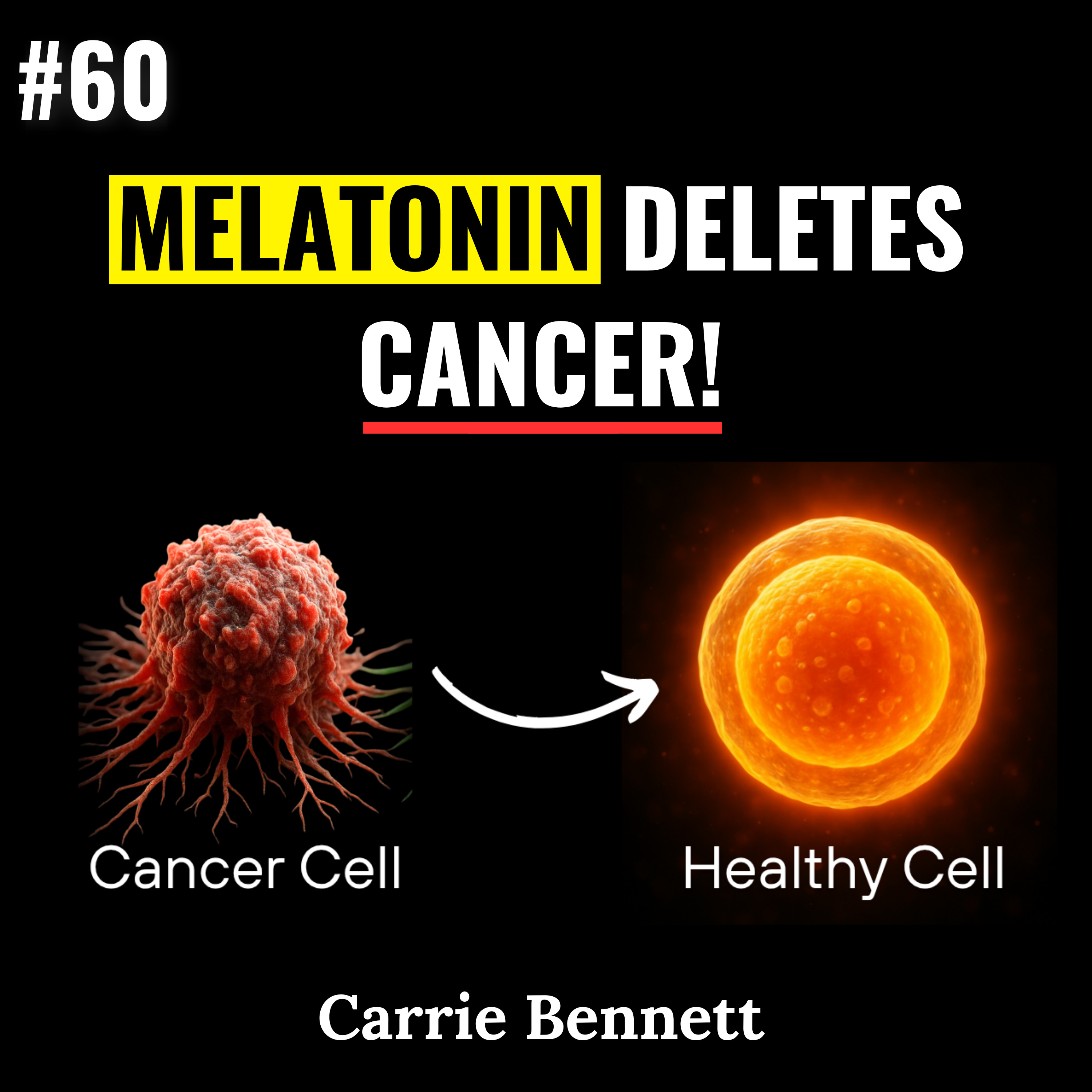
And what happens is the mitochondria begin to no longer be able to be the energy producers of the cell and the energy production switches to the outside of the cell in the cytosol, in the in the fluid of the cell. And that's called a Warburg metabolism. And it's a very inefficient metabolism. It's a metabolism that that has to hoard glucose to make very little ATP. And so, but that's what happens when a cell becomes dysfunctional to the extent, and it's not just cancer, this is how this happens in various autoimmune conditions as well.
It's just a hallmark that we've overwhelmed the mitochondria with some form of toxin and they they were not obviously giving the mitochondria what it needs to sustain healthy oxidative phosphorylation. And so then what he showed though, is he's taken Warburg cells, so cells that are in this very unhealthy cancerous metabolism and has given them the correct signal of melatonin and they revert back to mitochondrial oxidative phosphorylation. He called it quote his to that, though the study title is something like part time cancer.
And he said, well, gosh, you know, melatonin is so important that we can actually take cells that are in this unhealthy, really dysfunctional metabolism and bring them back into a healthy mitochondria chondrite metabolism. And my question is, does it have to be part time? Because he saw that during the night time, these cells were doing it during the daytime, they were flipping back to cancerous. But as we know now, we're designed to make melatonin 24/7 in various different ways. So I have a feeling that we can do see if you were to repeat that study using the correct exposure of melatonin signaling at night and the correct exposure of near infrared light to make melatonin during the day, you could actually take those cells that were in that dysfunctional metabolism and revert them to fully healthy all the time because you're sustaining the appropriate melatonin.
Wow. I just, he just blew my mind. That was that was amazing. And so basically what I understood from what you just said there that the cancerous cells are sort of like the backup, the backup mechanism for the body to produce energy for the body because the mitochondria are not functioning properly. They're not actually there to cause us like issues because many times we think that everything that's happening to us is happening to us and not for us, right. But the body is always working for us and never against us.
It always doing as an adaptation, right? It's trying to keep us alive basically. So that that just blew my mind. So it just helps us really understand what cancer actually is. It's just really like when the cells have can't make the energy anymore, then there is this backup mechanism that there is involved in the body that is just trying to keep the show going until we create the right environment within the body for them to revert back to. And I didn't know that they could revert back to, you know, healthy functioning cells and mitochondria.
That's just amazing. That's incredible. So let's move on to the our next topic now, because I know that we're running a little bit out of time, but so we covered, we covered then like all of the things that suppress melatonin. So that's very important for people to be aware. So now we talked a lot about it. We know its roles in the in the body and how important it actually is for our health, well-being and cancer prevention and performance and recovery. And so then we talked about the blue light being problematic, the artificial blue light in the day or in the night.
It's just problematic all times of the day really because it's not native to our environment. We talked about the non-native electromagnetic fields, which is from the Wi-Fi routers, cell phones, microwaves, anything electronic these days. What other things do you think suppress melatonin production? Think that there are things like even like toxins, anything that damages the mitochondria frankly has the potential to impair mitochondrial melatonin production. So that this is where the talk of things like heavy metals and the chemicals and all those things comes into play as well.
Interestingly, anything at any stressor that we apply to our body, our mitochondria will make more melatonin for us. And so, you know, like exercise, for example, that's going to create some micro damage, but that's healthy micro damage that if we have the correct healing environment, then we can repair it and become stronger, more explosive, whatever, whatever we're training. And so, so melatonin, melatonin, it can be made also situationally based on what we're exposed to. But if you do something that damages the mitochondria and you lack infrared, near infrared light, you are doing a double whammy when it comes to allowing your mitochondria to make that melatonin for you.
So training indoors under artificial blue light basically. Well, I mean, I, I don't, I don't think it's optimum for the human body. I train way less than I ever did before when I actually owned a blue lit gym and am young. I feel my muscles feel younger. I am still as strong, if not stronger. And that was like 15 years ago, right? I mean, so like I, I am in my mid mid 40s, I'm stronger than ever. I'm doing way less of that intense training that I thought I need. That thought would benefit me at 5:00 in the morning, you know, under artificial blue light.
And I'm very strategic about how I train in all natural light. And it I think, I think I was just spinning my wheels essentially when it, when it came to training that way. I just did a recent interview with Jack Schroeder, if you know him, and he was basically. Saying, yeah, Jack's great. Yeah, he's awesome. He was basically saying how the hermetic response is too great when we're exposed to this artificial blue light, whether we're doing breath work indoors or training indoors. The problem is that we're already creating a hermetic response through these like the whole through these hormatic stressors, right?
Like exercise, sauna, cold, like all of the things that we know are beneficial. If you survive it, you basically become stronger, right? What doesn't kill you makes you stronger. But then you also need like that recovery. Without the recovery, you don't become stronger. And melatonin is part of that recovery process as you're mentioning. And that's helping up that cleaning up like all the time. And if we work out outside, for example, we can feel like we're not so smashed at the end of our workout, but then we're able to recover way quicker.
I've witnessed that for myself this entire summer. I've trained most of my workouts outdoors. Maybe only one of my workouts per week has been indoors. And I felt like an absolute massive difference. And now I'm really going to try and stick to it during the winter time as well. So that would lead us into like my next question that I have for you. How can we utilize winter to optimize our health? Because everyone knows that in the summertime we need to be outside. We need to get the sunlight for the vitamin D. And now obviously, we can't make as much vitamin D because the UVB is going down the UVB intensity.
And people are going to think that, oh, so if the vitamin D is decreasing that I can produce, that means I need to take vitamin D supplementation, right? And just keep on doing what I'm already doing, like I operate in the summertime. Are there some consequences to continuing to live this way? And why should we honor the cycles? Yeah, I used to experience the consequences. I had seasonal affective disorder. I had low libido in the winter, just felt like just did not feel like, I mean, I isolated myself.
I just didn't feel good. And I live in a very winter. I live in a very seasonal environment. We experience winter hard. We also experience summer hard, right? So there are definite extremes where I live. And what I was trying to do was I was under the assumption that I needed to maintain healthy vitamin D levels. Now that vitamin D we have to come back and do a whole podcast just on vitamin D because what I know as quote, UN quote vitamin D, what we test is just vitamin as quote, UN quote, vitamin D is 1 metabolite just in the blood, three dozen metabolites of vitamin D that are both in the blood, in our, in our, in our cells, fat soluble versions in water soluble versions.
So we test 1 version of vitamin D and we make this assumption that, oh, no, vitamin D is low. That means we have to supplement it. And it never made sense to me because I was like, but I live in Michigan and there's literally no way for me to make adequate vitamin D from let's say mid-october through mid to the the end of March. Like I literally can't make enough of it with sunlight exposure. Why would my body need to maintain high levels of vitamin D? Just didn't make sense. And then about 3 years ago, a phenomenal paper came out that said, oh, by the way, melatonin docks to the vitamin D receptor.
And they showed this little Venn diagram right where it had vitamin D on one circle, melatonin in the other. And the fact that they had completely overlapping functions in terms of what they can facilitate for gene expression to support inflammation, the immune system, tissue repair, right? And so I was like, Oh my gosh, this was what I inherently knew is that there was a different thing, a different system our body was operating on when it came to the winter. And that is that what if we maximize melatonin in the winter because we have more darkness?
That's what our body is designed to do. We flip the switch to a melatonin based signaling pathway. Whereas in the summer we absolutely will use a more vitamin D based signaling pathway. But it's why the Sup the studies that really do long term high dose vitamin D supplementation and even quote UN quote normal dose, they were used to say, let's do 400 IU, OK, let's do 2000 IU. OK, let's do 10,000 IU. Like you would see it going up and up and up in terms of the the dose of the vitamin D they're giving people because at the lower dose, no benefit, OK, no benefit, no benefit.
And so, you know, even studies where they'll, they'll try to get someone's blood value this like up to a certain threshold using light and then blood value up using supplementation. Only the people who got it up or the animals, they were animals say as well that used the light were the ones that saw the health benefit. So it's not just about what is your blood vitamin D level. I think a lot of it is about what pathways are you stimulating and are you stimulating correctly in the summer versus the winter two months.
And when I switched to honoring melatonin, honoring the darkness, looking at it as an opportunity to have more of these melatonin repair pathways running, when I started recognizing that the cold actually is a healing and can stimulate other repair pathways in my body, it was a game changer for me. I was living winter as if I was, I was like, I was a winter denier, right? I was like, oh, yeah, it's yeah, yeah, it's cold, but I'm just going to stay warm. I'm going to keep it hot in the house. I'm going to turn on lights all over.
And I was living winter like it was summer. I was eating lots of tropical fruits still. And when I changed that and I started to really honor the fact that we had darkness and cold and that these were gifts was a game changer for me. Like summer, summer, I was my thriving season, Winter was my season. And now summer I thrive, winter, I thrive. It's just so much fun to share this information with people. Oh, it's so important for people to understand that they can enjoy like the beauty of every single season, right?
And also to honor that because there is something critically important that it's meant to happen. I believe in the winter time because I feel like the summer is very stimulating, very energizing to the body. And we we sort of is very young, right? And then the winter is very yen. It's more nurturing. We're meant to sleep naturally more. We're meant to have more darkness. We're meant to eat like more roots, kind of vegetables and stuff like that. Eat seasonally, for example. And there is there is this beauty found in nature if we live with the cycles.
But if we don't do that, then everything is just kind of like the same and our body just stays stuck in this stressed state, especially if we never are in connection with nature. We're living under these artificial blue lights and doing all our life the same over and over and over. I believe is what is actually contributing to this accelerated aging, especially people doing that in the winter time is going to accelerate your aging way, way more, I fundamentally believe, compared to the summertime, because in the summertime, naturally you have longer, you know, days and shorter nights and you have a way brighter locks.
So you can kind of get away with like, you know, if you crack open a window and you still sit indoors, but when the winter comes, there is no mercy, you know, because you need that melatonin. As Carrie is saying throughout this entire episode, what we talked about, how critically important it is for all of our biological functions and the fact that it replaces the role of vitamin D in the in the winter time and that we shouldn't be actually striving to keep our vitamin D levels up. Of course, we should strive to be in nature as much as possible and get the sunlight, but the UVB is naturally going to be lower.
So we're not going to be making as much vitamin D anyway, depending, of course, where you're living on the planet. And yeah, so it's just so important that we actually honor the cycles. But you have this winter challenge going on. Do you want to tell the audience about that? Sure. So, you know, it took me a long time, you know, let's say 35 years of my life, I'm struggling through winter before I started learning this from a different lens, how to embrace the darkness and make that melatonin, how to cold adapt that doesn't.
Like if you want to do an ice bath, by all means, I talk people through that. But it doesn't have to be that way. I've taught thousands of people how to cold adapt using things like face plunges or the gentle ambient air temperature that as it shifts in your location. And if we can do that, we actually become we we're less inflamed, we don't have to shiver to generate heat anymore. We are metabolically better able to burn fat as a fuel source, which we're designed to do in the winter. Most people associate winter with weight gain, and that's not the case at all.
It's just when we don't exactly, we just don't initiate these metabolic pathways that make us efficient at burning fat. And if we can burn that fat efficiently, we actually generate heat with it. And so like I basically have a 19 day challenge that starts October 2nd where I take people through 19 very short, let's say they're about, you know, 5 to 15 minute video lessons each day to say This is why winter is a gift if you, if you live within the gifts that the season is giving you. And so we'll do like I said, we talked about the cold, the darkness, we talked about infrared energies, which we're not getting, like we're not living in camp by campfire anymore.
So how could we get that infrared into our environment? What does it look like to maybe building what I call strategic scarcity? Because during the winter months where I lived, I wouldn't have had access to all fruits and vegetables from all over the planet. And so just because I have access to it doesn't mean it's what my body is asking to consume. And so, you know, I just basically take people through 19 days of reframing winter with the really practical strategies I've discovered by by transforming my view of winter.
And I'm just so excited to share it with people. It starts October 2nd. It's a 19 day, 19 challenge and I just encourage as many people as possible to join it because I've heard time and time again that it really, really is life changing if you live in a place where you experience winter and hate winter. Oh, yeah, and I highly recommend it for people because if you most people know how to work with the summer, right, and it's super easy. It's just so much more easy to be, you know, in tune with the summertime.
But it's the winter time where people need to really optimize, just like as we talked about. So I will make sure to put the link in the description below so people can find your challenge straight there. So thank you so much for this conversation, Carrie. I absolutely loved it. And I'm sure the the audience is going to love it as well. And of course, we need to do more episodes because, you know, we didn't have enough time and I felt like there was so many rabbit holes I wanted to go down. So we have to definitely do it again.
Welcome people, connect with you and find you. Sure. Thank you so much for this conversation. First, Andreas, I always love chatting with you. You can go to Carrie B Wellness on Instagram or Carrie B wellness.com or I also have YouTube, Carrie B Wellness. So any of those places connect. I'd love to. I'd love to get to get to know people more and just help them as as best as I can. Awesome Kerry, I look forward to doing it on the next one. You guys enjoy the topics and guests I bring on the show.
I would really appreciate it if you left me a five star review on Spotify and also subscribe to Fitness Wisdom podcast on YouTube as well as this helps to spread the knowledge and wisdom with the world. Until next time, this is the Fitness Wisdom Podcast.
 Apple Podcasts
 YouTube
 Spotify
 Castbox
 Castro
 Goodpods
 Moon FM
 Overcast
 Pocket Casts
 Podbean
 Podcast Addict
 Podcast Republic