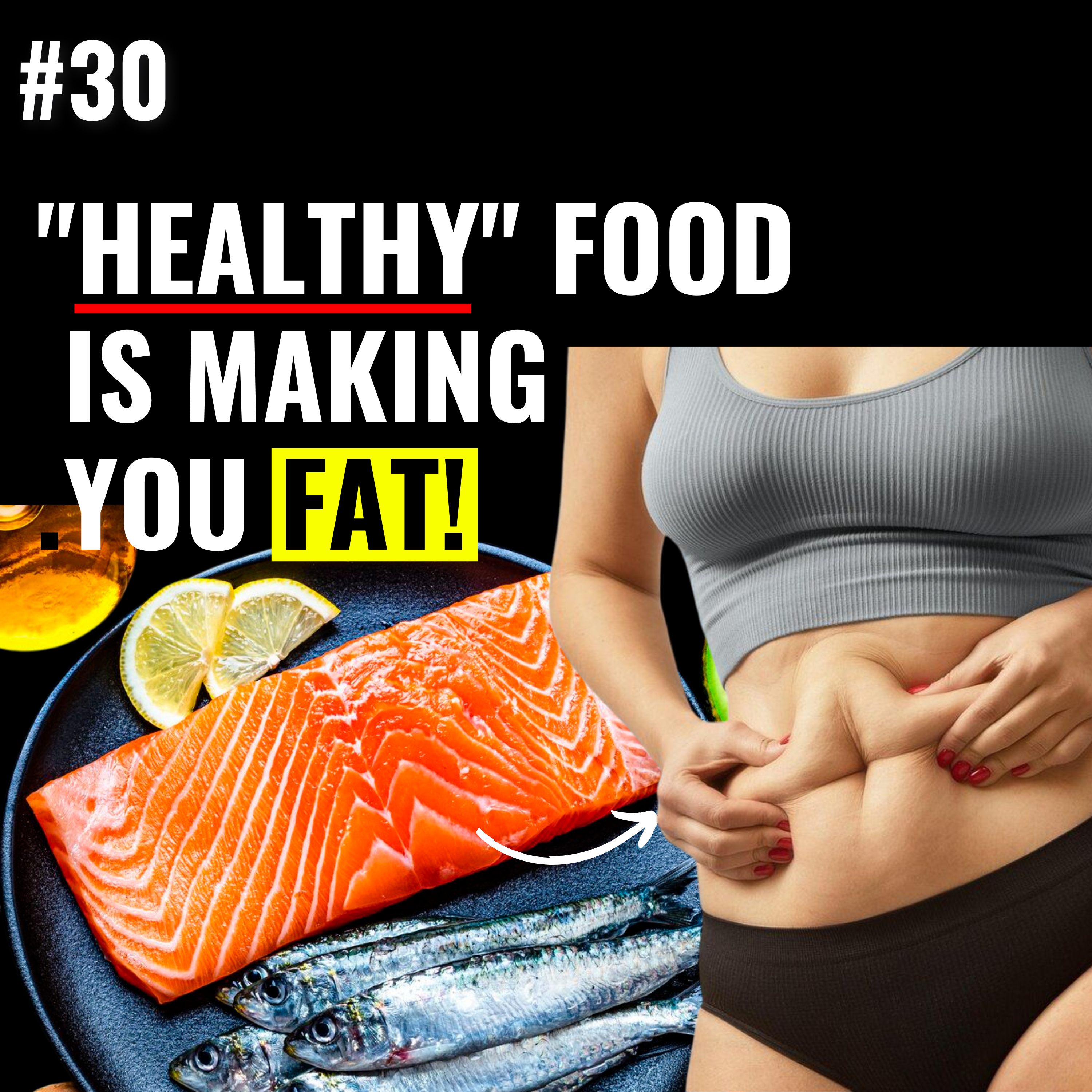
Best Fat Loss Foods | "HEALTHY" Foods making you FAT! Biggest Dieting Mistakes | How to lose Belly Fat | Causes of Fluid Retention | Best Weight loss Strategies | Fat loss Mindset & Lifestyle Shift
What's This About?
👇🏽 Best Fat Loss Foods, Biggest mistakes when it comes to dieting, "Healthy" Food is making you FAT & keeping you Fat! The importance of Mindset, Adherence & Consistency when it comes to losing body fat and keeping it off and much more...💥
Definitely SAVE & SHARE this episode with a friend, this knowledge is extremely important & potentially life changing!✅
Eliminate Stagnation & Stiffness, Restore your Mobility & Function, Improve Blood Flow and take Care of your Fascial System with my New Dynamic Stretching Routine Program! Only for limited time, you can get it at a 50% OFF ✅ with the code: GET50 at checkout 👇🏽https://www.mobility-fitness.com/dynamic-stretching-routine
👇🏽 In this Episode of the Fitness Wisdom Podcast we discussed:🎙️
• "Healthy Foods" are making you Fat & keeping you from losing body fat!
• Best Foods for Fat loss
• How to construct your plate when dieting
• The importance Protein
• Do Carbohydrates make you Fat?!
• Causes of Fluid Retention / Belly Fat
• How do identify the right foods for your body & goals
• How long should you diet?
• When you should NOT diet & what to do instead!
• What is required in order for you to Lose Fat & Keep it Off
• The importance of adherence, consistency & mindset in Fat Loss / Weight Loss
👇🏽 You can find us on our other platforms as well, as work with us 1-on-1 Online World-Wide 🌎
📲 Instagram: www.instagram.com/andreas_david_christou
🎙️ Podcast IG: www.instagram.com/fitnesswisdompodcast
🌐 Website: www.mobility-fitness.com
▶️ Youtube.com/@movementspecialistandreas
🐦 Twitter: x.com/movementandreas
👉🏽 Find the Best UV + Red Light Therapy panels, Blue Light Blocking Glasses & Circadian friendly light bulbs 🚨Use promo code: MOBILITYFITNESS ✅ for 20-30% OFF your entire order 👇🏽
https://www.emr-tek.com?snowball=MOBILITYFITNESS
👇🏽 Here is the Methylene Blue I use 🌀🧠
merakimedicinal.com/MOBILITYFITNESS
Use promo code: MOBILITYFITNESS to get 15% Discount on all products ✅🧠
👇🏽 Find the SHILAJIT I use & recommend below ⚡
https://mountaindrop.com/order/?ref=5873
Use promo code: MOBILITYFITNESS for Discount on your entire order ✅🧠
👇🏽Grass Fed Collagen Peptides & Beef Organ Supplements
https://densenutrition.eu?sca_ref=5897075.4jZIGNksTY
Use promo code: TIINA-15 for 15% OFF your entire order ✅
Get yourself a personalised Nutrition, Training & Lifestyle Optimization Plan designed for Your Body & Goals! Work with us 1-on-1 ✅ and let's Transform your Body & Health from the inside-out! 💎 The Link is Below👇🏽
https://www.mobility-fitness.com/product-page/1-on-1-online-coaching
*None of the content / statements in this Podcast are Medical or Personal Advice & is not intended to cure, treat, prevent or diagnose any medical conditions. All my videos are for Educational & Research purposes only. If you decide to try anything discussed in this video, you agree to do so at your own risk & responsibility*
This is the Fitness wisdom podcast.
Your mitochondria health and performance love molecular hydrogen. In this modern world stress is inevitable. In small amounts of stress can be very beneficial but long term stress can be very damaging on our body. This is why we must find ways to assist our body as much as we can. This is why I love to use molecular hydrogen on a daily basis. Molecular hydrogen is known for its anti-inflammatory, anti apoptotic properties. It's also incredible for the mitochondria and it's also an electron donor and does so much more.
It has the capacity to scavenge harmful free radicals while leaving the beneficial reactive oxygen species that our body needs for cellular signaling, this making it a safe antioxidant. Some benefits which I have noticed by using molecular hydrogen on a daily basis is increased energy levels, better recovery from workouts, better sleep, better hydration and an overall feeling of clarity. Check out the Trivalve bottle that I'll have to use on a daily basis and use the the promo code muscle I check out for discount as well.
Hello everyone and welcome back to another episode of the Fitness Wisdom podcast. Today we're going to be discussing about the best foods to eat when it comes to fat loss, the biggest mistakes when it comes to dieting, healthy foods that are making your fat and keeping your fat, the importance of consistency and mindset and so much more. So let's get straight into this discussion today. So we hear many times that you know you're eating healthy and you're finding that you cannot lose weight or you're potentially even gaining weight.
Why do you think that could potentially be? I think a lot of times people justify eating a lot of food just because it's healthy foods. And while those foods might be health supporting, I think in general overeating calories, it's not going to be healthy in the long run. And especially if our weight, if our goal is to lose weight, it's not going to work, unfortunately. Yeah, exactly. So basically, if you're overdoing the energy intake side of things, it doesn't matter whether you're eating at the right times of the day or even if you're eating the highest quality food in the world, whether it's organic and grass fed and local and all this good stuff, which is all very, very important.
But if you're doing the energy intake side of things, you're definitely going to, you know, cause yourself to hit a plateau and you're going to be wondering why you are not losing that body fat, right? So when we are talking about losing weight, we're not talking about losing muscle mass. We are talking about losing body fat. And if we want to lose body fat, we want to make sure that we have the right amount of protein in our diet to make sure that we are sparing our muscles from muscle loss. And we are also doing resistance training.
But then we are also making sure that we are reducing the energy substrates in our diet. What are the energy substrates in the diet? So that would be your fats and carbs. Yeah. So these are your primary fuel sources. And we want to avoid utilizing proteins as a fuel because this means that we are conditioning the body to breakdown protein as a form of energy. And then eventually, if we are not eating enough protein, it's going to start catabolizing our muscle. And that is a very dangerous process because when this happens, this starts to diminish or decrease our resting metabolic rate.
And therefore we are trapped in this loop of us trying to get out of constantly dieting lower and lower and lose body fat. In the end, we end up gaining weight even by eating very very little amount of food. So in practical terms, you are saying that we should always account for our protein intake, right? And the remaining calories that we are aiming for should be divided into fats and carbohydrates. Yeah, exactly. So what you want to do if you are building your nutrition plan for fat loss, which is what we do with our clients, we basically always calculate how much is their ideal body weight going to be.
Let's take a woman who weighs 140 lbs and she wants to get down to 120 lbs and when she gets down to £120 for her ideal body weight, she will be absolutely lean, meaning that she will be competition ready. You know, she won't have much body fat left on her body. And so if we think about that type of body, that means that they will require around 120 grams of protein per day. 1g per pound of body weight in terms of protein is the ideal amount to prevent muscle loss and also to gain muscle mass as well.
And it's absolutely important to prevent muscle loss, especially when dieting. So after we have accounted for those calories, then we are going to check, OK, how much protein and fat can that individual fit in their caloric deficit without them over spilling, meaning going over into a calorie maintenance or a calorie excess. So this is where I feel like a lot of people make a mistake when they are dieting, they are not taking into consideration the amount of protein that they actually need in their diet.
But then they are just focusing a lot on the energy substrates. And it's so easy to overdo the energy, especially like if you are doing like a high fat diet, let's say. Because, you know, the things that are high in fat are obviously higher in calories because 1g of fat contains 9 calories and 1g of carbohydrate contains 4 calories and 1 gram of protein contains 4 calories. So now I think we should get into the best type of foods when it comes to losing body fat based on this discussion that we had just now.
Can I backtrack a little bit, of course just to the protein topic as well, but why wouldn't we want to overshoot the protein either? Well, as we mentioned that you know, we want to give enough calories for the rest of the energy substrates and we just don't want to condition the body into utilizing protein as a form of energy. So we want the the body to be using either fats or carbohydrates as a form of energy. And if it's tapping into, you know, utilizing protein, if it's coming from the diet, it's not necessarily a problem.
But then if we are conditioning the body that it's going to be using, you know, more energy that's coming in from the diet, from the protein, then we are teaching it that, you know, when we are without food, hey, you know, it's OK to catabolize muscle for energy because, you know, protein is where do you get protein from? You can mainly get protein from eating muscle of animals, right? Or you get it from dairy or or so on. But basically protein is, you know, you break it down into amino acids and the body can utilize that as a form of energy as well in times of survival.
But that is not thriving, right? We want to be thriving. We don't want to be surviving. So I just wanted to underline because I think this is a really important topic. So because our caloric intake will be low on a caloric deficit, it is important to reserve those calories for the energy substrates just because we want to make sure that we can keep performing and keep feeling amazing, you know, have enough carbs in there and enough fats to support our goals. So This is why I think it's enough clever to overdo the OR kind of like steal the calories to proteins above of what we actually need and then to sacrifice our energy, substrate, substrate in that way.
Yeah, that's very, very true. More is not necessarily better if you're already hitting 1g per pound of ideal body weight, which means your lean body mass. Because somebody who weighs 300 lbs and they're obese, they are overweight, they carry a lot of body fat. They obviously shouldn't consume 300 grams of protein. Their amount would probably be around 150 to 180, maybe 200 grams of protein Max, depending on the amount of muscle mass or actually lean body mass that they are carrying underneath that body fat.
So it's very important to acknowledge as well, you know, what type of body fat percentage do you think you are and how much fat do you actually have to lose before you reach your ideal body weight where you feel extremely comfortable in your body and you are looking really nice and lean. So let's let's take it to the best type of foods that people can consume when they are losing body fat. And this is based on the idea that these are going to be low calorie foods, right? So either they are really filling foods, they are they are called like filler foods or they are energy giving foods like car.
Well, they're primarily made-up of carbohydrates or fats most of the times these filler foods, but the ones that are going to be lowest in energy, they're also going to contain a lot of water and a lot of fiber in them. So maybe you can start off with that. What do you think? Yeah, I don't know if the concept of filler food is so commonly known. Could you elaborate a little bit? More yeah So what I mean by filler food is it doesn't have much energy at all really in the food So take for example like a cucumber.
Maybe one cucumber can be around 4 calories depending on the amount of grams of the cucumber of course. So this is all based on grams, right? So 100 grams of everything, so 100 grams of cucumber versus 100 grams of carrot. If we compare those two together, I believe like the carrots, do you know how many calories it has per 100 grams? I think somewhere around 30. Or 4040, Yeah, it's the same as pumpkin. Yeah, yeah, yeah. So basically pumpkin and carrot are pretty similar. So if you eat 1K of carrots, you're going to get basically 400 calories from the carrots, but if you eat 1K of cucumbers, you're only going to get 40 calories.
So it's basically like as what That's what I mean by filler foods. You find and identify foods which are extremely filling. They don't 'cause you gastrointestinal distress and they are complementary to your meal. That doesn't mean that they are the main part of your meal but they are contributing your actual energy substrates, meaning the ones that are giving you bioavailable carbohydrates and fats as well as your protein so that you can create a nice and complete meal which creates satiety. So this is the whole idea behind what we are talking about here, is finding foods that are giving you what you need but also are filling you up, right?
Yeah. And also check your calories before making calculations. I think we might be off those a little bit. Yeah, but we're giving examples here and I think I'm quite on point when it comes. I've studied this before, so we've done this for years. It's just that, of course, some trackers and some places online may be differing by a few calories up and down. But I think it's something along the lines like this. But for example, if we take into consideration like something like rice, well, rice obviously is not really a filler food because when you cook it, it doesn't become very, very volumous to be honest.
So 100 grams of rice is going to give you around 350 calories, right? And then when you look at it on the plate, it doesn't even look really that much. However, you're not going to treat that as a filler food. So you probably shouldn't be overdoing the rice. You should be eating it in more smaller quantities, making sure that you are covering your protein intake for the day. And then whatever is left, then you can add in there in terms of rice or or cheeses or or these types of energy substrate foods.
Yeah, and maybe cheeses are not the best caloric deficit food anyway. Normally, yes. We will, we will get into the, we will get into the biggest mistakes too. I think now like let's backtrack a little bit here. So we went into the topic what are the best foods to eat? Yes, for butlers, yes, right, yes. So you are saying you are talking about the filler foods now? Yes. Are those the the things that you would advocate or how would you, how would you construct? A meal. OK, yeah, that's a that's a great entry.
So if we think about a blank plate, OK, so how would one construct their meal? So always we start off by building the meal by focusing on where is the protein on the plate. That is the number one thing that anybody should be considering when they're building their their plate now, yes. What would be a protein sources? Oh, I just wanted to say that you don't necessarily have to add protein to every single meal as long as you are hitting your total protein intake for the day. So even if you eat consume it in two meals and you eat 3 meals per day, it's absolutely fine.
It's just that most people are not able to do that in, you know, in less meals. So it's it's better to spread it out over more meals? Definitely. And you will get better satiety with the protein on the meal, so I would actually advocate spreading that evenly out throughout the meals if possible. Yes, exactly. In rare cases, there are some individuals who are, they don't have really great appetite. So for those individuals, I would advocate getting your protein on early in the day. So the majority of your protein are breakfast and at lunch and maybe the last meal of the day can be minimal protein to carbohydrates or fats.
But of course, you should be considering your circadian signaling as well there. So you probably shouldn't be eating after sunset hours. So remember that energy intake matters, the timing of the food that you eat matters, and also the quality of the food that you eat. So let's go back to building the plate. Yes, and the protein sources, they are from Whole Foods. Right, yes, always from always from Whole Foods. So when we are saying that, you know, consume high protein, we're never say saying that, oh, just go out there and drink a bunch of protein powders or eat a bunch of like protein bars.
Of course protein powders have their time and place 100%, especially if someone is not able to hit their protein goals or you know, you're in a hurry, you don't have time to cook meals. That's a fantastic way to get an extra protein. I would totally utilize that approach if I if that was is my only option. But if you do have the opportunity, 100% of course, we know that the protein sources are anything from animal meats. All animal meats are high in protein. Ideally when we are dieting, meaning we're trying to lose body fat and stay in a calorie deficit, we want to be aiming for lean meats.
So that would be lean fish. So not things like salmon, but things more like cod or whitefish or anything that is pretty low in fat. And how we want to go about adding the energy substrates in the diet is by adding them on top of the meal rather than being included with the protein, you know, type of food. And also we have dairy, we have eggs. Is there anything that I'm missing in terms of high protein foods? Of course there are like some plant based options, but those are not the most bioavailable forms which the body can utilize our best.
Yeah, plant based approaches, they just do require so much more work and effort and studying the topic really because you want to make your proteins bioavailable. So we want to get the complete range of amino acids from our proteins for the essence of amino acids. Yeah. And beyond the satiety aspect the protein provides, I think it's very important to, you know, illuminate that protein is required for absolutely everything in the body, you know, rebuilding, regeneration, repair. And the body, if you think about it, is we are like animals, right?
So if we are like animals, we actually need those building blocks to be able to end those amino acids to create certain neurotransmitters. So it's essential for so many parts of our biological processes. So it's essential to get enough protein, not only to preserve your muscle mass so you don't lose muscle mass, to also gain muscle to create satiety, but also for all of your fundamental biological processes. So now let's move on to cell. We've addressed the protein part. You've added the amount, the correct amount of protein that you need for your meal.
So let's say you eat 150. Let's say you eat 150 grams of protein per day or you need, then you would put 50 grams of protein per meal, right? So if you're eating 3 meals per day. And So what I like to have for breakfast as an example, is I like to have Greek yogurt. And this Greek yogurt that I eat has 10 grams of protein per 100 grams. So I eat 500 grams of that yogurt with some apples on top and that gives me 50 grams of protein instantly. Super easy. I don't even feel like it's too much for me because I eat it with the fruits and it's absolutely great.
Especially if you're dieting. I don't even feel like I'm dieting. And that is the whole point when we are trying to lose body fat, it's so critical to build the meals in a way with Whole Foods and filler type of foods so that we feel that we are creating a really great satiety that we trick our brain to thinking that we're not even dieting. And this is also the a fantastic way for consistency and adherence to the diet. So let's move on into the the energy substrates. How would we add those and what type of foods would you choose for the energy substrate in the meals when we are dieting?
So when dieting, I think we would aim for high volume foods. So for example, for carbs, what could we get which is feeling for our body? If I'm eating a tablespoon of honey versus if I'm eating an apple, it's going to keep a very much different impact on my body even though I, I don't know if the calories are equal, but I'm just pulling that out of my head. And so I think we want to always aim for those higher volume foods at the same time as we are getting our energy substrate. 100% and for example, I can give an example that I know is quite a close comparison.
So something that would be maybe 120 grams of rice or maybe a little bit more in comparison to 1K of pumpkin, which would be the squash as people know it. That is a massive, massive difference, right? Because like when you cook that now you are getting the same amount of energy, but the volume, the amount on the plate is so much more when it comes to the pumpkin that you will even not even be able to finish that probably in one meal. Most individuals can't. I can't because my body is big and I've conditioned my body to eat a lot of food since a young age, but most individuals cannot eat that amount in, you know, in one sitting.
And that's actually like a fantastic food. Then that means for your diet because you cannot overdo it. And you're also able to spread it over multiple meals as well. So you're able to bulk cook so that you're not spending time in the kitchen the whole time, you know, cooking your every single meal. And you're also creating that satiety that you're looking for. Because again, when we say best foods for fat loss, there isn't such a thing as best food for losing body fat, but it's more, more of an ideal food for your mindset really.
Because we know that losing body fat is a mindset thing and it's a it's a mental thing rather than a physical. I think it is important to know this though, that aiming for Whole Foods is always the answer. So even though we're talking about calories, we don't advocate eating whatever it beats your macros because we always want to make sure that the stuff that we are putting in our body is actually supporting our biology. And it's understanding what what's happening with the food, what's supposed to happen.
And so that our mitochondria can work efficiently and give us that ATP energy which we need from the conversion from the food. And basically, I don't think it's a good idea ever to go for the palatable man made options when it comes to foods which are basically lab made, not something that our body is evolved to be running on. So I think it's very, very important to make this understanding. Otherwise we are building the picture that whatever bits your macros is the way to go. But that's totally not the case.
Even if it's your macros, I would always opt for. For Whole Foods, 100% always. Yeah, yeah, absolutely. Because anybody can lose body fat by eating McDonald's every single day. Because it absolutely works, you know, if you eat according to your macros. I did this in the past before I was more aware about the importance of eating Whole Foods, local, seasonal, organic, and you know, without chemicals and processed. I would just basically eat anything that would fit my macros, right. I could eat candies, I could drink energy drinks, I could drink alcohol.
And as long as I calculated it into my macros, I would still lose body fat and I would look great. That doesn't mean I felt great. That doesn't mean that I was actually healthy internally. So yes, this is absolutely critical what you just said, that people must eat real foods because this is going to impact you on so many different aspects. It's not about just how you look, right? It's also your internal health. And remember that how you look externally is a reflection of your internal environment.
So you must make sure that you are taking care of your internal environment if you want to look good externally. I would also say that if you are trying to fit those sorts of foods in your diet like candies and all that, what you were talking about, it will require a tremendous amount of discipline to stay in that caloric deficit with such foods because they do not provide any satiety and in the worst case scenario they provide this blood clot goes roller coaster where you are not never feeling satisfied and never feeling good.
So I think. Yeah, that's just not the way to go, even if we can do it. But it requires so much more toughness up on that from the headspace as well. Yeah, absolutely. Think about this for a second. Like I believe that one slice of pizza, like a big slice of pizza is around 400 calories. So if it's one slice of pizza is 400 calories, you eat your 1200 or 1600 daily allowance of calories in one meal. And now it's lunchtime and you have, you know, eight more hours or nine more hours before bed. How are you going to be able to pull through that?
You know, mentally that's going to be super, super tough. No one just eats a pizza and then afterwards, you know, after maybe like all those hours is not going to be able to eat something because just because something is feeling in the moment and maybe giving you that, you know, quick dope, I mean, that you're looking for isn't doesn't mean that it's going to get you satisfied. So if you are, are going to consume these types of foods, we like to use this approach, which is a, you know, 90 to 95% of the time you are eating clean, Whole Foods.
And then 5% of the time you're eating once every month or something like that. You eat something that you know, you have been craving or you have like a drink of alcohol or you do something that you really feel like you, you want to have. But primarily you want to build a lifestyle that is, you know, living in alignment with nature and you're eating as natural as possible because this way, it's going to support your body and your goals from every single aspect, your energy levels, your cravings.
And then you might even get to the point where you don't even crave those foods anymore. Like we don't necessarily crave what we call unhealthy foods or man made foods these days, but sometimes we, you know, we just get up and we feel like, Oh yeah, it would be great to eat an apple pie or it would be great to eat an ice cream or, or something like this. And, and we go about and we eat it and we don't stress about it. You know, we just get straight back on track from the next meal. We don't even restrict ourselves because the key is when you're dieting is and don't ever try to, you know, yo-yo back and forth and over restrict yourself and make yourself feel bad about it.
You know, do excessive cardio before or after just because you've eaten something that you're not supposed to just get back on track with immediately with your next meal. Do not skip meals. If you had something extra in that they just maybe don't eat so many carbs or something like that. You know, maybe just focus eating more on the protein and then your body will be able to deal with those foods way better. Because remember, when you eat things in excess, your body has to, or eating things that are processed as well, your body has to detoxify more, right?
So I think it would be good if we transition now into the biggest mistakes that people make when it comes to dieting. Do you want to finish off this? Can we can we touch up on that fats topic as well a little bit because we were talking about the energy substrate? Yeah, how to build a place? I remember I mentioned earlier in the podcast that we don't include so many cheeses in the dieting phase or in the fat. Loss and a lot of people think that cheese is high in protein, but maybe it's not the most ideal.
Yeah. Source. Yeah. Well, I did want to mention that because most cheeses are high in fats and that's not necessarily a problem. But if we think about like, OK, if we have a block of cheese that's let's assume it's 100 calories and then that's already 100 calories gone from our meals. So now what do we have left? So if we covered our protein and then we have that little piece of cheese, then we might end up not being satisfied from that meal. And yeah, so This is why I think this kind of like more calorie dense foods, one of the most optimal way to go.
Maybe we can utilize them as more as flavor, you know, just a little piece here and there. It depends where it fits. But if we are already having a protein source, which is a little bit higher on the fats, and we definitely don't have room for those sorts of things. And also it's good to understand that we need to account for the cooking fats as well. And most people don't cook without fats. So. So yeah, I think this is just where we have to be clever about it. So of course, if you are a person who is cooking in the oven or cooking with an air fryer or something, maybe we have a little more room for those fatty foods as well.
But but we need to always consider. Those were those were really great tips that you gave there at the end about cooking in the oven and cooking in the air fryer. You're able to save a lot of calories by not using cooking oils. When we'd say cooking oils, we, me and Tina, we always use either butter, ghee or coconut oil, saturated fats because those do not necessarily go rancid as easily when they are heated up. We avoid a processed seed oils at all costs because they are are known for, you know, causing damage to the mitochondria.
So we only aim to eat real fats. And if we do consume seed oils such as, you know, things like from olive oil, avocado oil or anything like this, well, well, any, any kind of oil, let's say that comes from a seed, we would always get it as unprocessed and organic and cold pressed. That's extremely important. And it mainly would be for medicinal reasons that we would take it. It wouldn't be necessarily for cooking. Yeah, I think high quality olive oil and high quality avocado oil can be really good oils to use, but I wouldn't still heat those and just because of the nature of the oil.
So. So yeah, seed oils are a little bit different to olive oil and and all those the better oils like which come from the fruit, so. They contain more monounsaturated fatty acids, the olive oil and the avocado oil versus. Polyunsaturated they do. They do, yes. And also good amount of polyphenols and and these sorts of things. This is why I think that they are good oil, but we don't need to get into that of big too much. But you have to be heated. Yeah. So the oils that or the fats that I would be comfortable heating are just saturated fats.
Yeah, absolutely. And so, yeah, Now let's move into maybe the biggest mistakes that people make when it comes to dieting. I think that also relates to what you said previously about people using high energy foods to build their meal. So let's say you're a person who is consuming 1200 calories and that is your like energy deficit intake, so calorie deficit. And you basically start to consume your first meal of the day. You have, let's say honey, like a ton of honey and dates. And maybe you've got some protein somewhere in there, let's say fried eggs.
Well, obviously that meal is going to be extremely high in energy, maybe 700 calories or something like this. And that's basically half of your calories gone for the day, right? So you want to make sure that what we said previously is that you build your meal very, very wisely and you don't try to over consume those nutrient dense foods are incredible because that's that's why they are, you know, considered as nutrient. That's because they contain the highest amount of nutrients in the smallest amount of food.
But then it's so easy to overdo those foods as well. So something like honey is extremely incredible, but at the same time, if you overdo it, then obviously it's going to take you out of your, you know, caloric allowance for the day. And then you're easily going to, you know, gain body fat or even maintain your weight. You're not going to be able to lose the body fat that you're looking for. Do you have something to add here? I was just going to say that I actually love using those foods when I'm aiming to get more calories in my diet.
So because if I'm already eating a high volume of foods, then probably adding in more volume is not so comfortable for the digestive track and all that. So then adding those into this. Phenomenal. So, so yeah, we just need to know when to use and what to use. I think that's the key here when it comes to Whole Foods. I don't want to Abilify anything. I think there is time and place to eat all those foods that come from nature, but we just need to understand when and why and why not so. So yeah. Absolutely.
Context is everything. So one thing which I wanted to talk about was that do you think that carbohydrates make us fat? Oh, absolutely not. Excess of energy intake will make us fat, yes, that's for sure. So we. Coming from any yes we can substrate. We can excessively eat carbs. We can excessively eat fats. We can excessively eat protein, so, so yeah, carbs don't make us fat, but we need to account for the energy that's coming into the system. That's that's what it is. 100% However, there is something to be said about protein and getting away with eating more protein.
We haven't personally noticed and over the years with our clients too, that if you overeat protein, it's way more difficult for the body to, you know, store that as body fat. And I believe the reason to be because the body doesn't want to actually utilize protein as a form of energy. I think it would be good here to add in maybe if people did feel like they needed a snack, if you really needed a snack when dieting, which we don't advise, we advise having three big nice whole meals in the day spread out equally.
Or maybe having your biggest meals at breakfast and lunch and your smallest meal at dinner, which is the most circadian appropriate way for your your hormones, your insulin, your leptin, your melatonin and in general, like your whole hormonal cascade. But if you did have to, you know, consume a snack, I would say that you should go always for a high protein snack because even if it's in addition to your energy intake, so it takes you out of your caloric deficit. I do believe that you could get away with that compared to eating an excess of an energy substrate, which the body prefers for energy, which also means it also prefers it has an easier time storing that as body fat.
So I think now it would be great if we moved into fluid dynamics and fluid retention. And there are so many things that influence, you know, our fluid dynamics and fluid retention. Maybe you can start off with this because you have a really good experience with yourself and also with the clients. Well, I think I'm not sure which direction you were are wanting me to take this. But like, maybe what kind of foods and also situations in life, any kind of situation would impact a person's fluid dynamics because a lot of people think when they get on the scale or when they look at the cells or when they grab their skin, they're grabbing body fat.
And that may definitely be the case as well. But one really big part is what we already talked about in our previous discussion in Episode 28 of the Fitness Wisdom podcast is we also talked about this fact about fluids as well. So I think for the fluid dynamics, it's important to support our lymph system. So lymphatic system is the most number one which have a lot of support for this. But of course there are so many different things that could impact why we are gaining fluid and definitely stress being 1.
So we all know also that if we don't sleep well, we feel way more poofy the next day. So I think there is something to the good night's sleep. And maybe maybe we could highlight why that is. I do you want me to cover that? Yeah. So basically when our body is stressed, obviously think about stress as activating the sympathetic nervous system, right? So when our sympathetic nervous system is active, it's contracting our body more. So all the cells in our body are in a more contracted state. And when this occurs, we have a decreased amount of blood flow and lymphatic movement flow as well throughout the body.
So that means that less toxins and metabolic waste is able to get out from the body, which needs to get out. And if it doesn't get out, then the cells begin to get stagnated with that metabolic waste. And that means that they cannot receive the oxygen and the nutrients that they need. So they are they begin to suffer. So the energy metabolism begins to suffer, but also because of this, we are having an overwhelm in the fluid dynamics because our lymphatic system now is having to work overtime, right, to be able to deal with all of this excess metabolic waste and toxins that it's not able to remove as quickly because we are stuck in a sympathetic state, in a stressed state.
So this is going to make us feel more poofy and swollen on our face or maybe on our arms. And then we are wondering, like, I haven't changed something with my diet. I mean, a calorie deficit. I'm doing everything right. But why do I feel fat? You know, But is that you're not fat, you're just obviously gaining or retaining a lot of fluids. And you need to also manage these other lifestyle factors as well, not only the diet, right? So of course, from the diet side of things, we have noticed if we overeat a big amount of salt or, or, or taking too many electrolytes on top of salt, then that will of course make you retain a lot of fluids as well.
But that doesn't mean that it's there to stay fluid retention of fluid dynamics that it says in the name it's very dynamic, meaning it's able to fluctuate from a day-to-day basis. So in literally 2 days, you can lose 2 kilos or 4 lbs and you can equally gain four 6 lbs back as well from water weight. But that doesn't mean that you are gaining body fat. It just means that there is a massive fluctuation in the fluids. And so it's very important to understand this and which foods work for you and your body because I have personally found that there are certain foods that I eat, even though they are low in calories, they make me retain a lot of water.
What's your experience on this? Oh, definitely. There are foods we can go to that as well. I wanted to cover because you asked me to cover with topics. OK, sorry. Yeah, no, no, no problem. I just wanted to say that of course, hormonal fluctuations as well. This is huge, especially for ladies. So I think it's something to be aware of. And what else was I going to say? There was the stress, hormonal fluctuations, the salt that I want. Lack of sleep. Yes, lack of sleep as well, but I did want to mention about the salt.
Yes, but yours already covered that one. Alcohol for sure, but that's another part of the fatless style. No, no, wait. Let's say if someone did add it in there, you know they want to have a drink and they calculated in their macro goal or their calorite deficit, that would make you hold on to a lot of like water weight. I don't want to even actually like support that idea that of course that's for our calories. That could be maybe like, let's say, if somebody is really like going out once every three months, I mean, you know, or.
Like a birthday or something. Like this and they want to have that drink because of that. But but and then they can of course like make make their adjustments to their plan, but not to get the idea that it is OK to have it on a regular basis as long as we fit it in the macros. Definitely not. Yes, yes. So don't say that. So back onto that list that you were mentioning, did we, did we cover all the things with the influence? I think so. Yeah, Oh yeah, yeah. So the hormone fluctuations and inflammation is 1.
So information for any reason or another. Yeah, and so many things contribute to inflammation, like even just being stress, like, you know, chronically can also make you inflamed. So it all goes hand in hand, right? Stress, as you have now figured out from most of our podcast, is like one of the root cause for pretty much every issue that we are facing as a modern human. And This is why also I think like this could be, you can tell me if I'm correct, why crowning makes me feel like was because you know that I have struggled over the years with a little bit of swelling in my joints.
And every time when I've had this discomfort in my knees and I have gone in the water and I've stayed in the water for a little while, it disappears. And that's amazing. Is it because it reduces the inflammation in the system or what do you think is? 100% So I mean, the science of grounding is still like pretty new, but I mean there is a lot of research out there, but of course there is still much more that we need to understand. But yes, it's definitely amazing for reducing inflammation in the body.
And basically it helps to improve blood flow. So that means if we have improved blood flow, we also have improved lymphatic system flow. So that means our detoxification system, our primary detoxification system is working better, which means our fluids can start moving. We can start excreting them all through our skin, through our urine, through our, our breath and all of these different detoxification pathways. And what else does grounding do? Well, not only depends how you ground too though, because you always ground in the sea and because the C is pretty cold, the cold as well is absolutely incredible for reducing inflammation and swelling.
So it's also going to, you know, cause a little bit of, you know, this external vasoconstriction, which is going to promote the fluid to go to the internal components of your body, which is then also going to promote afterwards when you get out of that increased blood flow and the overall feeling of well-being and vitality. Yeah, absolutely. I think the cold is just, it's so evident when you get in the cold it makes you feel good. Inflammation wise, yes. But I was also referring to the past because in the past I used to have this swelling in my joints as you remember years ago.
And back then I never got in the sea actually, but I was crowning on the earth. And so that also helped. So. Well, you're also gathering energy, so you're gathering electrons. So of course, if your body has more energy, then there is like less of a reason for your body to be inflamed because what is inflammation? Inflammation is basically cellular chaos, which is incoherence. There is a lack of coherence in the system. So what does grounding do? Think about the flock of birds that's flying like an orchestra in the sky, which is making all these beautiful coordinated shapes.
The birds and or the fish or whatever are flying in coherence with each other. Now, if you they were not going in coherence with each other, they would all crush into each other and fall to the ground. Well, the cells are basically working in the same way when they are incoherence, they are basically in coordination and they are able to spend way less energy to carry out their biological processes. So if we're able to harvest more energy from the earth by gathering electrons and by also making the body, you know, improve the blood flow, we're able then to make everything work so much better with so much less energy.
And we're gathering energy at the same time for our cellular processes, making everything so much easier for the body to thrive, not just survive. And not about surviving, it's about thriving, right? Yeah. And I want to underline here as well, do listen to our previous episode. Was it 28? Yeah, but when we want to lose fat, we just want to all the time keep on aiming for that thriving always, because the better we are feeling, the easier it becomes. But we all know that if we have stressful time periods or or anything else is like disturbing our health in our everyday life, then it's really hard to focus on those goals.
Yeah, exactly. And the beautiful thing about nature connection, sunlight, grounding, be in connection with nature and the circadian alignment and quantum biology, all of these things, what they are doing is helping you to be in a parasympathetic state. And that is absolutely critical for everything in your body to take place that is supposed to take place. Remember that a fighting flight slash stressful response slash sympathetically dominant state is a survival state. This is not a thriving state.
So if you want to be thriving, you have to be in a parasympathetic state. And this makes fat loss way more effortless. It means that you are not a starving, you're able to have a better appetite suppression. All of the hormones and everything in your body is working so much better when you are in a parasympathetic state, right? So let's go back to those types of foods that could potentially cause water retention in individuals or I think that in general, every individual has to discover this, right, by testing and you know, through trial and error.
But I have personally found it's not many foods, but I've personally found that when I eat cauliflower or if I eat cabbage, even though they are very low in energy and then I fit them into my caloric requirement for the day to be able to lose body fat. I still gain a lot of water weight the next day. And I don't understand why, but I just must be some compounds within those, you know, vegetables that is causing me that. Do you have any kind of fruits or vegetables that 'cause you this type of water tension?
Well, I've experienced the same with cabbage and maybe cauliflower a little bit. But it is good to mention though that you eat so much larger quantity. So maybe they impact you more. But but it has always been a little bit like that for me with cabbage for example especially. But I don't know that any fruits would cause any kind of like water tension. Or of course, if I eat a lot of salt or if I drink a lot of electrolytes and I wasn't sweating on that day, then the next day I'm going to feel a little bit more Buffy.
But I actually cannot think from the top of my head any other. I think it's more from the vegetables. I think that if somebody like, let's say is even if you're eating in a calorie surplus or calorie maintenance and you go to a calorie deficit, but you introduce carbohydrates, meaning you're doing a ketogenic diet before, a carnivore diet before, and you're eating a calorie surplus or calorie maintenance. So you're not losing body fat. And then you go into calorie deficit and then all of a sudden you introduce carbohydrates.
You may increase the amount of fluids that you have in your body because remember that one gram of carbohydrates stores approximately 2 to 3 grams of water into your body, which is not necessarily a bad thing. And that may not necessarily go under your skin. Ideally it should go into your muscle and it should hydrate the body even better. Thank you for highlighting this actually I forgot because so many years I've carbs more consistently or actually I did go carnivore for a little while because I thought it was supporting my health but it wasn't in the long run just as I mentioned but for your for your body and goals.
Yes, and I mean, I mean for your lifestyle because everyone has, I mean different diets can support different lifestyles and situations. There is no such thing as a the best diet or ideal diet for everybody. It's all so much context dependent. And for example, for in Tina situation, because she's more athletic and maybe her body was more in the past in a sympathetically driven state. The the carnivore diet was just further emphasizing that sympathetically driven state because she didn't have any carbohydrates coming in to shut down that inflammatory or cortisol stress, adrenalized response and essentially why.
I thought it was supporting my health was was because it was helping my gut feel so good and my digestive tract and because it's lower deuterium. Diet as well, yes. And so there were like really good. Points, multiple factors. Yes, absolutely. I just wanted to say about the carbs though, that when we introduce carbs, more carbs than we have been eating, it is likely to experience water fluctuations. And this is something that I didn't remember the mention because I eat carbs consistently, but because a lot of people are going from keto to carbs and these kinds of things.
So, so then it is good to always allow a little adjustment period. I would always say that if we make changes in increasing carb heart rates in the diet, we need to allow at least one week to let the body stay. That's like a minimum I would say like. At least four weeks to to actually see that the body's fully stabilizing with the fluid dynamics at least. Because if you're getting weight on a consistent basis, let's say every single day and then you're taking the average of the week, you will be able to see that there are massive fluctuations at the beginning, especially the first couple of days.
If you haven't been consuming carbohydrates, even if you're in a calorie deficit, just because you are introducing carbohydrates, it's going to suck up, you know, all the water as well into that. I think it also depends. Like if we are going on a stable amount of carbohydrates, like let's say you're eating 100, that's actually very important to mention. Because when you're building your diet, me and Tina, for example, we and for our clients, we recommend that we find a stable amount of carbohydrates for every single day and that it doesn't necessarily fluctuate between high carb and low carb.
Some people like to do that, but we don't necessarily like to do that because we feel like it messes up with the, with the way that the body is expecting a certain energy to come in. And so then he has to, you know, quickly like metabolically switch, which is of course, we want the body to metabolically switch, but at the same time, the body is more in a state of shock. And then there is a lot of change in fluids. So if you go from, let's say low carb one day, high carb another day, but you are still in your calorie requirement, you're the body gets very confused and it starts losing water one day, gaining water another day.
But if you're eating a consistent amount of carbohydrates, let's say 100 grams every day, and you do that consistently over a longer period of time, your body will not be gaining those fluids anymore. It will be stable no matter what type of carbohydrates you're eating. But if you are going from zero carb to 100 grams to back to 0 or even, you know, anything above 0, you are going to notice massive fluid fluctuations even if you are in a calorie deficit. And that's going to drive you crazy. It would, it would for me personally, definitely.
So maybe now we should move into how long do you think people should diet? This is, I know, a very broad question, but like in what case do you think someone should actually stop dieting? OK, so I think we need to also. Think is it a drastic diet or are we just slightly below maintenance? Because then your if your question is how long, well I think that would already need to be accounted for. But of course, if any health troubles come along, then I would definitely go back to maintenance diet because The thing is that calorie deficit is quite stressful.
Quite. Stressful on the body maintenance is always the least stressful. State because also caloric surplus is stress in the body before the long run. So of course our body is supposed to be able to do like adaptable short bouts of like caloric deficit caloric surplus like this. But in a long run, of course we don't want to be either storing a lot of fat. So maintenance is always there usually if if the person is on a healthy weight, let's let's assume the person is in a healthy way, then the maintenance would be the most healthiest state to be in or the easiest for the body.
But yeah, so I think any health problems, I wouldn't even consider dieting unless the dieting was to help the health. So I think so if you were already in a. Surplus. And then that was causing you health issues or you were having inflammation in the system and you needed to be in a deficit and that actually made you feel better, then that's definitely the the yeah state that you should be aiming for. Yes. And it's of course good to mention. That we are not giving any medical advice. No, this is not personal or medical.
Advice. No, but I I think it's always. Very, very important to work with them, qualified practitioner or doctor or something like this, never to figure things if you have health issues. Yeah, for sure. When you are restricting energy, when you're in a caloric deficit, of course you are depriving some fundamental, you know, energy which could be going towards your biological processes. And if you are also exercising pretty hard, think about that all of your energy substrates would be going towards your workouts and maybe recovering from your workouts, but then you don't have so much energy leftover for, you know, repairing or healing or regeneration.
But however, this is where metabolic flexibility comes in. So if you are healthy, meaning metabolically flexible, you're able to switch between using fats and carbohydrates effectively, then you're, if you are able to switch to using fats, let's say, and you are deprived, you don't have any energy coming in. That means now your body should have an energy abundance. Because if you have if you're able to tap into your body fat and you do have a significant amount of body fat on your body, that will signal to your body that you have energy abundance.
And then you're able to even, you know, accelerate whatever, you know, maybe problems you may be facing. Because of course that is the key to everything, right With the diet, we want to be metabolically flexible. We don't want to be stuck using only glucose because if we are stuck to only using glucose, then that means our body is always dependent on receiving that carbohydrate slash glucose from an external source and that what causes the cravings and the agitation and the, you know, feeling that you want to binge.
But if your body is able to metabolically flex and switch to using fatty acids as a form of energy, then it sees that there is an energy abundance because obviously our body has an abundance amount of calories stored in our body fat compared to glucose in our body. Now, glucose reserves, yeah. So back-to-back to the what we said earlier, the question that we talked about, how long do you think that somebody should be dieting? If they are, let's say they're in an extreme calorie deficit, how long do you think that they should be dieting for?
I think it depends how much. Weight they are carrying for sure. So I don't know if I can say exact weeks for you because it would be totally different for somebody who just has, let's say, 5 lbs to lose or somebody who has £20 to lose or even 100 lbs. Yeah, I'm talking pounds, even though kilos are my normal measure. So yeah, it would be different in the time frame. But as you asked, when should Chamboni stop? I think, I think this is an easier way, way for me to cover if your energy suffers so much that you cannot of course, like we are going to feel a little low energy when we are on a deficit for a long term but or some more than days.
But if the energy suffers so much that sleep suffers as well. Yeah. And your workouts. And your hormones, yes, hormones, definitely. Recovery, recovery, yes, yeah and those. Are all the main things, but in general, like if you feel like as well that you're always thinking about food, you're always, you know, feeling like, Oh my God, I'm going crazy, you know, I, I really need to binge or if relationships suffer. Because it can cause the person to be irritated, angry, you know? Yeah, this is very, very common, like.
If you are dieting quite low for a long period of time, of course, as we, as we mentioned, like it makes you feel that all of your energy is going towards recovering, you know, for the energy for the workouts and because most of the time people combine dieting with exercising as well, right, Essentially, I think dieting. Shouldn't sacrifice health in any manner. So because let's assume that the person is not aiming for bodybuilding competition, this will be different because they will need to shred their bodies so much that it is going to be a burden and also detrimental to health.
Yeah. Just because you look like totally jacked and lean like a 6% body fat or 10% body fat for a woman, then you know you're you're literally sacrificing your health 100% because or a man it would be even. Lower. Yeah, I mean, that's what I'm saying. Like 6. Or 4% body fat. I mean, some people claim that they get to 0, but I don't think that's possible. Yeah, so. So yeah. Let's assume that if we are not talking about the competition prep, then I don't think we should be sacrificing health when dieting.
So anytime when this health starts to suffer. So if hormones start to suffer, libido, sleep, all this stuff, then we need to think that, OK, is it too much of A drastic energy drop or does the person need a repeat? Or is there weight still to lose? It's very, very important to be honest about these things and look in the mirror and think like, OK, where am I at? What has to happen now? Because I don't think those what we're talking about, these kinds of like negative side effects, I don't think they have to be part of healthy weight loss.
So if the person has enough fat mass to lose those negative side effects, I should say are not going to show up in to that extent. Yeah, exactly. So I think. What's important is to find a sustainable way to to diet where you can feel like you can do it long term. I think it just depends again on the individual. It's a very context dependent and all very bio individuals. So if an individual comes to us, they are weighing 300 lbs and they want to lose 150 lbs, they want to do it as fast as possible.
We would set quite a long time frame for them to lose that amount of weight because when you lose weight so drastically, it's all it could potentially be dangerous as well because you are releasing a bunch of toxins and, you know, environmental pollutants into your bloodstream from the fat tissue which you have probably accumulated. We all contain a bunch of environmental toxins and pollutants in our fat tissue. 100%, especially in this modern world, it's unavoidable with so much going on in our environment.
So I think it's critical that we lose body fat at a rate which is wise, but also that we don't think that we should take it slow because, you know, we don't feel like being, you know, disciplined or strict about it. I personally like for myself a very fast approach, meaning to drop down as fast as possible and then increase my energy intake a slight amount. So I feel like I'm getting more towards the maintenance calories. So I feel like I can maintain the physique which I have gained and that I feel happy in that state and I can do this for the longer run rather than taking a really, really long time like a year to to diet down.
So definitely dieting breaks are super important. But to the situation where somebody would consider to not diet would be a situation where they have already come to us and they are not able to eat a big amount of food. So let's say they're only able to eat 1200 calories and they are still not losing body fat even at that low amount of energy. And for some individuals, it may take even lower amount of energy to lose that body fat. But personally as coaches, we do not want people to diet at that low amount because it's not sustainable.
Because let's say you do diet at 1000 calories or 800 calories and you reach your ideal body weight or your goal with your body or how you look and how you feel. Where do you go from there? Like as soon as you start increasing the amount of energy, instantly your body will start gaining body fire. And this is where people say, well, I do all these diets and then they are successful. And then after I stop and then I go back to my old ways and I gain body fat. Of course you do because you know you can't.
It's always about the energy intake. You cannot just give up everything and go back to your old ways and expect that magically the weight will stay off. The reason you lost the body fat in the face first place was because you were eating less energy than your body was actually expanding. So to, to solve this problem, what we would do with an individual who's eating very low energy and cannot lose body fat, we would make them do a bit of a maintenance phase, or even like a, a building phase, like adding excess energy on top of their maintenance and making them do resistance training to build a significant amount of muscle.
And then as well as, you know, address some lifestyle factors as well, such as stress and sleep. Circadian rhythms optimize their hormones because all of these things they, they play a foundational and crucial role when it comes to our how our fat loss goes. And so then when they come back to us, they may be able to eat now, you know, the same amount of energy that they were before when they were dieting. However, they will start to lose weight on that amount of energy instead of being stuck. So then the idea is that over the years, every single time when we do dieting phases and building phases is to try and, you know, be able to eat more food than the last time while dieting down.
That is the most ideal scenario and this is the most sustainable for the long term because then you eventually have built a body where you can diet down on 2000 calories or even 3000 calories depending on the amount of muscle or body mass that you're carrying and your total daily energy expenditure. And I think that anybody who weighs 2000 to 3000 calories per day would pretty much say that it's very sustainable. I think that, you know, you can do it long term. Do you have anything to add to this topic?
No, thank you for covering that. That was really, really well covered. Awesome. Yeah. An important topic. I think this is like in the crucially important. Yeah, I think. There we still. Admire this or commonly admire this kind of a little bit thinner look. Although it's changing now, people are more admiring the especially for ladies. Yes. Yes, and. So it is a little bit of a danger loop if we keep dieting and dieting and we are wondering why. Yeah, we are wondering why we can't lose weight and because we know that muscle.
Is really a determinant of our longevity. So it's such an important organ and we want to preserve and build that as much as possible. At the young age, 100% you know, you hear so many. People they say that I'm eating such little amount of food and they show you with their hands and, and you're like, yeah, I, I totally get it. You know, like I believe you. But, and I can also tell you why you're not able to lose that body fat. It's because your body mass is so small and your maybe your lifestyle, you're not maybe that physically active either.
So you're not focusing on building muscle or being physically active around your resistance training as well. So your total daily energy intake is so low that basically you're just meeting your body's demands and you're at a calorie maintenance. And that is the reality. Unfortunately. Of course, hormones can have a massive influence on this as well. So if you're more hormonally optimized, you may be even able to lose body fat even without changing your calories, which is what we what we notice with a lot of people who optimize their circadian rhythms and do all the quantum biology practices such as, you know, getting grounded every way every day and lowering the stress levels.
They start to notice a, a, a quick drop in their, in their body fat, even without changing their energy intake because their, their energy expenditure seems to increase due to their connection with nature, which is pretty incredible. So that would now lead us into the last part of our conversation, which is the importance of mindset consistency and adherence when it comes to fat loss, dieting and all this good stuff. So what kind of lifestyle does one need to lead if they want to, you know, lose body fat?
Well, I'd say that they need. To lead the lifestyle that they is required for that certain type of body that they are striving for. When we look into the mirror, it is basically a result of our current lifestyle. That's just the fact. And if we want to make a change, we have to make the change in the mindset first. So whatever is required for that physique that we are, we want to get what is required for that from our lifestyle. So a feet body requires a feet lifestyle. That's just what it is. So we need to prioritize our sleep, we need to prioritize our exercise, our food, all that good stuff.
So. So yeah. So yeah, when you see somebody who is like. Extremely shredded, like in really great shape or a man or woman, it doesn't matter. You need to think for yourself, not what are they eating, but more about how are they living? Because it's, it's like a lifestyle thing, right? It's every single aspect of your life is contributing to how you look. And as I mentioned earlier in the podcast, it's your internal environment is a reflection of your external environment. And what you do in your life is going to affect you internally and is therefore going to have a feedback loop, which is going to reflect again, externally on the outside of your body.
So for example, if you are taking care of the amount of energy that you're eating, you're taking care of when you're eating those meals and also the quality of the food as well as your exercise, you're doing resistance training. You're not overdoing the cardio. You're, you know, being proactive, you're being active throughout the day, You are sleeping good. You know, you're having healthy relationships and you're optimizing your hormones, you're lowering your stress levels. All of these things are what leads to an individual looking fit and healthy.
And this is what the, the way that you need to live in order for you to achieve the body that you want. Of course, you can achieve it by just dieting and exercising alone, but you're going to have a struggle to be able to maintain that. And I think this is where adherence comes in because, you know, doing it for, you know, 4 weeks is easy. But this requires, you know, if you want to transform your body and keep it that way, meaning lose the body fat and keep it off, it requires adherence for a long period of time.
So you need to think, what can I swap? What kind of swaps can I make in my life where I can maintain them long term? Do you have any any tips for people that maybe like in terms of lifestyle factors that they could potentially swap that they could that could assist them in terms of their fat loss goals? I think like honestly where I want to. Have to start is from my sleeping habit habits because good sleep will support good hormones, good energy and all that and that is required if we want to maintain a lifestyle which which requires a lot more from our physical output and mental of course.
Yes, so I would start from sleep and swap some of my screen time for more restorative time. Yes, or outdoor time or even. If we do have to spend time on screens, we, me and Tina, we always wear blue light blocking glasses. And those are like absolutely foundational in a blue lit modern world, which we have blue lights everywhere right in that we have in the daytime, in the night, and they're literally everywhere. So if we are stuck indoors looking at screens, we have to wear blue light blocking glasses.
And you can't find a link with the discounts in the show not below if you're interested in checking the blue light blocking glasses that we wear. And for other good. Good stuff as well that we use. So in this way you can also support our SO as well by checking our. Yeah, we have a lot of great. Sponsors in the in the show notes below we have Meragi Medicinal which sells methylene blue. They have the the methylene blue infused Taliban. They have the organic black seed oil, the cold pressed black seed oil.
Then there is EMR Tech, which does the the highest quality red light therapy panels as well as incredible blue light blocking glasses. And then we have also the Sheila sheet that we are love to use on a daily basis for re mineralization, hormone support. You know, it's just fantastic for the anti system detoxification. It's it's just truly incredible and it's made by nature, which is the coolest thing. And so yeah, you can get a discount to all of those in the show notes below. I wanted to mention also a dense.
Nutrition because the animal based supplement products. Are pretty good for. What do they have there? Supporting organ supplements and collagen, bone broth, all these things. Those are what I use on a daily basis. And then of course I And why would someone want to? Consume these organs on a daily basis just because I think. How it's easier to approach? This is the thing from evolutionary point view. So as we were hunter cutters back in the day, we used to eat a lot of organ meats. So these days we don't eat a lot of organs because it just seems that those are discarded and then we eat the flesh.
But actually in the organ meats, there are so many nutrient compounds that we don't find in the flesh. So they complement the meats that we eat for sure. And we get a lot of micronutrients like B vitamins, copper, iron, yeah, a lot of a lot of essential. Vitamins and minerals really that we don't get in muscle meats and that we don't get in general from the rest of the diet. And most fats these days are lacking the K vitamins and the vitamin A's and the you know, and, and the vitamin D's and, and all and all this stuff.
So it's crucially important that we are getting, you know, these bioavailable fat soluble vitamins and also minerals and nutrients, which is coming in a nutrient dense form. And I think that a lot of people don't like the taste of organs. So I think it's extremely important for people to find a way to be able to, you know, incorporate them in their diet. And the cool thing is that they don't even have that much energy, right, in terms of calories. So even like if you are on a calorie deficit, like, you know, we have done it before multiple times, we always keep on incorporating these organ meats and, you know, bone broth, collagen and all this good stuff into our diet.
It's it's absolutely great to keep joints and and. Connective tissues, healthy and healthy. Yeah, 100% in combination. With healthy lifestyle, you know, nature, sunlight, crowning, it's all incredible. Remember that it's not just the one thing, but synergistically. Like, you know, things like collagen, things like bone broth, things like gelatin for glycine, all this stuff is absolutely incredible in combination. But should we return back to the last point of our discussion about the mindset and the adherence So because it.
Requires a lifestyle shift to get where we want to go. It's not only because we want to get where we want to go, but what's going to happen after. So we can maybe just squeeze that dieting phase and we can get that six pack or whatever we were aiming for. We can get to a certain number of what whatsoever. But if we didn't actually get there by a sustainable way in so that we had made those changes which are required for that appearance or that feeling for the long term, for the long. Term what is going?
To happen after now you don't have anywhere to fall into if you don't want to keep on doing that diet yes yes, because it's not even the it's not. Even about the diet, it's about the whole lifestyle Exactly. So if we. Then decide. Oh, now we can finally get back to my normal routine. Well, then you're going to get back to your normal. Yeah, because remember. Remember, the way that you look is a result of like your lifestyle, your current lifestyle. So if you want to look better, if you want to look different, you need to change your lifestyle.
You need to change every single aspect about your life. So remember that if you want to look fit, you need to live like somebody who is fit. If you want to be proud of how you look, then you are not going to eat or live a certain way. You want to be living a certain way where you are really proud of the way that you feel internally and then that will reflect to your outlook externally as well. I love that. I was well said. What kind of mindset shifts to somebody? Require when they're trying to lose body fat, I think it's good to accept.
That there are always some form of sacrifices involved in whatever it is in life. So whether we are aiming to be fit or not, we have to sacrifice something. So, so yeah, if we are aiming to strive for that fat loss, we might need to sacrifice some short term reward or what is the word yeah, reward, yeah or short term. Comfort. I think short term comfort is what I was looking for. So for long term success for long term. Success. Exactly. Yeah. So I think that's where it has to start from. So because we need to make changes that will require some form of sacrifice or compromise as well, 100%.
So remember. That things may feel uncomfortable temporarily, but then remember that the way that you are living is going to, you know, help you in the long run. So you need to build the lifestyle that you feel like is sustainable. But if you feel like there is so much discomfort on a daily basis, then you are clearly not doing it in a way that is sustainable. So everything that we're talking about in this conversation is about being consistent, adherent and sustainability. Because if you are not able to meet those three things, you are going to fail.
And it's OK to fail because you learn from your failures. That's how we have learned over the years as well. But it's crucially important to not go too hard, but not go too easy either. Find the right way, which is right for you and the areas in your life where you can swap in a sustainable manner that you cannot adhere consistently over time. And remember that as Tina said, you will always experience some form of discomfort. Do you want to experience, you know that the short term discomfort or do you want to experience long term discomfort by being stuck in a body where you feel uncomfortable and you are not proud of you?
If you want to be in a body that you are proud of, then you need to embrace the suck of the hard things in the short term for the long term satisfaction. That's 100% guys. If you want to work with us, we offer one-on-one online coaching worldwide. Check out our current programs that we have available on our website [email protected]. We also have personalized nutrition coaching plan. So if you are looking for dieting plan for you know, fat loss maintenance or muscle building for all kinds of diet types, we are we accommodate for that short and long term, as well as training programs and lifestyle optimization as well.
I hope that you guys enjoy the episodes. You enjoy all these awesome conversations that I'm having with the guests. I would really appreciate if you left me a five star review on Spotify and you also followed me also on on YouTube as well because that helps to get the message out there and spread this awesome knowledge and wisdom. I hope that you have an awesome morning slash evening wherever you are in the world. And until next time, this is the Fitness Wisdom Podcast.
 Apple Podcasts
 YouTube
 Spotify
 Castbox
 Castro
 Goodpods
 Moon FM
 Overcast
 Pocket Casts
 Podbean
 Podcast Addict
 Podcast Republic